Plating Lines & Equipment
PVD vs Electroplating: Choosing the Finish Route
PVD vs electroplating: how solution-grown and vapor-deposited coatings differ, where each route wins, and the requirement, geometry and volume inputs that decide.
# PVD vs Electroplating: Choosing the Finish Route
ES-PRO editorial team �� Updated 27 October 2026
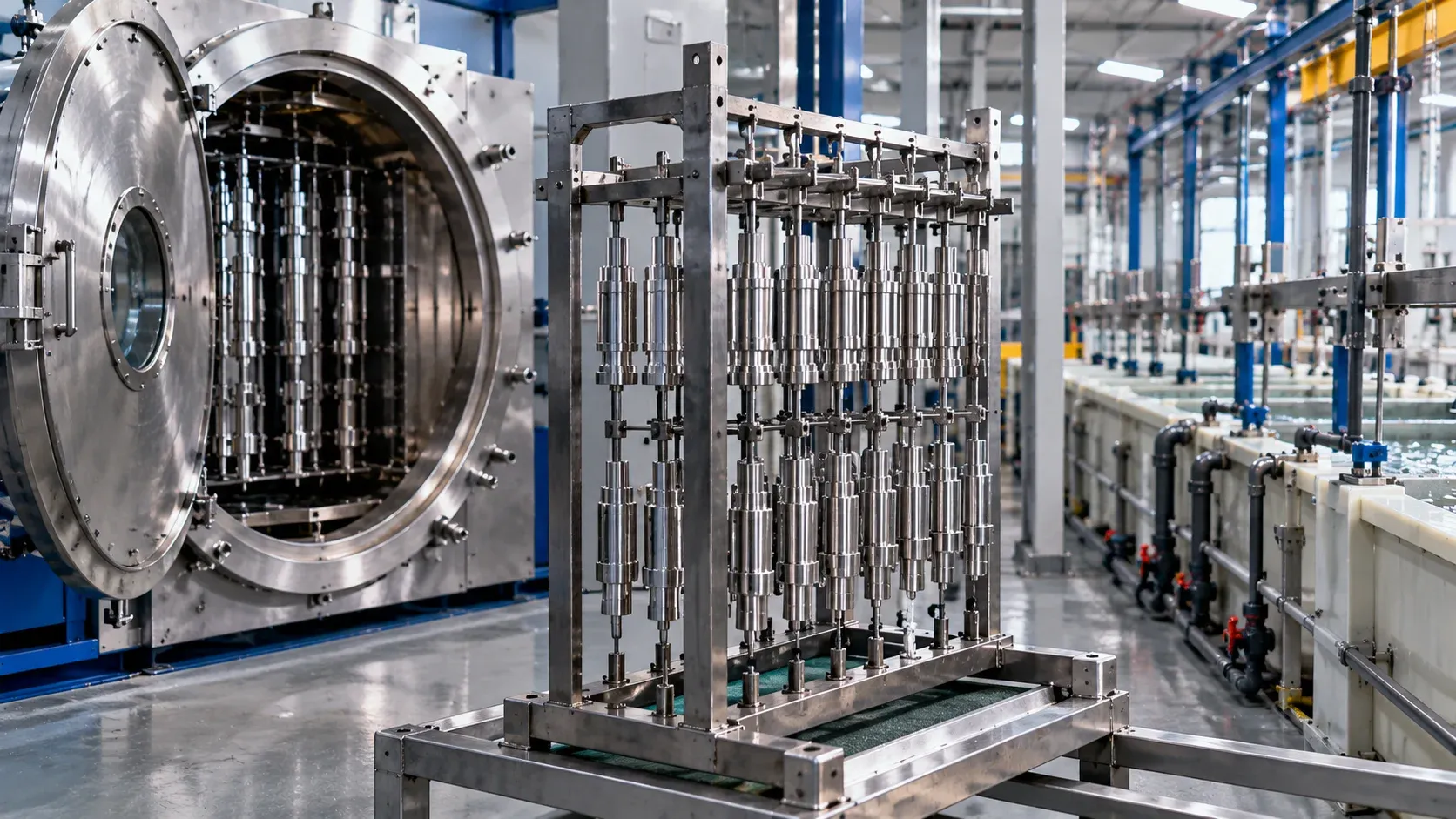
PVD and electroplating both put metal on a part, but they are different line families, not two brands of the same thing. Electroplating grows a deposit from a solution under applied current �� parts sit in baths, and the coating builds atom by atom across every wetted surface. PVD condenses metal from a vapor inside a vacuum chamber �� parts sit in fixtures, and the coating arrives as a directed flux. The route decision follows the requirement, the geometry and the volume, and it changes everything downstream: equipment, cost structure and effluent boundary.
How do the two routes actually differ?
Aspect | Electroplating | PVD (physical vapor deposition) |
|---|---|---|
Carrier | Aqueous solution, applied current | Metal vapor in vacuum |
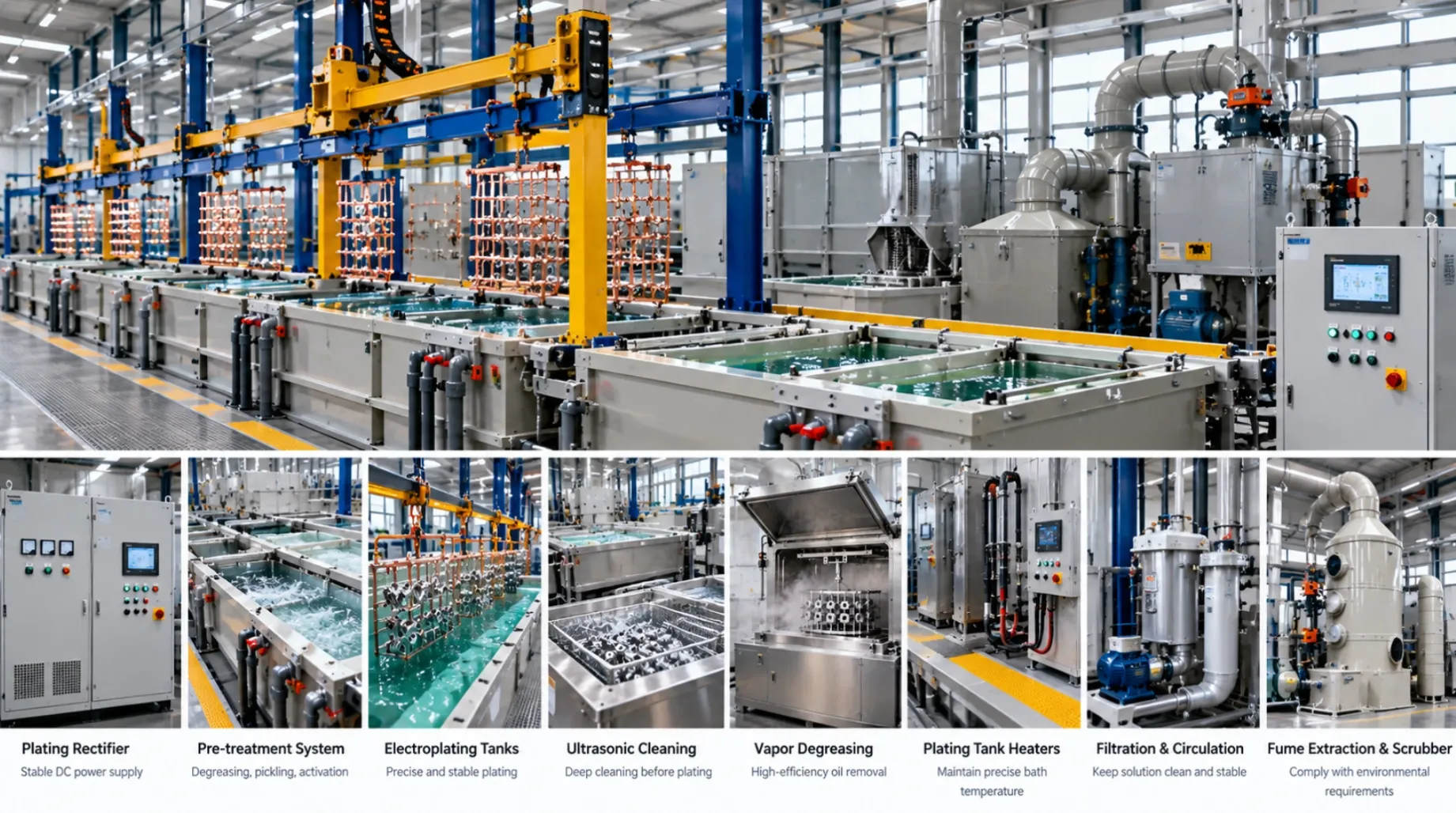
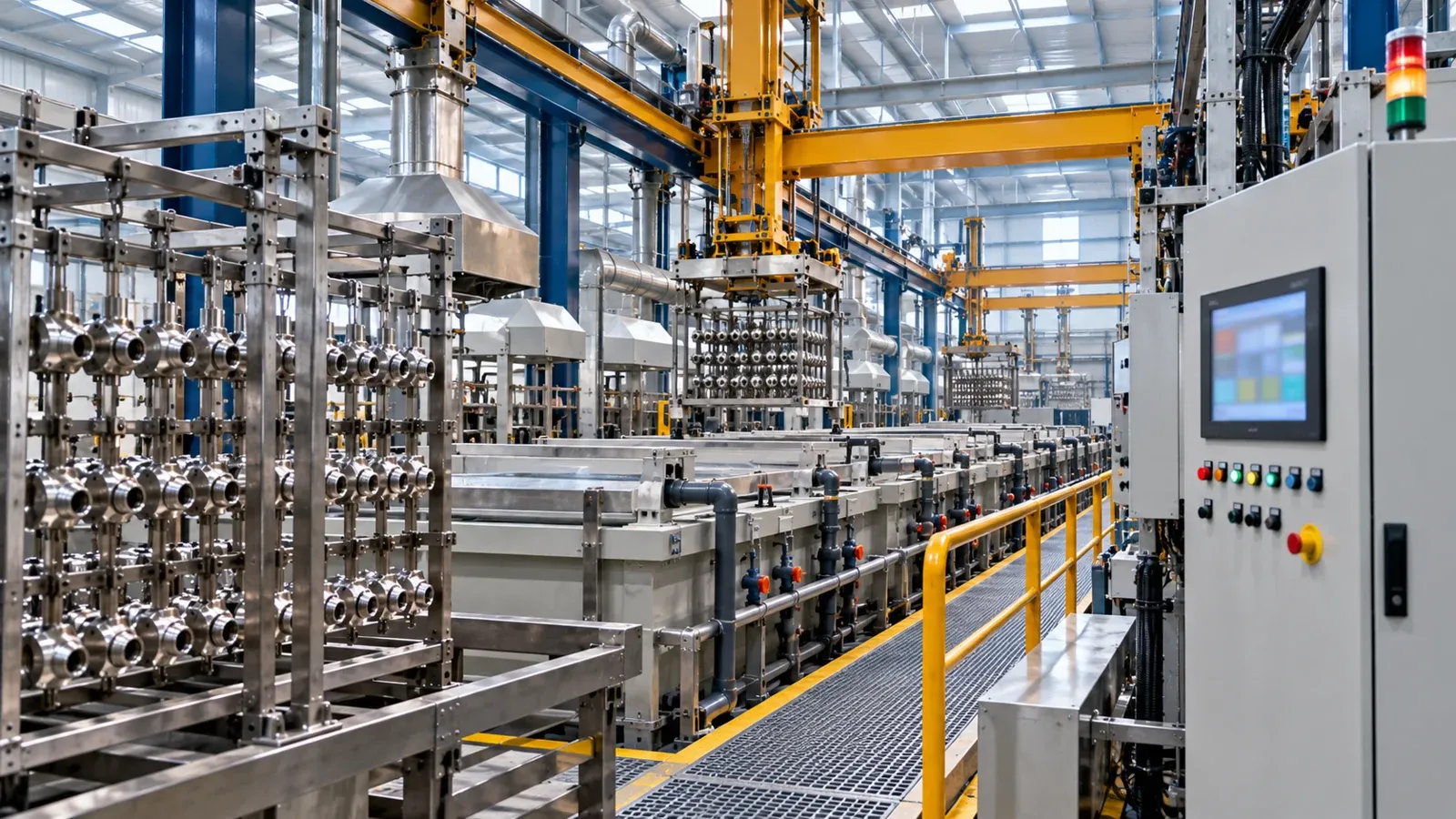
Line character | Tank line: pretreat, deposit, rinse, dry | Chamber line: clean, fixtured batch, pump down |
Geometry behavior | Throwing power follows current distribution; recesses plate with cell design | Line-of-sight bias: deep recesses and bores need fixture rotation or extra tooling |
Thickness regime | From thin functional coatings up to thick engineering build | Typically thin films; build-up range is narrower |
Temperature on the part | Bath temperature; substrates see modest heat | Elevated substrate temperature is common in some arc processes �� verify per part |
Effluent boundary | Aqueous rinse and bath treatment | No aqueous deposition waste; pretreatment cleaning still generates wash water |
Coating palette | Electrodeposited metals and alloys (chrome, nickel, copper, tin, silver, gold, zinc families) | Nitrides, carbides and metals �� TiN-type decorative and hard coatings |
Where each route wins
Electroplating is the answer when the requirement names electrodeposited coatings, when thickness build matters (engineering nickel and chromium work), when coverage must reach recesses, or when continuous high volume suits a tank line's economics. Decorative-plus-functional work �� our chrome line requirements guide covers the chromium case �� is its home ground.
PVD is the answer when the requirement asks for hard thin films, distinctive coating colors, or a process without aqueous deposition waste �� and the part tolerates vacuum processing and its temperature profile. Watch-hardware, tooling and some decorative-structural work live here.
What does the decision change in a brief?
Input | What to provide | What it decides |
|---|---|---|
Requirement | The coating the specification names | Route feasibility �� some callouts are route-specific |
Thickness | Minimum and build range | Electroplating's range is wider; PVD verifies thin films |
Geometry | Recesses, bores, parting lines | Throwing power vs line-of-sight handling |
Substrate temperature tolerance | What the part can see | Some PVD processes run hot; plating baths are milder |
Volume | Parts per shift | Tank lines scale continuously; chambers batch |
Effluent boundary | Site's wastewater capability | Plating carries an aqueous treatment obligation |
Where this does not fit
- ES-PRO supplies electroplating lines. Where the requirement genuinely points to PVD �� thin hard films, vacuum-only processes �� the honest answer says so, and this page is the wrong place to compare coating performance numbers.
- Declaring one route universally better: the specification, geometry and volume decide, per part family.
- Assuming pretreatment disappears with PVD: cleaning and activation obligations remain; only the deposition waste stream changes.
- Comparing costs without boundary: a chamber line and a tank line price differently in equipment, labor, space and waste handling �� compare scopes, not headlines.
Questions You May Have:
Is PVD stronger than electroplating?
Neither is universally stronger �� they deliver different property sets. Hard thin films and thick engineering deposits answer different requirements. The coating specification and its test methods decide what "stronger" means for your part.
Can PVD replace chrome plating?
Some decorative and light-functional chrome work has moved to PVD coatings, and some cannot �� thickness build, coverage in recesses and existing callouts keep parts on electroplating. Where a replacement is proposed, the part's requalification governs.
Does PVD need effluent treatment?
The deposition step does not produce aqueous waste, but cleaning and pretreatment still do �� the effluent boundary shrinks rather than disappears. A site without any wastewater capability still needs a wash-water answer.
Which route is cheaper?
Cost structures differ: tank lines amortize across continuous throughput; chamber lines carry batch overheads and fixturing. At production volume, geometry and thickness requirements usually make the route decision before the price does. Our buyer's guide frames the electroplating side.
Technical references
- Practice description. Coating requirements, test methods and route callouts belong to the product specification; process details belong to each route's validated documentation.
Get Proposal and Demo
Introduce your project with company, name, email and project country. Technical fields are optional. Describe the parts, the coating requirement and your volumes when available, and ask whether the requirement points to an electroplating line �� or honestly, elsewhere.
Details can follow by sales email, or chat on WhatsApp. The gold plating guide shows route thinking for device finishes.
Image note: AI-assisted conceptual diagrams illustrate equipment or workpiece contexts; they are not an ES-PRO installation, customer reference or evidence of coating performance.