Oct 7, 2026Plating Lines & Equipment
Electroplating Equipment: Buyer's Guide by Line Type
Electroplating equipment explained line by line — zinc, nickel, chrome, anodizing and reel-to-reel electronics lines. See what each configuration includes and what to send for a quotation.
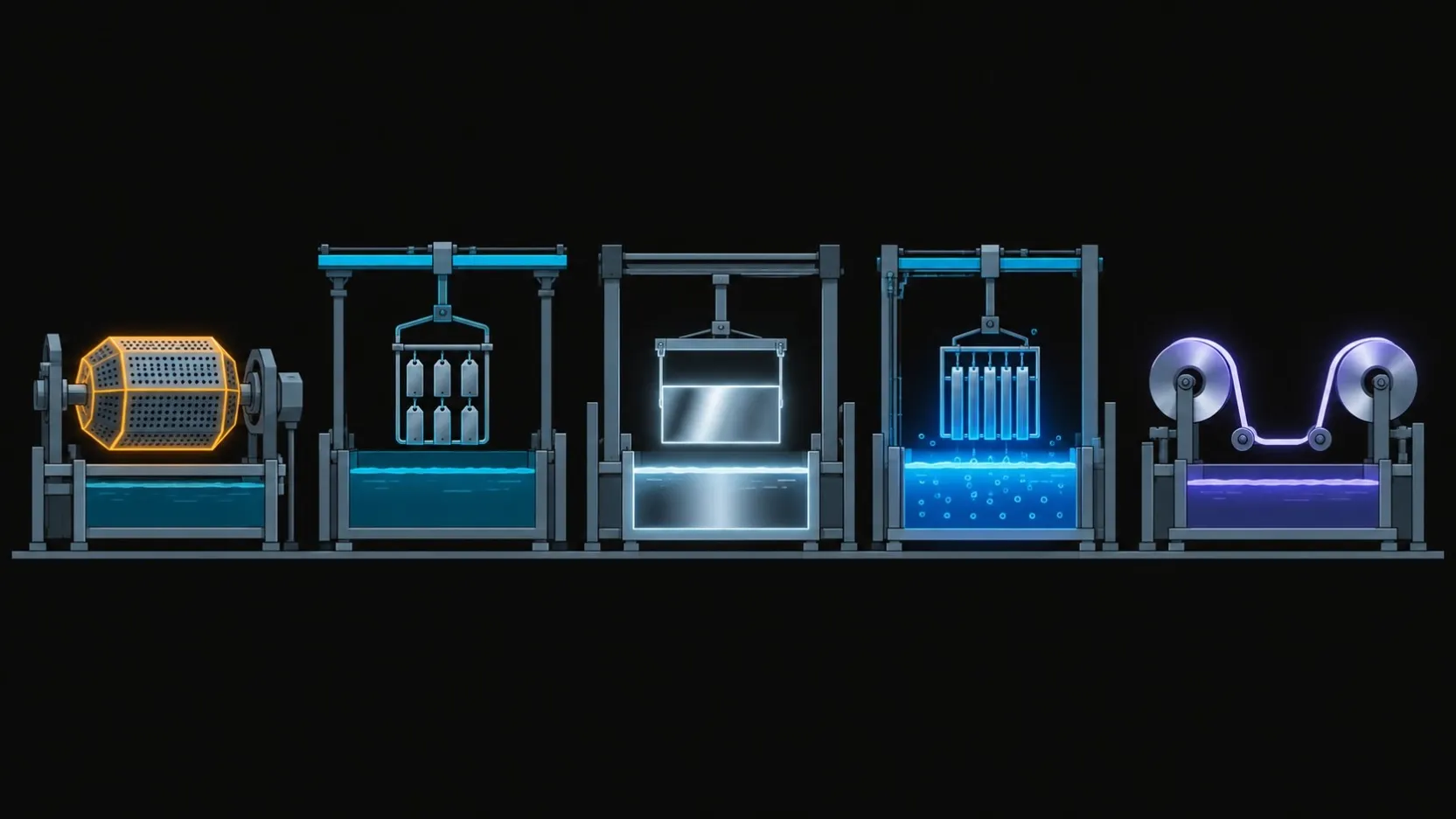
"Electroplating equipment" is not one product — it is a tank sequence, a power system, a handling method and a water loop, configured differently for zinc, nickel, chrome, anodizing or electronics work. Buy by line type, quote by checklist. About an 8-minute read.
Written by Jason Han · Engineering reviewed by Eayon · Published 6 October 2026 · Updated 6 October 2026
Equipment searches start generic and end specific. This guide walks the five line types buyers most often scope, lists what each configuration must include, and closes with the input checklist that turns a vague inquiry into a quotable project.
The Common Skeleton
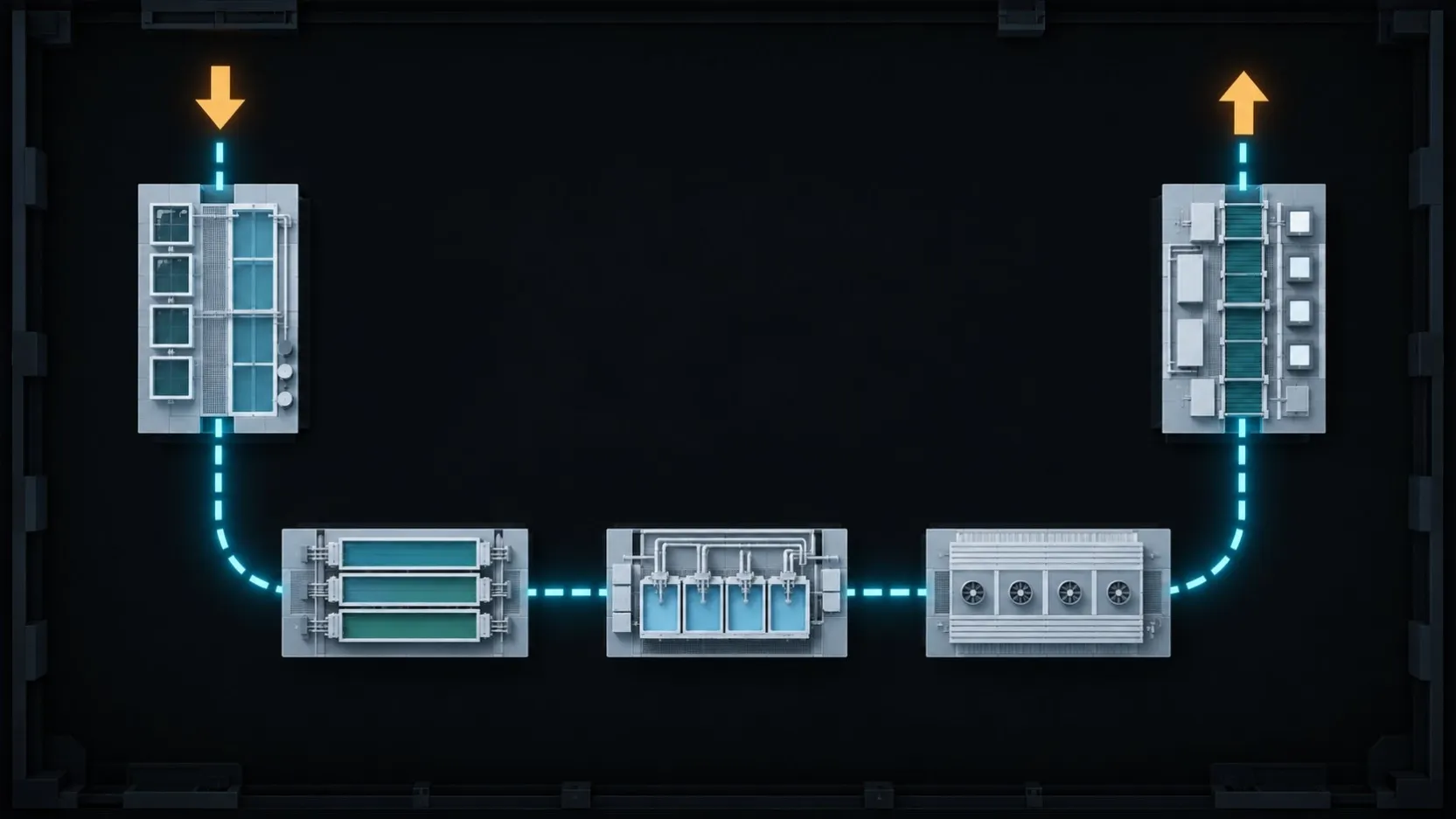
Every electroplating line shares a skeleton: precleaning, surface activation, the plating tanks themselves, rinsing, post-treatment, and drying — plus the utilities that make them work: DC rectifiers, heating and cooling, filtration and agitation, fume extraction, and water treatment for rinse and effluent streams. The differences between line types are in sequence, tank materials, power profile and handling — not in the skeleton. A machine-level view of handling options sits in machine families and automation levels.
Equipment by Line Type
Zinc plating line (barrel or rack). Alkaline or acid zinc baths with chromate passivation; rectifiers sized for barrel currents; a passivation and seal stage; and bake-out ovens where hydrogen embrittlement relief applies to hardened steel parts. Coating classes are specified per ASTM B633 (SC1–SC4 thickness, chromate types), which is also the reference your customers' drawings will cite.
Nickel plating line (rack, barrel or auto). Watts or sulfamate chemistries with tight pH and temperature windows, so filtration, continuous dosing and timed transfers carry more weight; bright nickel for decorative stacks or engineering nickel per MIL-DTL-14550 where the drawing says so.
Decorative chrome line. A nickel-under-chrome stack with high-current, low-efficiency chrome baths: expect larger rectifier capacity per tank, robust ventilation and fume scrubbing, and edge-shield tooling on racks.
Anodizing line. Not plating electrochemically but the same plant logic: etch and desmut stages, sulfuric anodizing tanks with cooling (the bath rejects heat hard), dye and sealing, and rectifiers rated for the oxide load.
Reel-to-reel electronics line. Strip transport with selective tooling (band, spot, stripe), inline XRF thickness verification per ASTM B568, and precious-metal or tin chemistries under tight contamination control — the configuration behind connector and lead-frame work.
New Line, Upgrade or Expansion
- New line — adds site works: floor pit or above-floor tanks, ventilation ducting, DI water and effluent treatment sized for the whole shop.
- Upgrade — keeps tanks and swaps the brain: automation, dosing, monitoring — where the audit pressure is (what OEM audits expect is described in automotive plating approvals).
- Expansion — duplicates a proven sequence with capacity headroom in rectifiers and water treatment so the second line does not starve the first.
What to Send for a Quotation
Suppliers can only quote what you define. The minimum viable RFQ:
- Part drawings — material, size range, masking or selective zones.
- Coating specification — the standard and class (ASTM B633 SC class, MIL spec, customer sheet) with thickness targets.
- Volume and shifts — parts per shift today and the three-year forecast.
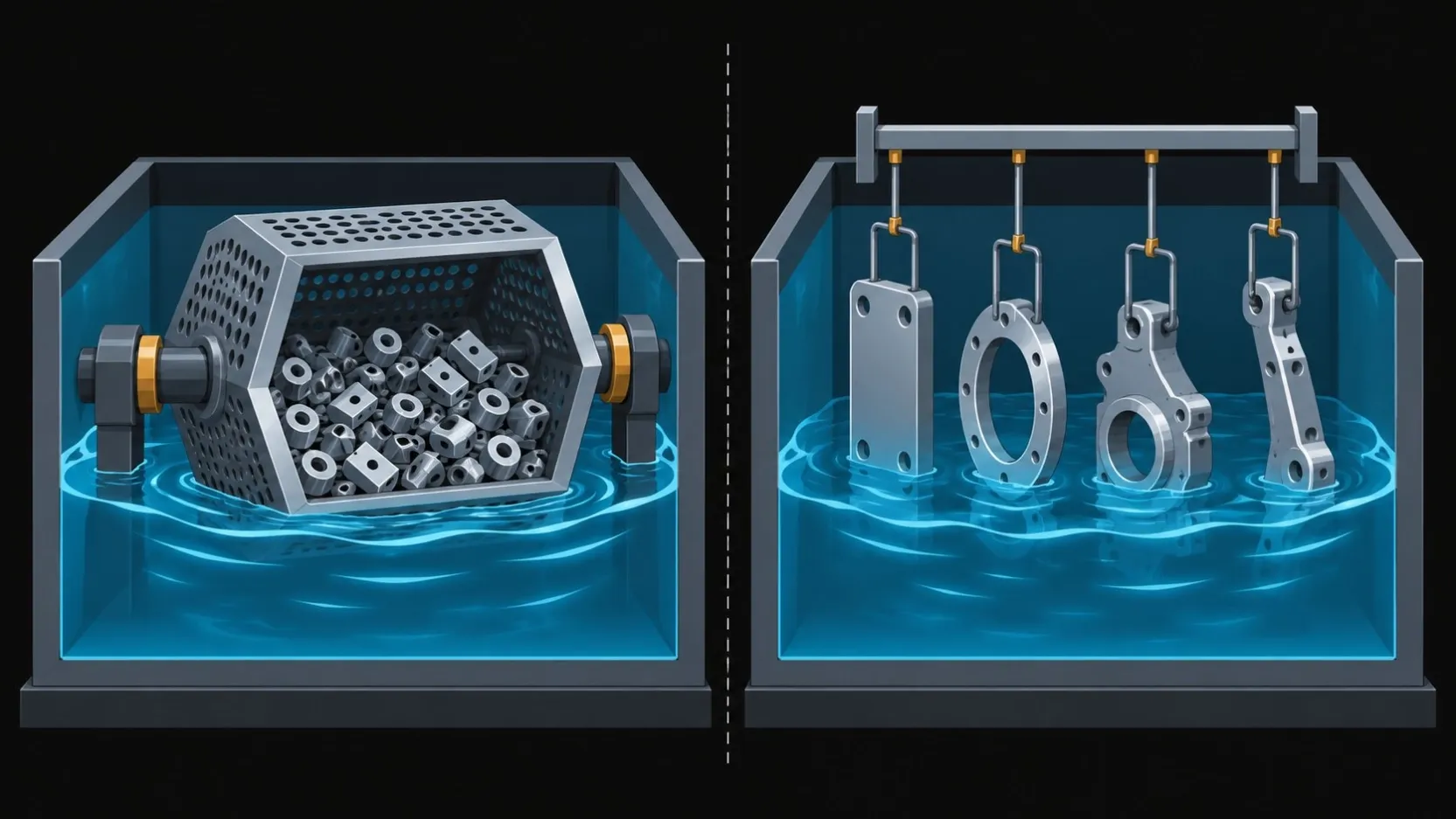
- Handling preference and constraints — barrel, rack or reel-to-reel; automation level; floor space and height limits.
- Site utilities — power quality, water supply, drainage, ventilation, effluent discharge requirements.
- Quality documentation — what your customers audit: thickness records, bath analysis, traceability.
With those six inputs, a cost quotation stops being a range and becomes a scope. The full build sequence from site survey to ramp-up is described in line setup.
Red Flags When Comparing Suppliers
- Quotations that price tanks but omit rectifier ratings, filtration and water treatment — the periphery is where lines succeed or stall.
- No mention of how thickness compliance will be demonstrated (XRF, coupons, records).
- Automation scope described without recipes, alarms or operator interface.
- Water and effluent treatment treated as "later scope" — regulators do not agree to later.
References & Authorities
- ASTM B633 — Standard Specification for Electrodeposited Zinc Coatings on Iron and Steel; the class system (SC1–SC4, types I–VI) that zinc-line equipment must be able to hold and document. (Verified: ASTM International, B633-23.)
- ASTM B568 — Standard Test Method for X-Ray Spectrometric Analysis of Coating Thickness; the QC instrument basis for reel-to-reel and rack lines alike.
- AIAG CQI-11 — Special Process Assessment: Plating Systems; the audit framework automotive buyers use to assess equipment scope and documentation.
Related Reading
- Electroplating machine: types and how to choose — the handling decision
- What equipment is needed for electroplating — component deep dive
- How to set up a metal plating line — from site to ramp-up
- How much does a plating line cost — quotation drivers