Oct 7, 2026Plating Lines & Equipment
Electroplating Machine: Types & How to Choose
Manual, semi-automatic, automatic hoist, barrel and reel-to-reel electroplating machines compared. See what each type includes and how to match one to your parts and volume.
An electroplating machine is a handling system around a tank line: the chemistry deposits metal, but the machine decides your labor cost, consistency and throughput. Choose the handling family by your parts, the automation level by your volume. About a 7-minute read.
Written by Jason Han · Engineering reviewed by Eayon · Published 6 October 2026 · Updated 6 October 2026
Buyers searching for an electroplating machine usually have a part in one hand and a volume forecast in the other. The industry answers with four machine families and three automation levels. This guide maps both, so a quotation conversation starts with the right configuration instead of a catalog photo.
What an Electroplating Machine Actually Is
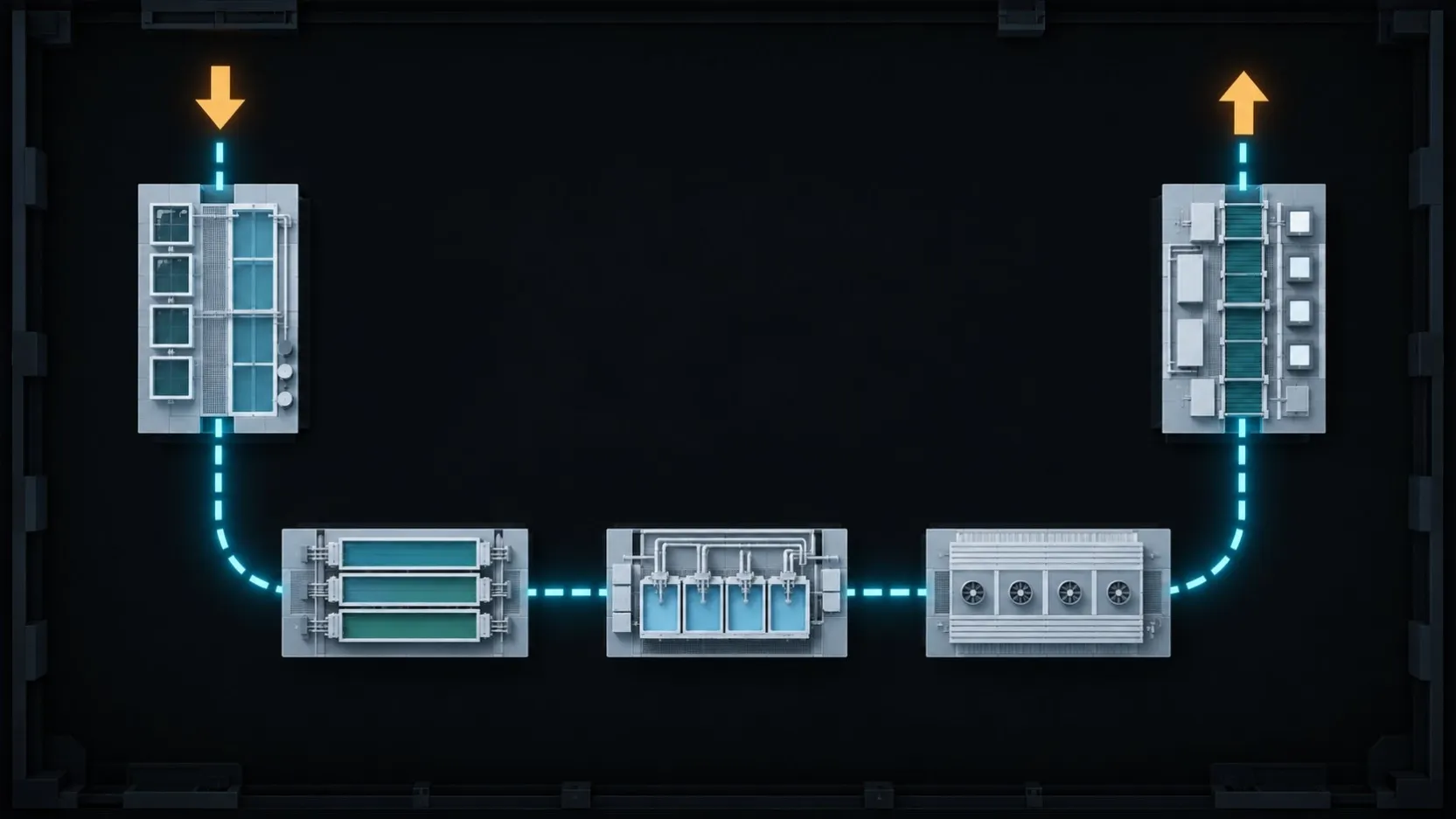
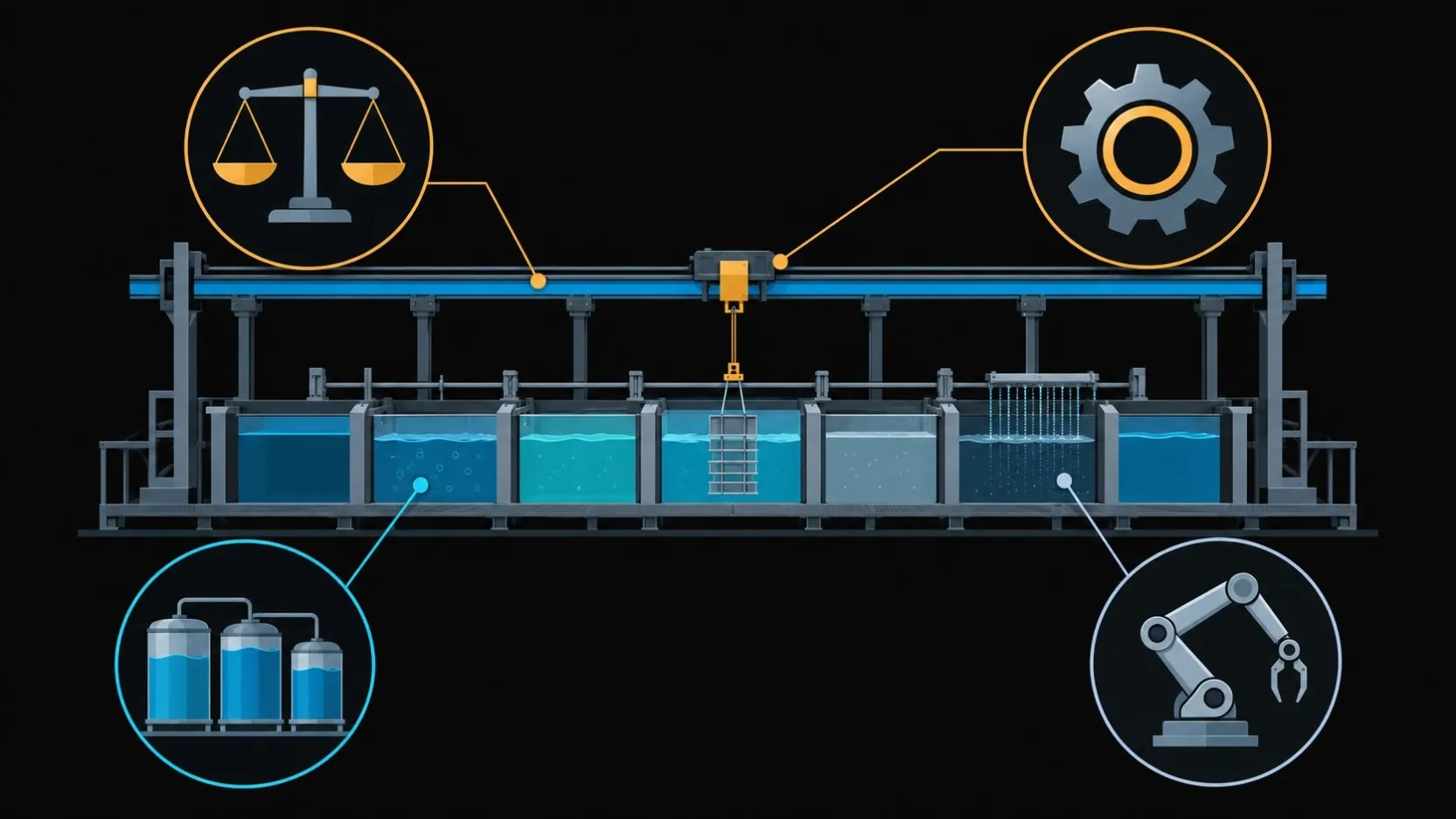
Strip away the chemistry and every electroplating machine is the same stack: process tanks in a sequence (clean, activate, plate, rinse, post-treat), DC power sized to the workload, heating and cooling for the baths, filtration and agitation for solution stability, and a handling method that moves parts from tank to tank. The component-by-component breakdown lives in what each part of the line does. What distinguishes machines is who or what does the moving — and how repeatably.
The Four Machine Families
- Manual lines — an operator moves racks or barrels by hand or hoist. Lowest capital, highest labor dependency, and quality that tracks operator discipline. Right for job shops, sample work and process development.
- Semi-automatic lines — a single hoist or rail assists the moves on a programmed sequence; operators load and unload. The middle ground for mid-volume shops that want rhythm without full automation.
- Automatic lines — shuttle hoists or rail systems run the full sequence under a PLC: transfer timing, current ramping, dosing and alarms. This is where consistency and labor economics meet, and where automated plating lines earn their premium on high-volume rack work.
- Reel-to-reel continuous machines — strip and lead frames run continuously through selective stations; the machine is a precision indexer as much as a plating line. The standard for high-volume electronics contacts.
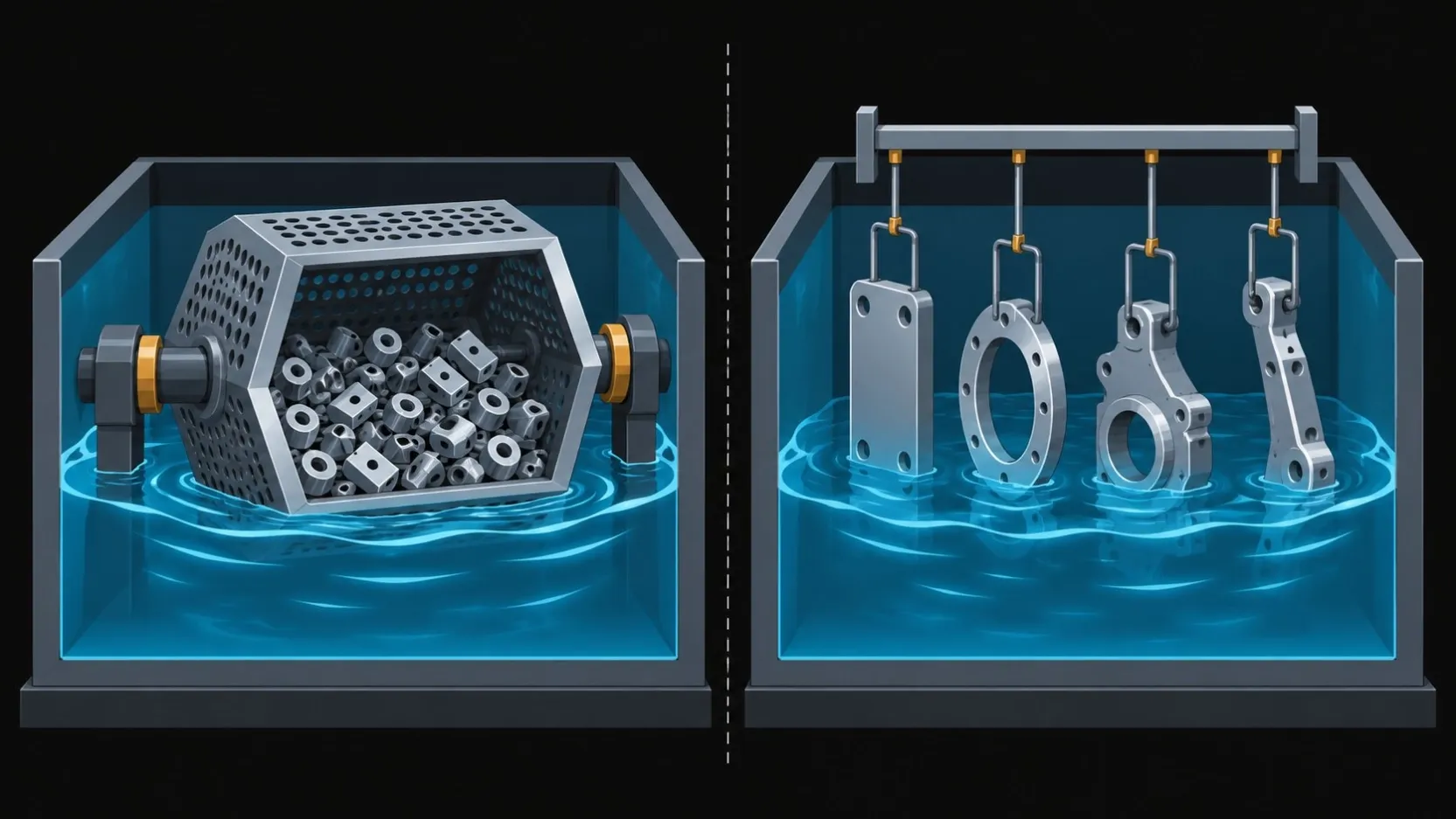
Barrel handling cuts across the families: small bulk parts ride in barrels — the trade-offs between barrel and rack handling are compared in barrel vs rack plating.
How to Choose: Part Mix First, Volume Second
Part geometry and fragility decide handling: small bulk parts suit barrels, large or dimension-critical parts suit racks, continuous strip suits reel-to-reel. Volume then sets the automation level — manual for job shops, semi-automatic for stable mid-volume, full PLC control for multi-shift work. Chemistry tightens the requirement: baths with narrow windows reward timed transfers and dosed additions, and specification-driven coatings such as those in ASTM B633 or MIL-DTL-14550 are written assuming the process held to window.
Quality evidence is part of the machine: inline or bench XRF per ASTM B568 turns machine output into documented compliance. And the site view — floor, rectifier power, ventilation, DI water and effluent treatment — completes the scope before signature.
What a Quotation Should Itemize
A complete machine quotation reads like a line build: tank sequence and materials, rectifier count and ratings, hoist and automation scope, heating and cooling, filtration, fume scrubbing, water treatment, and the control system with its recipes and alarms. If a supplier quotes "the machine" without the periphery, the gap reappears as site surprises — the same discipline described in plating line platforms.
Selection Checklist
- Part mix documented (sizes, materials, fragility, masking needs)
- Target coatings and thickness classes named per spec (ASTM B633 classes, MIL-DTL-14550 types, customer sheets)
- Volume per shift and growth forecast over three years
- Automation level chosen against labor economics, not catalog pride
- QC instruments specified (XRF, bath analysis, hull cell)
- Site utilities and effluent treatment in scope before signature
References & Authorities
- ASTM B633 — Standard Specification for Electrodeposited Zinc Coatings on Iron and Steel; thickness classes SC1–SC4 with chromate types I–VI. A coating written to a class assumes the machine held the window. (Verified: ASTM International, B633-23.)
- ASTM B568 — Standard Test Method for X-Ray Spectrometric Analysis of Coating Thickness; the measurement backbone for spec compliance on automated lines.
- MIL-DTL-14550 — Military specification for electrodeposited nickel coatings; an example of how coating classes translate into machine process requirements.
Related Reading
- What equipment is needed for electroplating — component-level tour
- Barrel vs rack plating — the handling decision inside the machine
- How much does a plating line cost — what moves the quotation
- Metal finishing: the complete guide — the wider process map