Hard Chrome vs Decorative Chrome: Define the Line Requirements
Compare hard and decorative chrome projects using part function, coating requirements, loading, factory interfaces and acceptance before defining a line.
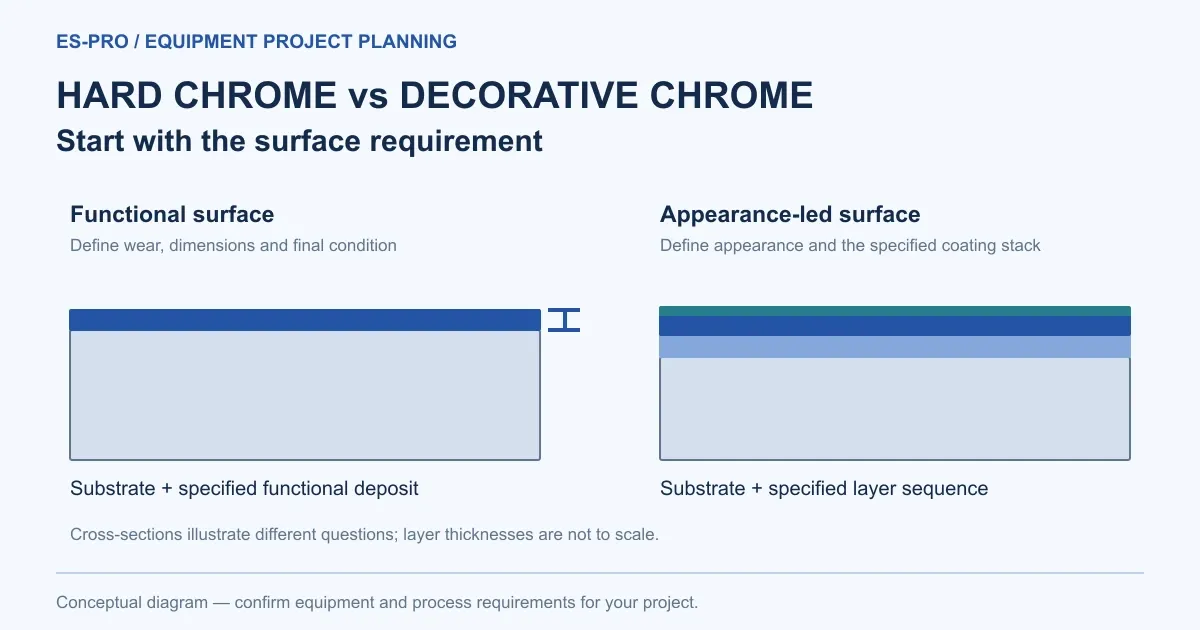
Hard chrome and decorative chrome projects start with different part requirements. Define whether the coating serves a functional surface or an appearance and protection specification, then identify the substrate, coating designation, significant surfaces and acceptance checks. Those inputs establish the line brief before tank dimensions, electrical equipment or automation are compared.
What does the word chrome leave unanswered?
A drawing that says “chrome plate” leaves important purchasing decisions open. A repaired shaft, a wear surface and a visible trim component may all arrive with that description. They need separate discussions of the intended surface, dimensions, coating layers and approved finishing sequence. Ask the process owner to resolve these requirements before suppliers quote a complete line.
ASTM B177/B177M-11(2026) is a guide to engineering chromium. Its scope describes work on steel, while the abstract discusses other engineering metals. Specified coatings on ferrous substrates are addressed by ASTM B650. Confirm applicability to the actual substrate and contract. ASTM B456-17(2022) addresses specified decorative metal coating systems involving nickel and chromium. These are useful starting references for identifying the correct requirement. They do not make every chrome process interchangeable or establish a universal production recipe.
Which part information changes the equipment brief?
Provide the substrate and its condition when it enters the proposed line. Include any retained coating, previous processing and drawing restrictions. Mark the surfaces that need coating, those that must remain uncoated, and the areas available for electrical contact. A whole-part photograph is useful context, but a marked drawing communicates the actual boundary more clearly.
For a functional surface, identify the dimensions before coating and the required finished condition. State which later machining, grinding or polishing operations belong in the project. For an appearance specification, provide the agreed finish reference and identify visible surfaces. Do not assume that a quoted coating thickness establishes either the final dimension or the complete appearance requirement.
How should the two project briefs be compared?
| Brief item | Functional surface project | Appearance-led project |
|---|---|---|
| Purpose | Drawing-defined surface function | Approved visual and protection requirement |
| Part condition | Substrate, retained coatings and dimensional history | Substrate and visible-surface condition |
| Coating scope | Required deposit and marked areas | Specified layer system and significant surfaces |
| Handling | Orientation, contact areas and loaded weight | Contact marks, visible areas and part protection |
| Later operations | Any approved finishing or machining | Any specified polishing or assembly preparation |
| Acceptance | Drawing and inspection method | Finish reference and specified coating tests |
This is an original procurement comparison. The requirements come from the part specification; the table does not approve a coating route or represent a tested ES-PRO configuration.
What must a line proposal explain?
Request a process-stage list showing preparation, coating, rinsing and specified finishing operations. Ask the supplier to identify which stages are included, which use retained factory equipment and which need process-owner confirmation. Connect each part family to its planned handling arrangement. Review the largest part and the most difficult loading condition separately from the normal production mix.
Ask how the proposed electrical, thermal and handling duties were established. The offer should state its assumptions about coated area, approved process conditions and loading. Compare proposals using the same part schedule. A maximum electrical rating on its own does not establish accepted output for a mixed production programme. Our equipment buyer's guide explains the wider handling and supply boundary.
Which factory interfaces belong in the enquiry?
Identify available space, delivery routes, lifting access and the retained utilities. Provide the project country and ask the responsible local specialists to identify the applicable workplace and environmental requirements. Include exhaust collection, water supply and service-stream responsibilities in the equipment boundary. These interfaces need coordination even where another contractor supplies the equipment.
The OSHA dipping and coating requirements provide U.S. workplace context. Their presence in a reference list does not establish compliance in another country or certify a proposed line. Ask the offer to show its actual scope and the information still required from the factory.
What should the demonstration establish?
Agree the representative part, loading pattern, approved process route and inspection plan before the demonstration. Record the condition of the part before processing and the measurements required afterwards. Identify which checks occur before and after any later finishing operation. Keep the coating result and the final dimensional result clearly traceable.
For appearance-led work, agree how the reference is viewed and which surfaces are inspected. For functional parts, identify measurement locations and the finished condition being accepted. Our coating thickness testing guide provides related planning context; the project specification still determines the applicable method.
Questions You May Have:
Can one line serve every chrome-plated part?
Its suitability needs assessment against the approved routes, part geometries and loading. Start with the actual part families and identify requirements that differ before discussing shared equipment.
Does hard chrome always mean a fixed coating thickness?
The required thickness and finished dimensions come from the drawing and specification. Provide those requirements and the intended finishing sequence rather than using a generic label as a numerical limit.
Is decorative chrome on plastic covered by the same reference?
ASTM B456's public scope excludes plastics. See our chrome plating on plastic guide and identify the applicable substrate-specific requirement.
Does functional chrome need different acceptance evidence from decorative chrome?
Functional parts require drawing-defined dimensions and coating checks at the agreed final condition. Appearance-led parts need an approved visual reference and specified coating tests. Keep those evidence chains explicit.
Where this does not fit
- Plastic substrates require a substrate-specific route; do not transfer the metal-part brief unchanged.
- Resolve masking boundaries, later finishing and appearance on representative parts before committing equipment.
- A one-off repair does not itself define a production-line project; assess the appropriate scale and route.
Get Proposal and Demo
Introduce your chrome-plating project with company, name, email and project country. Technical fields are optional. Include a marked drawing, required coating designation and representative production mix when available, and request an assessment of the relevant equipment scope and demonstration.
Drawings and specifications can follow by sales email. You can also chat on WhatsApp. Use the quotation scope guide to compare responsibilities and included interfaces.