
Plating Process
Plating Rework Decisions and Part History
Build a traceable plating rework decision. Record the defect, original route and material condition before approving stripping, reprocessing or another action.
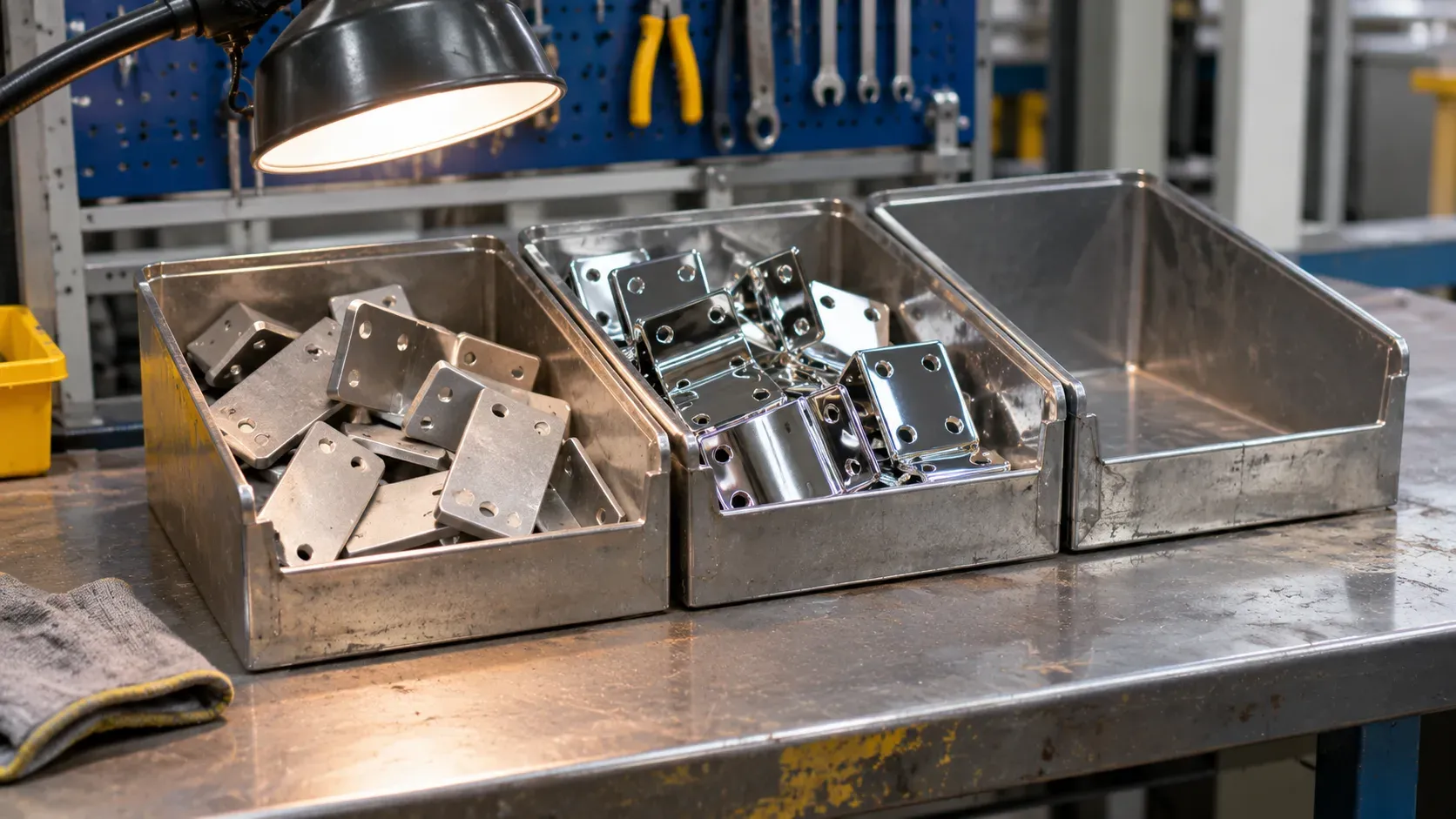
Approve plating rework from the identified defect, the part's material and process history, and the controlling requirements. Preserve the original lot and inspection evidence. Have the responsible authority define the permitted action and the checks needed afterward, then keep the reworked quantity linked to its final disposition.
A note saying “strip and replate” leaves important questions open. The team needs to know what failed, which surfaces are involved and what the part has already experienced. A rework decision also has to cover the condition that the next process will receive.
Describe the defect before choosing the action
Identify the drawing feature and the method that detected the failure. Keep raw readings and photographs where they support the decision. Record whether the finding affects every part, a named sample or a group needing further evaluation under the quality plan.
Separate the observed condition from the proposed cause. For example, a low thickness reading in a recess describes a result. Its cause still needs an investigation of the measurement, geometry and process. Repeating the same route without resolving the cause may repeat the same result.
Rework input | Evidence to collect | Authority question |
|---|---|---|
Failed requirement | Drawing location, inspection method and actual result | What must the corrective action achieve? |
Original history | Substrate condition, preparation, deposition and required post-treatments | Which actions are permitted for this part? |
Prior rework | Previous disposition, route and checks | Are further actions allowed? |
Proposed route | Defined operations and intermediate checks | Who approves the route and final release? |
The surface preparation guide helps organize the incoming condition for the new route. For a drawing-based chromium job, the AMS 2460 guide illustrates the need to resolve controlling requirements with the responsible authority.
Worked example with a recessed thickness failure
Suppose a steel component fails the coating requirement in one recess while other named surfaces pass. Confirm the reading and method first. The quality owner then reviews which parts are affected and what actions the specification permits. The process owner investigates whether a revised approved configuration can meet the recess requirement.
Before using a new route, identify what it does to the substrate, dimensions and remaining surfaces. Agree the intermediate condition and final measurements. Keep the original failure record even after a corrected part passes. This preserves the evidence needed to understand which action produced the accepted result.
If a subcontractor performs one operation, send the approved instructions and the history relevant to that operation. Require the returned parts and records to carry the agreed identity. A delivery note stating “completed” may not contain enough detail to establish the process state needed by the next stage.
Plan quantity reconciliation and segregation
Start with the number of affected pieces and their current locations. Record how many enter the approved rework route, how many remain on hold and how many receive another disposition. Keep the counts reconciled as parts move through inspection and any external operation.
Use the line's tracking record or a controlled manual record as agreed. The automation and traceability guide covers the wider system questions. For rework, the important link is between the original lot, the approved action and the final result.
Agree how normal and reworked pieces are labeled and staged during the sequence. If they can rejoin one delivery lot, establish the record that preserves their separate histories. The buyer or quality authority decides the permitted release basis.
Copy the disposition record
Record part and lot · failed feature · original result · material and route history · earlier rework · approved action · responsible parties · quantities · intermediate checks · final evidence · release authority.
In a rework-equipment quotation, include the part families and approved process boundaries. State who establishes chemistry, who approves the part condition and where inspection occurs. Ask for a representative trial before using an assumed rework yield to justify equipment capacity.
Close the quantity and evidence loop
At completion, compare the quantity originally held with released, scrapped and still-held quantities. Identify any pieces consumed by testing. Check that every released subgroup has the final inspection and required approval attached. Where subcontract returns arrive at different times, preserve the relationship between each returned group and the operation it received. This makes an open balance visible before the delivery lot closes.
FAQ
Can a part be reprocessed whenever the coating fails?
Use the controlling requirements and an approved disposition for the specific part history and defect.
Does a final passing inspection erase the original failure?
Retain the original evidence and the approved action with the final result so the release can be reconstructed.
Should reworked pieces count as first-pass production?
Track first-pass and recovered output separately. Define the delivered-output figure in the capacity or purchase agreement.
Discuss a rework equipment boundary
Share the defect and approved disposition needs. Include the material history, quantities and inspection points. Send records by sales email, or discuss the project on WhatsApp.


