
Build a plating preparation sequence from the substrate, incoming soils and oxide condition, the next deposit, and the checks required at each handoff. A cleaning tank name is not a complete route. The low-carbon-steel example below shows the purpose of each stage; the checklist turns those purposes into equipment and transfer decisions.
Scope and limits: plating surface preparation
- Assuming one universal sequence: every substrate and soil changes the chain; the sequence is a process-owner decision the equipment must serve.
- Buying tanks before route approval: an unresolved stage, transfer or verification requirement can change the tank count and controls; identify the open decisions in the quotation.
- Treating cleanliness as the bath supplier's job: cleaning chemistry suppliers support their products, but the line owns the stage boundaries and the carryover.
- Using unrepresentative samples: agree specimens or parts that represent the actual incoming soils, geometry and material condition. Coupon results alone may not establish the production route.
An example route — low-carbon-steel parts
The following chain is an example for low-carbon-steel work with typical soils. It is not a universal sequence: activation may be chemical or electrochemical depending on the system, some substrates add or skip stages entirely, and transfer and rinse decisions follow the approved route. The list describes stage purposes; specify the approved rinse/transfer after each relevant operation rather than reading this list as a complete tank-count drawing:
- Soak cleaning removes heavy oils, greases and drawing compounds. It does the bulk work so the next stages stay clean.
- Electrocleaning uses current and alkaline chemistry to lift the last soils and fine particles; polarity and current density are process decisions. Record its power, polarity, contacts and control boundaries in the stage list.
- Defined rinse handoffs between incompatible or cleanliness-critical stages reduce chemistry carryover — alkaline film carried into an acid stage neutralizes it.
- Acid pickling or descaling removes oxide, rust and heat scale where the incoming condition requires it. For heavy scale this is a real line stage with its own equipment; identify that scope separately from soil removal. Identify any required post-pickle residue or smut removal before activation in the approved route; ASTM B183 addresses low-carbon-steel preparation.
- Activation, where the route requires it, gives the surface the final chemical state the deposit needs — the form this takes (a short acid dip, an electrochemical treatment, or a strike-related step) depends on the system.
- Rinsing before the plating tank, with attention to water quality where the route requires it. Our DI water guide explains when water quality matters.
Order matters: running acid stages over incompletely cleaned parts contaminates the acid and leaves residues the next stage may not recover; and where a route requires activation, skipping it leaves the deposit bonding to a film rather than the metal.
What can a water-break test confirm before plating?
The ASTM F22-21 public page describes a qualitative water-break check for hydrophobic films on suitable surfaces. Record the inspected area and observations. A water-break-free surface does not establish the absence of every contaminant, successful activation or coating adhesion.
Rough or porous surfaces can reduce sensitivity. The method is unsuitable when the surface cannot be visually evaluated or when water trapped in an assembly cannot be effectively removed. Those limits appear in the public page's Significance and Use note. Keep downstream coating/adhesion acceptance separate from this observation.
The ASTM B322-99(2025) public scope frames cleaning selection around substrate and soils and separates heavy scale removal from its cleaning scope. Stainless, aluminum, zinc alloys and material conditions subject to hydrogen/stress controls need their own approved route. Identify masking and excluded areas in the drawing instead of treating all surfaces as the same inspection area.
Reading plating defects without jumping to a diagnosis
Deposit symptoms are where preparation problems become visible — and where they get misdiagnosed, because the same symptom can originate in the bath, the contacts, the racking, the chemistry or the substrate. Treat a symptom as the start of an investigation, not a conclusion:
| Symptom | Possible origins (examples) | Records to collect | Next comparison |
|---|---|---|---|
| Blistering, peeling | Residues or oxide under the deposit; bath contamination; current anomalies | Pretreatment stages run, bath analysis, load position | Use unplated comparison parts; strip or reprocess rejects only under an approved rework route. |
| Roughness, particulates | Soils or sludge reaching the tank; filtration state; handling damage | Filtration logs, cleaning condition, carryover points | Filter-condition check and a clean-run comparison |
| Skip plating | Passive or contaminated zones; contact quality; load geometry | Activation state, contact marks, rack position | Contact and activation checks on the rejected parts |
| Pitting | Cleaning-stage chemistry or current issues; gas sticking; base-metal condition | Cleaning records, surface condition before plating | Controlled re-clean comparison |
Keep the rejected-part identity, incoming condition, preparation history and deposition records linked. A controlled comparison can test a suspected contribution; the symptom alone does not identify its cause.
Which equipment supports the preparation handoffs?
List each stage with its heating or electrical duty, solution movement, rinse connection and transfer condition. An electrocleaning stage adds power and polarity controls; a descaling stage adds chemistry-compatible tanks and fume interfaces. Rinse quality and transfer timing can change both tank arrangement and hoist programming. State which existing water, extraction and waste systems are retained and where the new equipment connects. The equipment buyer guide provides the broader handling and utility boundary.
Worked transfer check: the same tanks can require a different layout
Hypothetical scheduling example, not a recommended process window: assume a project's approved route allows at most 90 seconds from the end of one named activation step to the start of plating. Proposed handling A takes 75 seconds; handling B takes 105 seconds in this assumed schedule. A meets only that illustrative timing requirement; B does not. Neither result proves cleanliness or adhesion. The figures are invented for this comparison, not standard limits or production results.
For the actual project, define the start/end events, wet/hold condition, route source and worst-case loaded transfer path. Check occupied positions and hoist waits as well as travel. An unresolved delay can require programming, rinse/hold provisions, layout or a route change validated by the process owner. Counting tanks alone would miss the difference.
Pretreatment stage-and-handoff checklist
Use this as a blank project worksheet. Enter actual requirements and observations; the blanks are not process limits or completed production results.
- Incoming lot and surfaces
- Record for this projectAlloy/material condition, drawing/lot ID, manufacturing history, oil/soil identity, scale, accessible/recessed and excluded areas: ____
- How this changes the decisionSelects which cleaning/descaling and inspection conditions need a representative trial; an outside face may not represent an internal feature.
- Approved route and open items
- Record for this projectStage sequence/revision, each stage purpose, supplier/process-owner reference, unresolved changes and approval owner: ____
- How this changes the decisionDistinguishes a candidate route from an approved tank count and makes a proposed omission or substitution reviewable.
- Stage operating evidence
- Record for this projectStage ID, approved chemistry/control reference, required heating/electrical duty and solution movement; actual recorded values with units: ____
- How this changes the decisionDefines equipment and monitoring interfaces without copying one substrate family's settings into another route.
- Rinse and carryover
- Record for this projectFrom/to stage, carried solution, specified rinse/water condition, drainage/orientation and retained water-system boundary: ____
- How this changes the decisionChanges rinse arrangement and bath protection; the water-quality requirement is a project input, not a universal DI-water rule.
- Transfer and hold
- Record for this projectNamed start/end events, allowed transfer/hold and wet condition, actual loaded-path timing including waits, source and owner: ____
- How this changes the decisionChecks the hoist/program/layout against the approved route; the hypothetical 90-second example is not a default limit.
- Cleanliness observation
- Record for this projectApplicable method/specification, inspected surfaces, accessible geometry, observations, location and lot linkage: ____
- How this changes the decisionRecords what the check can establish; water-break observation does not prove every contaminant is absent or that adhesion will pass.
- Downstream acceptance
- Record for this projectInvoked coating/adhesion checks, sampling and limits/source, results, deviations, repeat/recheck plan and sign-off: ____
- How this changes the decisionConnects preparation changes to accepted parts rather than treating an upstream shop check as final product conformity.
- Capacity and supply boundary
- Record for this projectRepresentative accepted parts/area per load, measured stage/handling times and assumptions, working calendar, retained services and assigned owners: ____
- How this changes the decisionSupports a line schedule including parallel positions and transfers; monthly demand alone does not establish cycle capacity.
Copy this project worksheet
Select the text in the read-only field and copy it into your RFQ document or project notes. Complete the requirements, owner and status for each item.
Questions You May Have:
Can we shorten the chain to save space?
A shorter route may remove, combine or rearrange stages, each of which can change cleaning, carryover and transfer conditions. Demonstrate the proposed route on representative incoming parts against the required cleanliness and downstream coating tests before changing production.
Is the water-break test enough for acceptance?
It is one shop check with a defined scope — detecting hydrophobic films on suitable surfaces — not a complete acceptance plan. Use it where the control plan calls for it, and add the checks the substrate and contract require.
Our deposits blister after a bath change. Where do we look?
Compare the defect timing with the bath change, the pretreatment records, substrate condition, rinsing, electrical contact and loading. Do not assign the cause from the symptom alone; use controlled comparisons and record the evidence.
Who supplies the cleaning chemistry?
Usually a process chemistry supplier under the process owner's control plan. The equipment inquiry should name the boundary: tanks and controls are equipment; chemistry and its monitoring follow the process contract.
Get Proposal and Demo
Introduce your project with company, name, email and project country. Technical fields are optional. Email the completed checklist; use project notes for a short summary of the alloy, incoming soils, next deposit and open decisions. Describe the incoming part condition, alloy families and current preparation route when available, and ask which stage list the assessment recommends.
The quotation scope guide helps separate preparation, rinse, handling and utility supply. Details can follow by sales email, or chat on WhatsApp.
Official references
- ASTM B322-99(2025) — Cleaning Metals Prior to Electroplating — public scope connects cleaning selection with substrate and soils; heavy scale removal is a separate boundary.
- These references describe general practice. Stage chemistry and acceptance follow the process owner's approved route; for stainless descaling guidance see ASTM A380/A380M-25; for hydrophobic-film detection see ASTM F22-21.
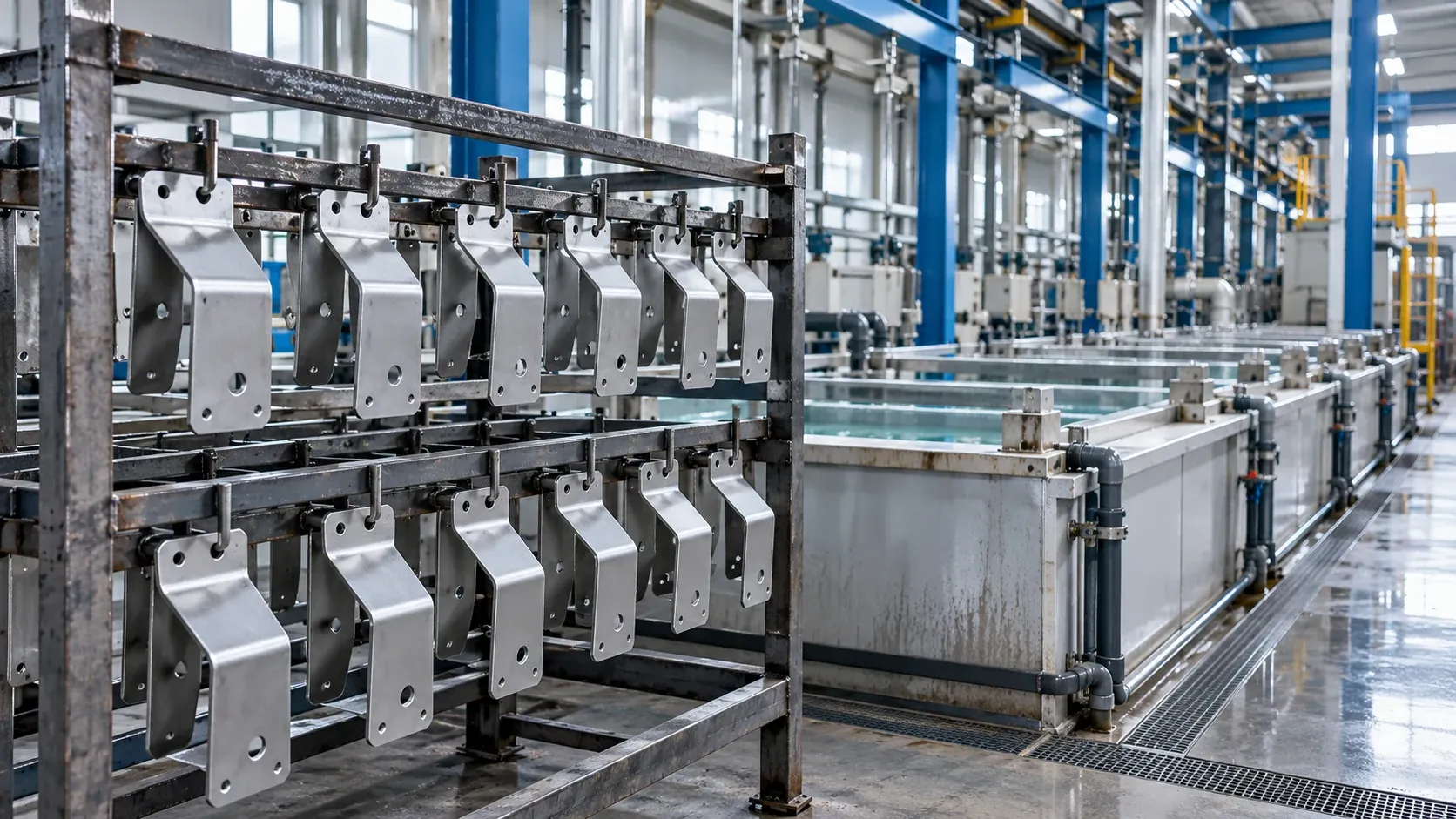
Image note: AI-generated pretreatment-line and workpiece imagery is editorial illustration, not an ES-PRO installation, customer reference or verified cleaning/adhesion result.


