
Oct 5, 2026Applications
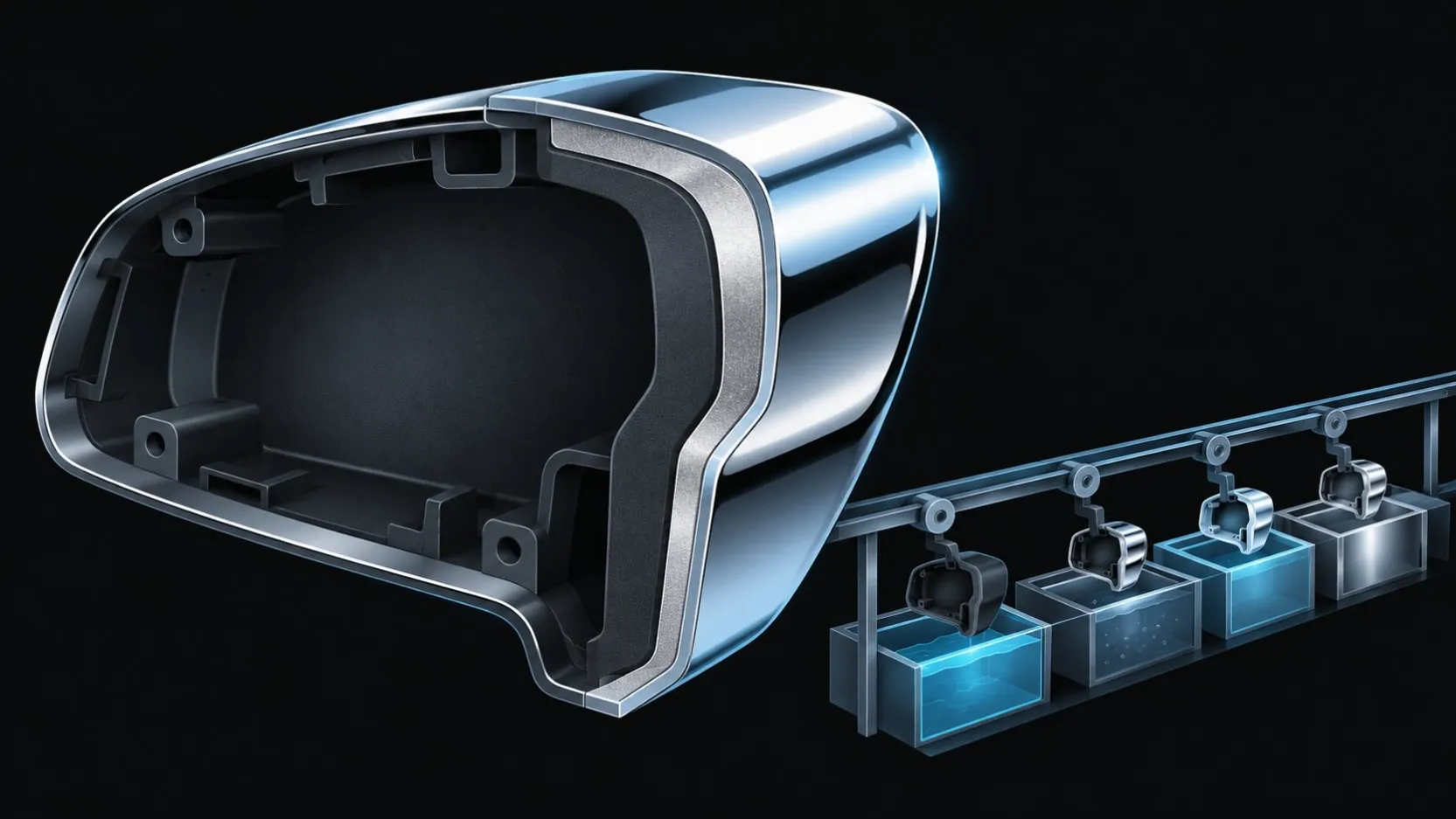
Chrome Plating on Plastic: How It Works
Plastic can be chrome-plated — after etching, activation and autocatalytic nickel. See the full process chain and the line equipment behind decorative plastic plating.
Plastic can be chrome-plated — after etching, activation and autocatalytic nickel. See the full process chain and the line equipment behind decorative plastic plating.
Three electrochemical surface treatments, three different results. See what plating, anodizing and electropolishing each change on a part — and how to choose.
Paint, plating, anodizing, passivation, PVD and more — see the main surface treatment families, what each costs to run, and how to choose between them.
Metal finishing covers cleaning, plating, conversion and verification. See how the pieces fit, what each does, and how a line turns them into output.
Steel is the most plated substrate. See the main coating types — zinc, nickel, tin, copper and chrome — and when each one earns its place on a line.
Coating thickness decides corrosion life and cost. See how XRF and eddy current testing work, when each method fits, and how to set up QC on a plating line.
Electroplating is the electrochemical deposition of a metal coating on a part. Learn how it works, the common plating types, and what a plating line includes.