Plating Process
Watts or Sulfamate Nickel for an Engineering Deposit?
Compare Watts and sulfamate nickel systems with the required deposit condition and part geometry. Define a controlled trial and the equipment evidence.
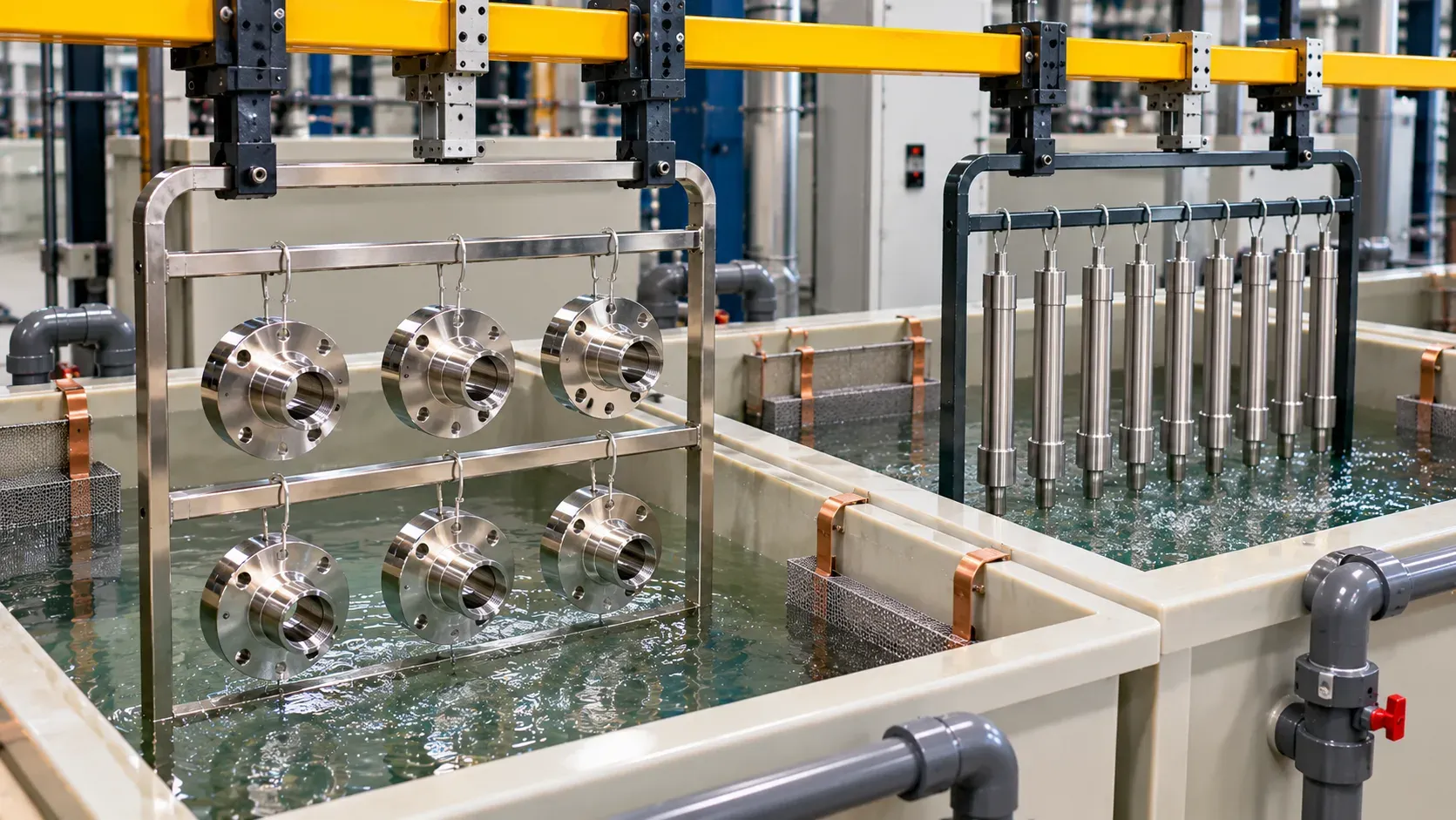
Choose a Watts or sulfamate nickel system from the required deposit properties, geometry and approved process evidence. Identify the actual chemistry system and final condition before comparing trials. Verify thickness distribution and relevant deposit tests, then specify the line services and controls needed to reproduce the accepted load and sequence.
These are nickel electrolyte families with system-specific operating conditions. Deposit behavior also depends on the actual formulation, additives and operation. A family name or an isolated property value is an incomplete basis for an engineering coating or electroforming decision.
Define the engineering requirement
State whether the nickel is a functional coating, an underlayer or a formed deposit. Record the substrate and preparation, required final dimensions and the properties that the drawing controls. Where stress, ductility or another deposit characteristic matters, name the test and the final condition it represents.
The Nickel Institute handbook describes nickel deposition and electrolyte families. Use the process supplier's approved data for the selected system and confirm it with the relevant qualification.
Trial input | What to establish | Why it affects equipment |
|---|---|---|
Deposit duty | Coating, underlayer or formed component | Part handling and final process boundary |
Required properties | Method, specimen and approved limits | Sample fixtures, records and test responsibility |
Geometry and load | Critical locations and occupied arrangement | Electrical duty and usable load |
Chemistry system | Identity and operating/maintenance needs | Filtration, circulation, thermal and analytical interfaces |
Compare at the required final condition
Record any treatment or finishing that occurs after deposition and before acceptance. A property measured on a separately prepared sample should be linked to the actual process state it represents. If the test uses a special specimen, agree its position, preparation and relationship to production.
Keep the area and current basis readable. Different load geometry or an unrecorded change in the program can affect the interpretation of a comparison. Ask the process owner to define the permissible conditions for each candidate system.
Worked example with an engineering nickel sleeve
Suppose a buyer needs a nickel deposit on a sleeve with dimensional and deposit-property requirements. Two candidate systems produce visually acceptable samples. The team defines the actual thickness map, approved property tests and final finishing state.
Use representative parts and any approved test specimens. Compare the same required outcomes, preserving the chemistry identity, operating records and specimen position. If one result fails, distinguish an unresolved process setting or specimen issue from evidence that the candidate cannot meet the requirement.
If an accepted candidate requires a different working load or additional monitoring, carry those duties into the equipment comparison. A larger nominal deposition rate has limited value when it depends on a load or property state that the buyer has not approved.
Specify the recurring production duties
Ask the chemistry supplier to define the required analysis, replenishment and service tasks for the proposed system. Record how the equipment supports them and what the buyer must provide. Include the inspection and maintenance access needed under the agreed process.
Use the electroforming guide when the deposit becomes a formed component. Use the rectifier guide for the electrical basis and the thickness testing guide to identify measurement locations.
Record deposit purpose · selected system · substrate and preparation · final condition · load and program · property specimen · thickness map · process services · release evidence and owner.
Name the person responsible for each unresolved property or equipment assumption. Require the supporting trial or supplier clarification to identify the same chemistry and part configuration as the quotation.
Use a production-representative property sample
Ask which specimen demonstrates the required deposit property and how its process history matches the component. Record its preparation, location and any finishing or treatment before testing. A special laboratory specimen may have a valid role, provided that the quality authority has defined what it represents.
Where repeated loads matter, retain the results by run and actual operating state. A summary average can conceal a failing specimen or a shift in the process. Review the individual acceptance results and any deviations before declaring the configuration qualified.
For procurement, identify what the equipment must record during those runs. The quote may need sample positions, event history or access for the required measurements. Specify the actual evidence and responsibility rather than asking generically for a “quality control system.” That makes the equipment acceptance demonstration easier to define.
Procurement checklist
- The purpose of the nickel deposit, finished dimensions and required property test methods.
- The named chemistry, approved program and representative load used to demonstrate each property.
- The rectifier, filtration, temperature-control and laboratory duties included in the equipment quotation.
FAQ
Is every sulfamate nickel deposit low stress under any conditions?
Use system-specific data and the actual deposit test. Record formulation, operating basis and final condition with the result.
Can a visually good sample qualify an engineering deposit?
Verify the dimensional and property requirements named by the drawing and acceptance plan.
Can the existing Watts line be reused?
Review compatibility, electrical duty, services and the required production controls with the process and equipment suppliers.
Discuss an engineering nickel process
Share the deposit purpose and acceptance requirements. Include the part geometry, candidate systems and final condition. Send records by sales email, or discuss the project on WhatsApp.