A plating rectifier should be selected against the process operating requirements, the factory services and the line controls—the intended operating range. An RFQ that states these conditions gives suppliers a common basis for quoting and gives your team a basis for checking the equipment before acceptance.
Use the checklist below for a new line or a replacement power supply. The process owner must confirm the operating values; this guide does not prescribe a chemistry recipe or an electrical installation design.
What does the rectifier need to do on your line?
Start with the work rather than a model number. State the process, substrate, rack or barrel handling method, batch size and required coating result. For a replacement, include the existing unit's nameplate and the reason for changing it: insufficient capacity, difficult control, cooling problems, unreliable operation or a different production requirement.
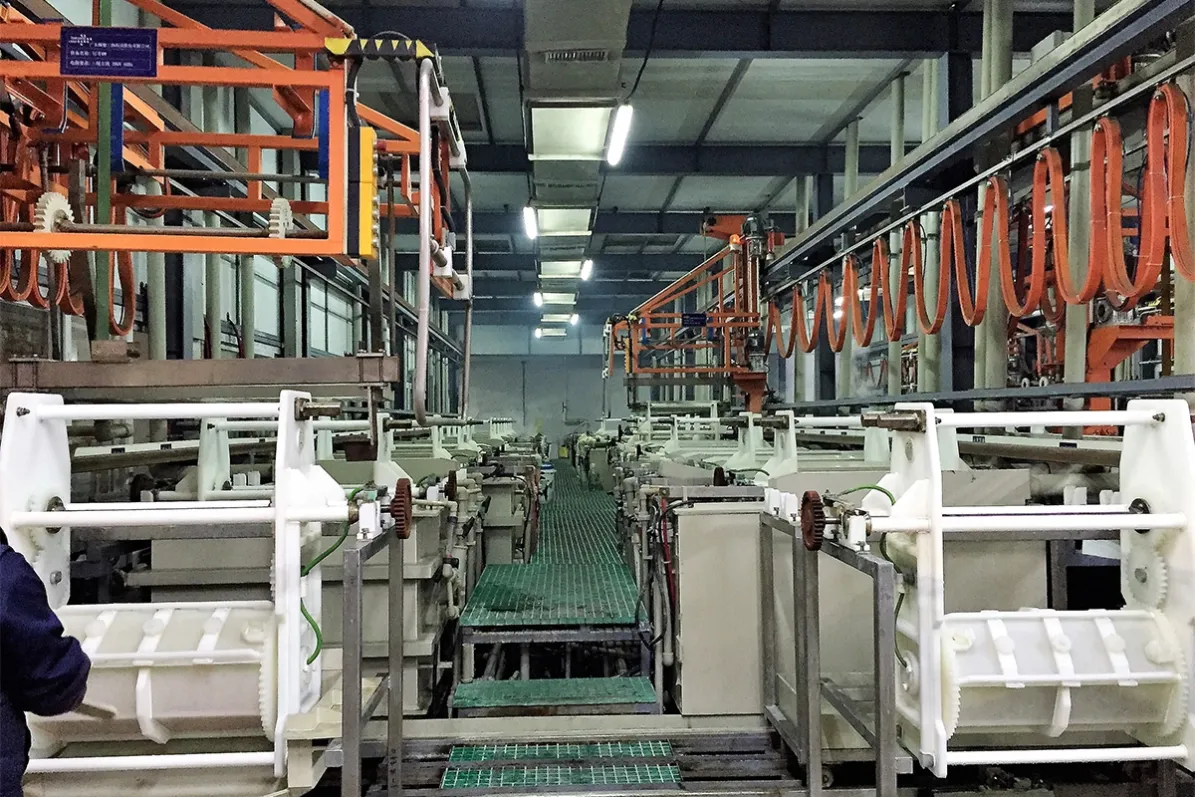
If the project involves a complete line, identify which process tanks need power and whether their loads run independently. The rectifier, handling equipment and control system have to fit the same production plan. Our electroplating equipment checklist places the power supply alongside the other systems that need to be specified.
Which output information belongs in the RFQ?
Give the supplier the required current and voltage operating ranges, the usual working point and the planned duty. Include the largest and smallest intended loads. Ask for the output rating under the cooling and ambient conditions stated in the offer.
Do not choose operating current from the part count alone. Supply the exposed area of a loaded rack or batch, if available, and the process owner's approved current requirement. Where the area or operating window is uncertain, mark it for engineering review instead of filling the gap with an assumed value.
For a replacement, also provide the existing output connections, approximate conductor route and available cabinet space. Have the responsible electrical engineer confirm the installation design and site supply.
How should ripple and control be compared?
A ripple percentage needs its test conditions. Ask whether it describes current or voltage, how it is defined, and where in the operating range it is measured. An average panel reading does not provide that information.
The Nickel Institute Nickel Plating Handbook provides technical context for relating current density to the process load. For the equipment offer, request the required current and voltage ranges and measurement conditions. Do not assume that a full-output figure establishes performance at every lower-load operating point.
Specify how operators will run the unit: local settings, a remote controller or the line PLC. Identify the required control mode, setpoint commands, feedback signals and fault reporting. If the line recipe needs ramping or timed output changes, describe that sequence and request confirmation of support.
Do you need DC, pulse or pulse-reverse operation?
Let the validated process requirement decide. State the required waveform and operating sequence if the process owner has already approved them. If you are investigating pulse operation, request a process assessment and a test plan before treating it as a production requirement.
A proposed pulse or reverse-pulse function needs its own approved operating sequence and acceptance plan. Ask suppliers to distinguish a confirmed standard function from an option or a separately engineered requirement. Record the required waveform with the process owner's specification before treating it as an equipment commitment.
What does the factory need to provide?
Record the actual mains voltage, phase and frequency at the installation site. Also describe ambient temperature, dust or corrosive mist exposure, ventilation, cabinet location and maintenance access. Country alone is not a sufficient electrical specification.
For an air-cooled proposal, ask about the permitted environment and clearances. For a water-cooled proposal, request the water quality, flow, temperature and pressure requirements, and identify who supplies the cooling circuit. Confirm the cooling service conditions for the unit being quoted and identify who provides the circuit, monitoring and maintenance. Do not apply an unrelated manufacturer's limits to the project.
A checklist you can send with your enquiry
| Information | What to provide or request |
|---|---|
| Process and load | Process, substrate, rack/barrel method, batch information and approved operating requirements |
| DC output | Working current/voltage range, usual working point, duty and number of independently powered tanks |
| Waveform | DC or validated pulse sequence; clearly identify unresolved process questions |
| Output quality | Ripple definition, measurement method and test points relevant to the intended use |
| Factory services | Actual AC supply, ambient conditions, cabinet position and cooling services |
| Controls | Local/remote operation, PLC interface, commands, feedback, alarms and agreed interlocks |
| Connections | Existing connection details for replacement work; drawings to be reviewed by the electrical engineer |
| Supply boundary | Rectifier, cooling equipment, conductors, installation, integration and commissioning—identify inclusions |
| Acceptance and service | Agreed tests, records, documentation, spares and support responsibilities |
This table is a project brief. Final values and acceptance criteria should be agreed with the process owner, equipment supplier and responsible electrical engineer.
What should you check before accepting the offer?
Compare quotations against the same scope. Identify which output, cooling and control functions are standard, which are options and which require separate equipment. Request an explicit list of exclusions so integration work is not left between suppliers.
Agree on test conditions before manufacture or commissioning. The acceptance plan can cover the agreed output range, output-quality measurement, control commands, alarm feedback, cooling conditions and required documentation. Ask who performs each check and which record will be supplied. Set the pass limits from the approved specification; a general checklist cannot set those limits for your process.
For a line project, keep the power-supply brief with the handling and automation requirements. You can also review the current ES-PRO equipment range to describe the wider project.
Send your rectifier or plating-line project brief with the process, operating requirements and site services. Include unresolved questions so the supply scope and interfaces can be reviewed before a model is proposed.
Questions You May Have:
Is maximum current enough to compare two rectifiers?
No. Compare the operating envelope, duty, output-quality test conditions, cooling and required controls for the same process load.
Can I start a replacement enquiry without an electrical drawing?
Provide the nameplate, photographs, operating requirement and known site supply. Ask which survey and connection information are needed before the installation scope is confirmed.
Does a line quotation automatically include conductors and cooling?
Only if the supply boundary says so. Identify who provides the power connections, cooling circuit, installation and control integration.
Who should decide the process current?
The process owner should approve the operating requirement using the actual load and process. The equipment offer needs that requirement and its acceptance conditions.
Official technical context
The European Commission JRC reference provides EU technical background on surface-treatment installations. It is not a certification of a rectifier or a substitute for the project's electrical design.
Have an existing nameplate, connection drawing or cooling diagram? Send it to sales@electroplating-equipment.com. Files are optional for the initial equipment discussion.