A QQ-N-290 drawing does not automatically become an ASTM B689 or another AMS job. First record the original invoked edition and classification. If a replacement is proposed, compare the technical and inspection requirements item by item and obtain the responsible authority's approval before changing the process or quotation.
Scope and limits: legacy nickel specifications
- Autocatalytic (electroless) nickel callouts: different specifications, different process; do not substitute B689 for B733/AMS 2404 or the reverse.
- Nickel-chromium decorative systems: where chromium is part of the stack, the system specification governs the full coating.
- Assuming "nickel" is one product: Distinguish deposition method, required properties and type; assess bath selection against invoked requirements and the qualified process.
What happened to QQ-N-290?
DLA cancelled the federal QQ-N-290A on May 3, 2001, and directed future acquisition to SAE AMS-QQ-N-290. SAE lists AMS-QQ-N-290D as Stabilized, dated October 12, 2021. For an existing drawing, confirm the edition already invoked and whether it still applies. If the project proposes a different specification, document the technical comparison and obtain the responsible authority's approval.
The historical federal QQ-N-290A identifies Class 1 as corrosion-protective plating and Class 2 as engineering plating. Federal A section1.2 links Class 1 grades A through G to thickness. Read the class or type in the edition invoked by the drawing. If an SAE edition or ASTM B689 is proposed, compare the deposit, thickness, inspection and any hydrogen-control requirements before accepting the change.
Where does ASTM B689 fit?
ASTM B689 covers electroplated engineering nickel. The public ASTM summary describes several deposit types and includes inspection and adhesion requirements. On a purchase drawing, agree which type applies, the required thickness, and where and how it will be verified.
The ASTM public abstract distinguishes the following deposit types. Match the invoked type to the proposed deposit and ask what evidence supports that match.
| B689 type | Public-summary distinction | RFQ question |
|---|---|---|
| Type 1 | Deposit from a solution without hardeners, brighteners or stress-control additives. | What bath and additive declaration supports the proposed Type 1 route? |
| Type 2 | Deposit containing codeposited constituents that modify hardness, grain structure or internal stress, for moderate-temperature use. | Which required properties and service conditions must the proposed deposit meet? |
| Type 3 | Composite deposit containing dispersed submicron particles to improve wear resistance and hardness. | How will the proposed particle handling, solution services and verification support the required composite deposit? |
These questions define what to compare in an offer. The type label does not establish a qualified process, a coating thickness or a completed acceptance result.
Our thickness testing guide covers the measurement discipline that both B689 and the AMS documents assume. The AMS family sits alongside: AMS 2403 covers general-purpose electrodeposited nickel, and AMS 2424 covers low-stressed electrodeposited nickel. These are related but distinct documents — none substitutes for another automatically, and none substitutes for the invoked drawing.
Which specification should the drawing invoke?
| Requirement or document | Scope and status | What to transcribe | Purchase decision |
|---|---|---|---|
| Federal QQ-N-290A Class 1 | Historical corrosion-protective nickel; federal document cancelled in 2001. | Invoked edition, class, applicable grade, any form/finish, underplate, coverage and thickness information. | Preserve the complete original callout while assessing any proposed change. |
| Federal QQ-N-290A Class 2 | Historical engineering nickel in the federal classification. | Invoked edition, drawing thickness and dimensions, preparation, hydrogen controls and acceptance requirements. | Class 2 alone does not specify a low-stress deposit. |
| SAE AMS-QQ-N-290D | Nickel Plating (Electrodeposited), Stabilized, October 12, 2021. DLA's cancellation notice directed future acquisition to the SAE document. | The particular SAE edition and its own applicable classification and requirements. | Confirm its applicability to the drawing; the catalogue is not a clause-by-clause equivalence statement. |
| ASTM B689-97(2023) | Active specification for electroplated engineering nickel. | Invoked type, thickness and locations, inspection and adhesion requirements. | Compare the type boundary and acceptance work with the actual proposed route. |
| SAE AMS 2403R | General-purpose nickel plating; SAE lists revision R. | Invoked revision and its coating, process and inspection requirements. | Assign the required duties in the offer. |
| SAE AMS 2424G | Low-stressed nickel deposit; SAE lists revision G. | Invoked revision, required deposit properties and verification duties. | Check those requirements explicitly when considering a low-stressed route. |
For an autocatalytic deposit, use the applicable electroless specification rather than this electroplated-nickel comparison. Our AMS 2404 guide explains that separate system.
What does the nickel callout change in the equipment?
The specified deposit properties and part area define bath and rectifier duties; rack contacts and anode layout affect thickness distribution. A stress or hardness requirement may add control and verification tasks that a thickness-only offer omits. Record the invoked tests, specimen arrangement and any hydrogen-control handoff before deciding which instruments, ovens or external services belong in supply.
A worked RFQ comparison for the same nickel-plated part
Fictional RFQ N-01. A buyer needs low-carbon-steel sleeves and the proposed drawing callout is ASTM B689 Type 1. The following partially completed comparison exposes open items before equipment is ordered. It is an invented purchasing example with no standard limits, real customer or production results.
| Item in RFQ N-01 | Offer A records | Offer B records | Decision and owner |
|---|---|---|---|
| Deposit type | A brightened nickel bath is offered. | A non-brightened route is offered, with its additive declaration still to review. | The process engineer identifies a conflict between A's brightener and the public Type 1 boundary. A needs a revised offer or an authorized callout change. B still needs evidence review. |
| Thickness and measurement | One nominal coating value; measurement locations unspecified. | Drawing thickness and locations A/B requested; values remain open. | The design engineer completes the thickness and location requirements. The equipment supplier then checks racking, current demand and deposition duty against them. |
| Preparation and hydrogen controls | Standard preparation; no separate oven duty assigned. | Material condition and the invoked control requirements requested before assigning oven or outside-service duty. | The design/process authority supplies the material-condition and control requirements. The supplier identifies the equipment or retained service carrying each required duty. |
| Acceptance and records | General thickness check included. | Method, sampling, adhesion checks and load-linked records requested from the inspection plan. | The quality lead completes the inspection plan and assigns instrument, specimen and record ownership. The supplier lists any excluded laboratory work. |
| Capacity | Monthly demand quoted without a rack/load basis. | Representative parts per load, area, operating calendar and cycle assumptions requested. | The buyer and supplier complete the load schedule before accepting a capacity figure. |
The first row can change the proposed chemistry. The next rows can change rack/contact design, rectifier duty, verification equipment, retained services and the supply boundary. Neither offer is qualified by this comparison. Each open item has a named decision owner so it can be closed before ordering.
Legacy nickel callout change-control sheet
Use this as a blank project worksheet. Enter actual requirements and observations; the blanks are not process limits or completed production results.
- Original requirement
- Record for this projectDrawing and revision, invoked specification/edition, class or type, legacy grade where applicable, specified form/finish and underplate, significant and excluded surfaces: ____
- How this changes the decisionKeeps the quoted requirement tied to the drawing and defines the faces that the rack must expose or protect.
- Substrate and condition
- Record for this projectAlloy, material condition, strength or heat-treatment reference and required hydrogen controls: ____
- How this changes the decisionChanges preparation and handling boundaries. Assign any required oven duty or external service from the invoked requirements.
- Deposit and controls
- Record for this projectInvoked deposit type, thickness, stress/hardness or other properties, method and acceptance source: ____
- How this changes the decisionConnects bath control, monitoring and verification duties to specified properties rather than to the word nickel.
- Part and rack
- Record for this projectPart drawing, plated area, rack contacts, representative parts per load, orientations and masking: ____
- How this changes the decisionProvides inputs for current demand, current distribution and rack capacity. Confirm the approved current-density window before sizing the rectifier.
- Thickness and dimensions
- Record for this projectTarget and tolerance, local measurement points, permitted buildup and final dimensions, any post-plate machining: ____
- How this changes the decisionChanges trial measurement fixtures and deposition duty. Assign machining and final measurement separately from tank-line supply.
- Acceptance evidence
- Record for this projectRequired thickness, adhesion or other tests, specimen/sampling rules, method, limits and record owner: ____
- How this changes the decisionDefines instrument or outside-laboratory duties and the records needed to connect each result to the load.
- Accepted output
- Record for this projectAccepted parts or area per load, approved cycle assumptions, load mix, operating calendar and demand: ____
- How this changes the decisionSupports capacity comparison including loading, transfers and rechecks. Monthly demand alone does not establish tank or rectifier size.
- Proposed change and approval
- Record for this projectCandidate replacement document/edition, item-by-item gaps, decision owner, approval, affected parts/lots and effective point: ____
- How this changes the decisionControls a substitution and its equipment changes before production; an unsigned cross-reference cannot release the change.
Copy this project worksheet
Select the text in the read-only field and copy it into your RFQ document or project notes. Complete the requirements, owner and status for each item.
Questions You May Have:
Our drawing says QQ-N-290 Class 2. Is it still valid?
In the historical federal QQ-N-290A, Class 2 identifies engineering nickel. Confirm the edition and requirements invoked by your drawing with the responsible authority. If the project proposes AMS-QQ-N-290D, AMS 2424 or another document, compare the requirements and obtain approval before quoting on that basis.
Is ASTM B689 enough without an AMS callout?
It is sufficient only where the drawing and contract invoke B689 and all applicable requirements are satisfied. Industry labels do not determine which specification governs.
Does the class change the equipment?
Class 2 identifies engineering nickel in federal QQ-N-290A. Confirm the actual stress, hardness, thickness and inspection requirements before selecting the bath and controls; the class label alone does not establish a low-stress requirement.
Who decides thickness locations?
The drawing and the invoked specification together. Significant surfaces and measurement locations should be agreed before the trial, not after the first rejected load.
The equipment buyer guide records the handling and supply boundary. Keep those equipment inputs separate from the written decision accepting an invoked nickel specification or substitution.
Get Proposal and Demo
Introduce your nickel plating project with company, name, email and project country. Technical fields are optional. Provide the callout, substrate and part families when available, and ask which line scope and acceptance demonstration apply.
Specifications can follow by sales email, or chat on WhatsApp.
Official references
- ASTM B689-97(2023) — Electroplated Engineering Nickel (ASTM catalogue).
- SAE AMS-QQ-N-290D — Nickel Plating, Electrodeposited — Stabilized status, 2021-10-12 per the SAE record.
- DLA ASSIST: Federal QQ-N-290A cancellation and document history.
- SAE AMS 2403R: General-purpose nickel plating.
- SAE AMS 2424G: Low-stressed nickel deposit.
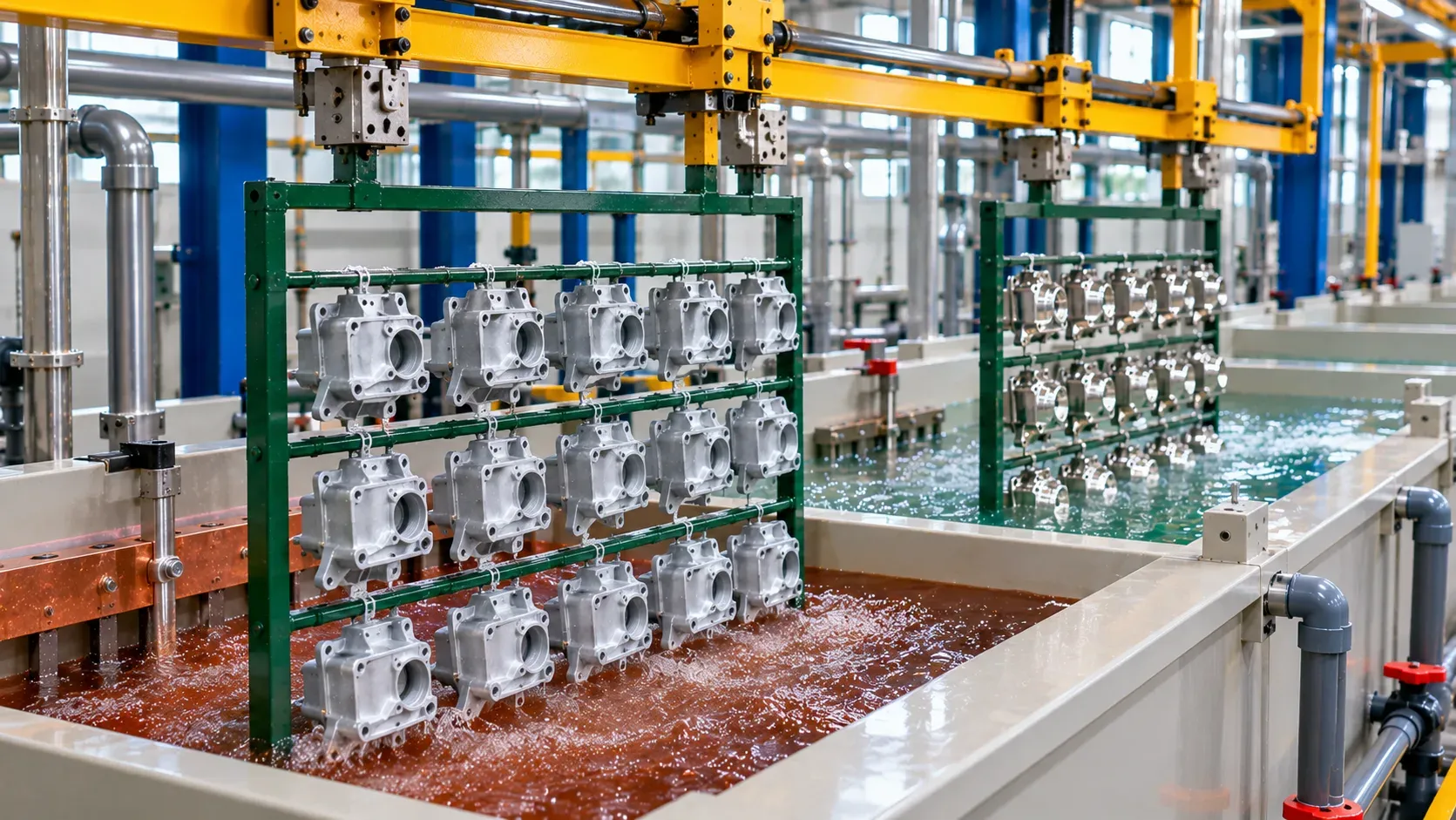
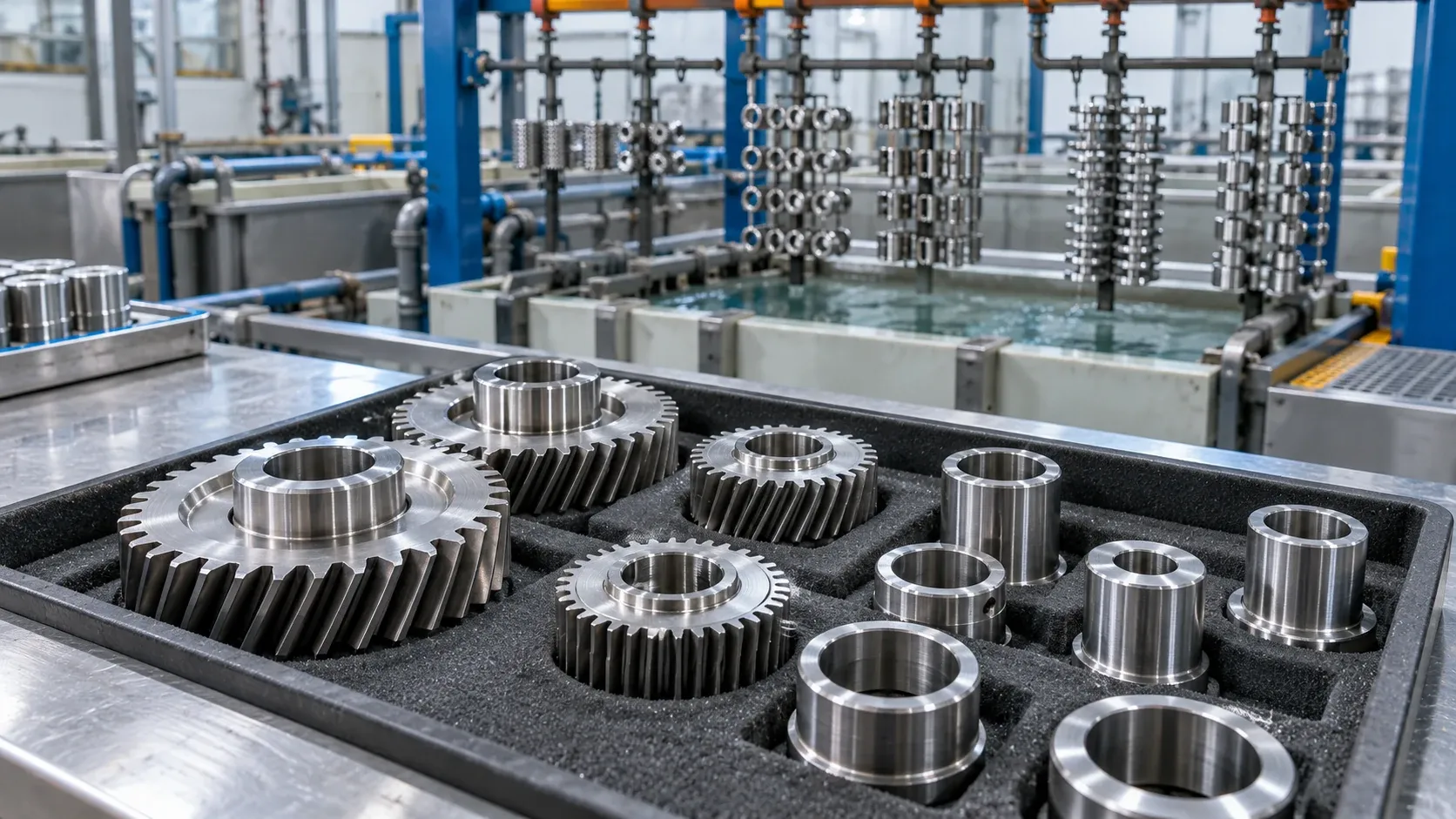
Image note: AI-generated editorial imagery illustrates equipment or workpiece contexts; it is not an ES-PRO installation, customer reference or evidence of coating conformity.