Applications
Plating Zinc Die Castings: A Production Line Brief
Plating zinc die castings requires an equipment brief based on the actual alloy, casting condition, approved surface preparation and required coating stack. Define significant surfaces and contacts.
Plating zinc die castings requires an equipment brief based on the actual alloy, casting condition, approved surface preparation and required coating stack. Define significant surfaces, contact restrictions and finished-part acceptance before selecting handling or tank duties. A generic decorative-plating sequence cannot establish that an incoming casting is suitable for the required finish.
Casting conditionMarked finish areasTrial & acceptance
Original editorial enquiry framework. Conceptual inputs, not an engineered layout or measured result.
This guide is for buyers planning production equipment for zinc-alloy components. The first decision is what arrives at the line and what the customer will accept after coating. Equipment selection follows the approved process and that acceptance boundary. For handling concepts, see our electroplating machine guide.
What should the incoming zinc die-casting specification identify?
Identify the alloy and the supplier's material designation. Record manufacturing and finishing operations already performed, along with known lubricants or residues relevant to preparation. Provide representative parts from normal production and identify variation that the process owner needs to assess.
Mark visible surfaces, recessed areas, sealing or fit surfaces, and permissible contact locations on the drawing. Define how incoming surface conditions are accepted or segregated before plating. If the production team already tracks recurring surface defects, provide those records separately from the desired appearance after coating.
The official ASTM B252-26 record addresses preparation of zinc-alloy die castings for electroplating and conversion coatings. Its scope has specified alloy and finish context. It should not be treated as a universal recipe for every zinc casting; the process owner approves the applicable route and edition for the actual parts.
How should the finish on zinc die castings be specified?
List the required coating stack and the customer's designation or drawing notes. Identify thickness acceptance by significant area rather than supplying an unexplained single number. Record appearance requirements, agreed comparison samples where available, and any specified adhesion or performance checks.
Keep incoming-part acceptance and coating acceptance separate. The buyer should be able to identify a casting released for processing, a coated part meeting the requirement, and a part needing investigation. Ask the responsible parties to define those decisions before a supplier demonstration.
Requirement | Information to supply | Question to resolve before quotation |
|---|---|---|
Material | Alloy designation and manufacturing condition | Which preparation route has been approved for it? |
Incoming surface | Representative production samples and acceptance limits | Which conditions require segregation or process review? |
Significant areas | Marked drawing and visible/functional surfaces | Where are thickness, appearance and contact restrictions assessed? |
Coating stack | Agreed designation, layers and applicable edition | Which stages and services are part of the equipment duty? |
Handling | Part geometry, weight and permissible contact locations | Which fixture or bulk-loading trial is needed? |
Release | Inspection methods and acceptance owner | Which evidence establishes an accepted production part? |
The table is an original project worksheet. It does not establish casting quality, a treatment recipe or a measured result from an ES-PRO installation.
Which zinc die-casting handling details affect plating equipment?
Compare the proposed loading arrangement against the marked surfaces and the part's geometry. Individual support and bulk tumbling have different assessment questions. For a bulk load, ask how the trial addresses damage, nesting and drainage. For individual positioning, ask how the proposed fixture respects contact restrictions and reaches the agreed production load.
Provide the product mix as well as the largest part. A line serving several castings needs an explanation of fixture changes, load identification and the operating assumptions used for each family. A successful trial with one simple geometry should be recorded as evidence for that geometry, not automatic acceptance of the entire range.
Use the existing barrel versus rack guide for the initial format discussion. This project's next step is a part-specific loading and finish assessment, with clear criteria for the significant surfaces.
What should a zinc die-casting plating trial preserve and record?
Record the incoming condition and identify the actual sample lot. Agree the preparation route, loading and coating acceptance before processing. The trial record should connect the processed parts to those conditions and identify the inspections performed afterward.
Include the areas most likely to drive the purchase decision: visible faces, recesses, contact points and tolerance-critical features selected by the product authority. Ask which outcomes are demonstrated and which remain unresolved. If a condition needs further process development, keep that status visible in the equipment offer.
An approved appearance sample can help the discussion, but it needs an agreed comparison method and use conditions. Identify who owns that sample and whether it represents the full acceptance requirement or only appearance. Do not assume a finish judged on one surface establishes performance on the rest of the part.
How should a zinc die-casting plating proposal define its scope?
Ask for a stage-and-service schedule for the approved route. List handling, tanks, electrical output, heating or cooling where required, rinsing, extraction and associated water interfaces. Mark each duty as included, optional, retained or supplied by another party.
Separate accepted output from gross processed quantity. The capacity discussion should state the load, operating assumptions, product mix and inspection/release activities it includes. Describe known incoming variation rather than assuming every casting in a delivery will be released for the line.
For an upgrade, identify retained preparation equipment, fixtures and inspection arrangements. The quotation scope guide helps document those boundaries and compare the work required to reach the agreed acceptance condition.
Questions You May Have:
Does the term zinc die casting define a complete plating process?
No. The actual alloy, incoming surface, coating requirement and approved preparation route must be identified for the project.
Can a decorative finish requirement select the handling format?
It informs the assessment, but the part geometry, contact locations and representative loading trial are also needed to confirm the arrangement.
Is an appearance sample enough for production acceptance?
Only for the requirements and comparison method agreed by the product authority. Thickness, adhesion or other specified checks need their own acceptance definition.
Can the initial enquiry proceed without every technical input?
Yes. Introduce the casting family and intended finish. Drawings, samples and detailed requirements can be supplied as the assessment develops.
Get Proposal and Demo
Introduce your zinc-casting project with the known alloy, part family and finish objective. Company, name, email and project country are required; technical details are optional. Ask which representative-part demonstration and equipment configuration should be assessed.
Marked drawings and incoming-part records can follow by sales email, or chat on WhatsApp. Explore the gantry equipment family for coordinated batch-handling discussions.
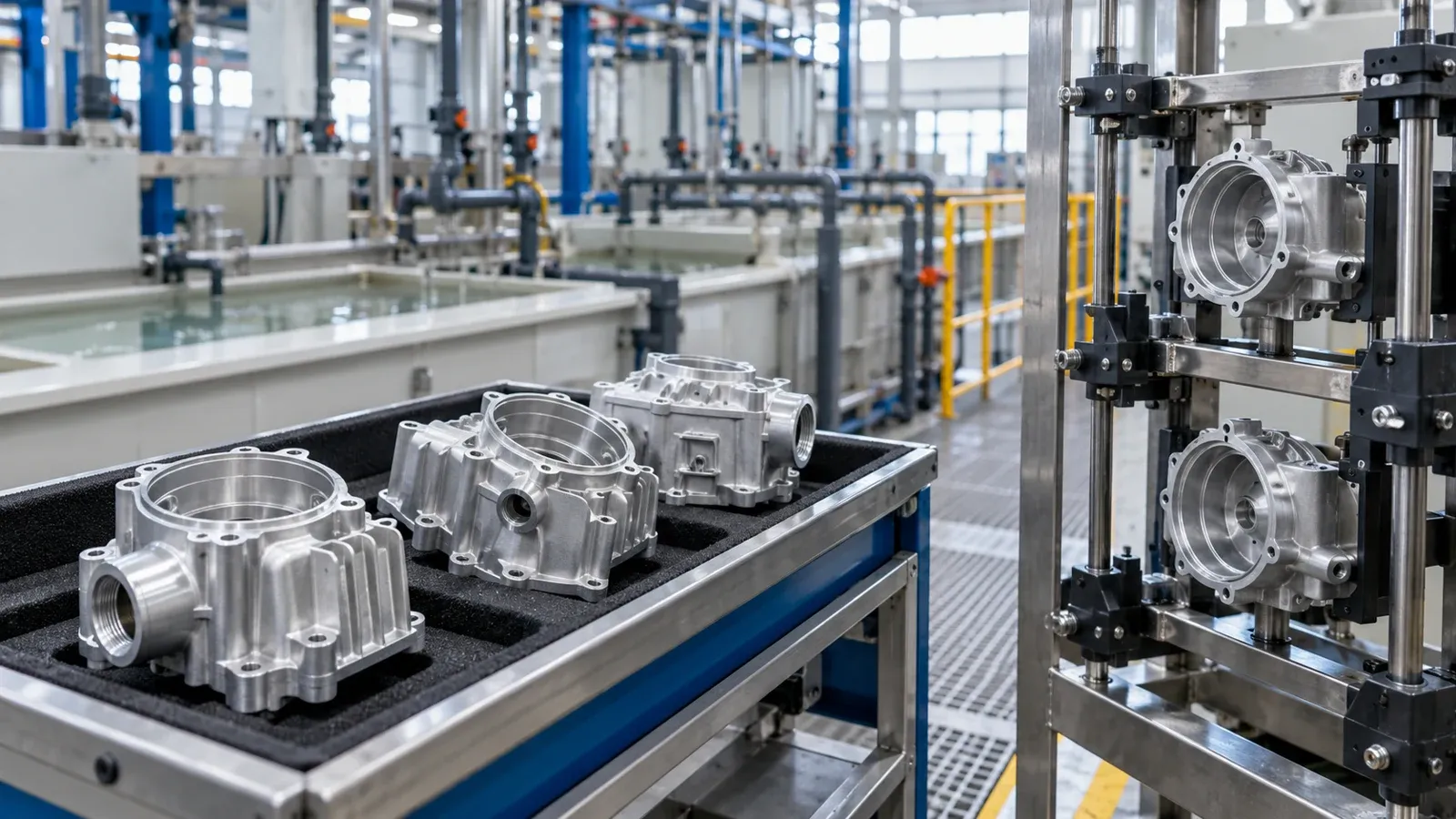
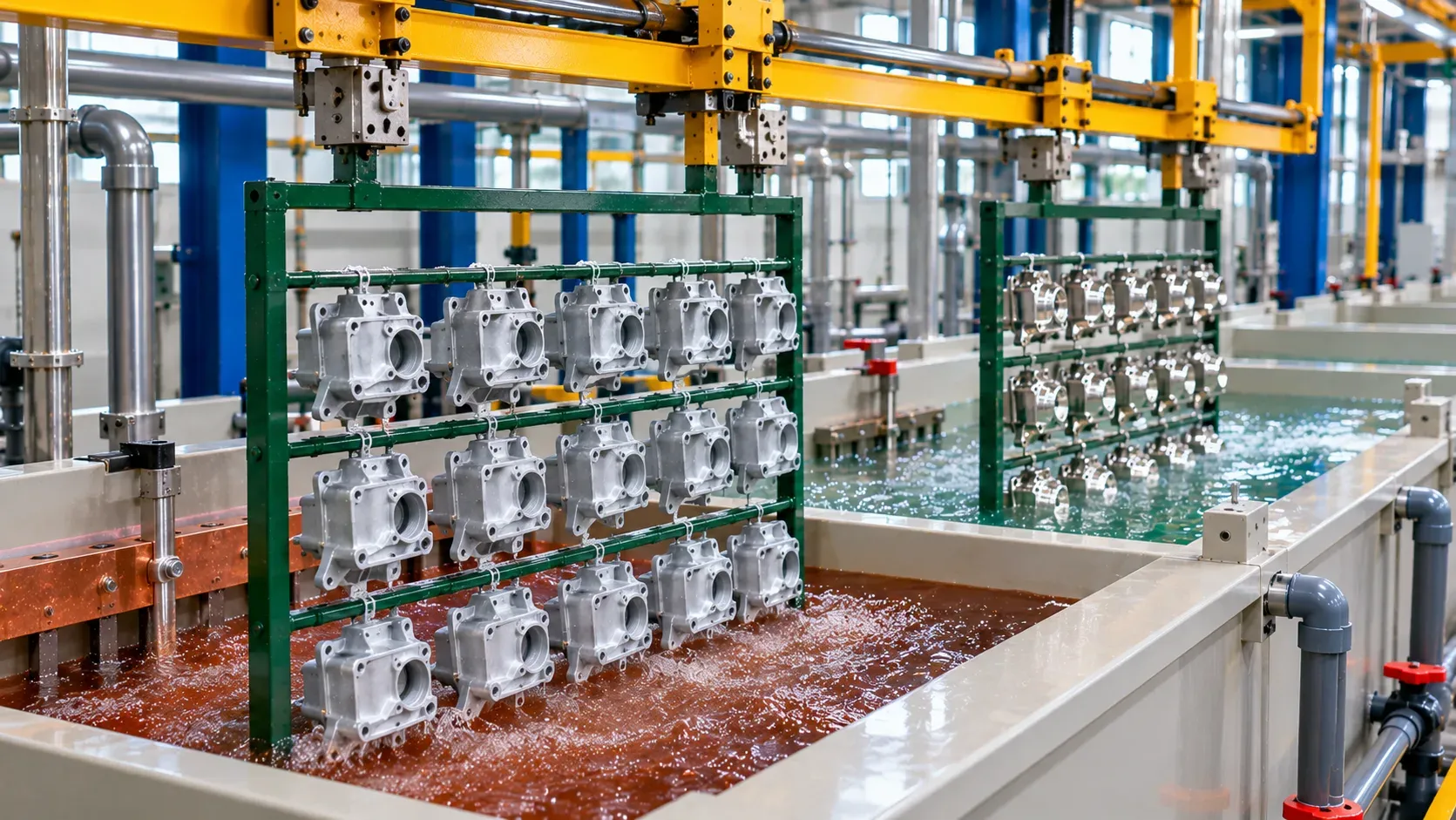
Image note: AI-generated cover illustration; not an ES-PRO installation, customer project or test result.