Applications
Silver or Tin Plating for Electrical Contact Parts?
Compare silver and tin contact finishes with the mating system, handling and service test defined. Build a coating trial and production equipment brief.
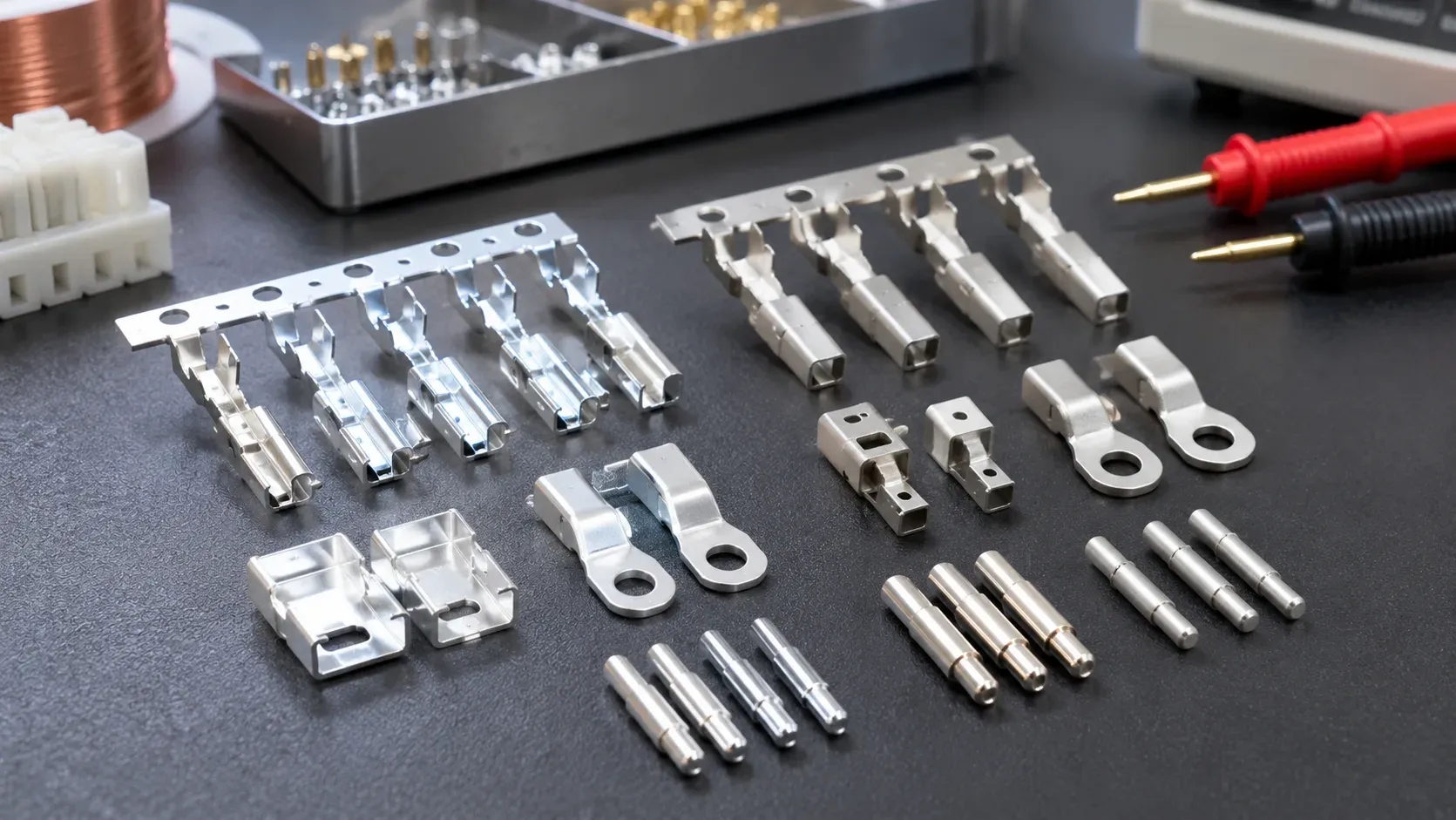
Choose silver or tin for an electrical contact using the complete mating system and the required service tests. Define the substrate, underlayers, contact geometry, force and operating environment. Compare representative finished assemblies, then qualify the coating and handling sequence that preserves the accepted electrical and mechanical performance.
A material's bulk conductivity alone does not describe the contact interface. The relevant evidence depends on the actual mating surfaces and their condition. A finish chosen for a terminal can require a different validation from one chosen for a bolted busbar joint.
Specify the contact system before naming the finish
Record whether the part is a sliding, separable, soldered or bolted connection. Identify the mating finish, intended assembly process and the tests the drawing requires. Agree what the specimen looks like at the start of each test and which handling or conditioning steps form part of the accepted sequence.
The ASTM B700 catalogue covers electrodeposited silver coatings for engineering use. The ASTM B545 catalogue covers electrodeposited tin coatings. Use the actual invoked specifications and customer acceptance plan to define the required coating systems.
Input | What to compare on the assembly | What the line must support |
|---|---|---|
Contact design and mating finish | Electrical result at the agreed assembly condition | Controlled coating and inspection locations |
Joining or repeated movement | Applicable mechanical and electrical checks | Qualified deposit and any required post-treatment |
Service and storage exposure | Approved conditioning and final performance | Handling and protection through delivery |
Production part family | Repeatable accepted output at representative load | Loading, selective coverage and measurement access |
Work through a terminal finish comparison
Suppose a buyer is selecting a coating for a copper terminal. Both candidate finishes can be deposited on the identified part through an approved route. The team defines the actual mating counterpart and tests complete connections after the agreed handling and service conditioning.
Keep specimen identity and the coating history with the electrical results. If a reading changes, first confirm the assembly, measurement method and contact condition before assigning the effect to the deposited metal. A changed mating force or a different counterpart can make two tests incomparable.
Include dimensional and assembly checks. A coating and underlayer change can affect the finished contact geometry even when the nominal part drawing remains the same. Have the design authority decide any change to the finish callout and the evidence required to release it.
Compare the complete manufacturing sequence
List preparation, underlayers, the selected metal deposition and any approved finishing or protection. Record how the part is held and where contact marks are permitted. If only one region requires the contact finish, establish the coverage boundary and the inspection method.
The tin application guide and silver application guide provide adjacent equipment context. The comparison needs the same accepted assembly and production basis for both routes.
Ask the supplier to report accepted pieces per representative load and the sustained production sequence. Record any extra inspection, masking or handling that the selected system needs. A material-price comparison by itself can miss a change in coverage area, qualified load or downstream assembly yield.
Copy a contact finish decision sheet
Record part revision · substrate and underlayers · mating counterpart · finish and specification · contact or joint condition · test method · service conditioning · electrical and mechanical results · handling state · approval owner.
Review an unloaded and packed sample alongside the final test specimen. Mark which surfaces may touch the tray and which need protection. The selective plating guide helps discuss local coverage when the buyer has a defined contact region.
Preserve the test assembly as carefully as the coating sample
Give the mating counterpart an identity and revision, and record whether it is new, conditioned or previously used. Keep the assembly setup and measurement points with the electrical test record. A repeated test should reproduce the state the project is trying to evaluate.
If specimens are handled between coating and testing, record the handling and storage condition. Examine whether any visible damage or change at the functional region occurred before the assembly test. The investigation can then distinguish the coating as delivered from a condition introduced afterward.
Before approval, have the team reconstruct one accepted and one held sample from the report. They should be able to identify the finish, counterpart, assembly state and acceptance criterion for both. Resolve missing information before converting the preferred sample into a general production requirement.
Procurement checklist
- Both coating systems and their thickness maps, including the actual mating finish.
- A representative contact assembly with controlled contact force, service exposure and electrical acceptance.
- The selective tooling, recovery provisions and inspection scope assumed in each equipment offer.
FAQ
Is the metal with higher bulk conductivity always the better contact finish?
Evaluate the actual interface, mating system and required service evidence before selecting the finish.
Can I compare results from different contact forces?
Use the agreed assembly and measurement conditions. Record force or joint setup when it affects the specified test.
Should the packing condition be part of the qualification?
Include it when the accepted contact state depends on handling or protection before assembly.
Discuss electrical contact plating
Share the mating system and acceptance requirement. Include the substrate, coverage region and representative tests. Send drawings by sales email, or discuss the project on WhatsApp.