Plating Lines & Equipment
Phosphating Lines: Surface Conditioning and Project Inputs
Prepare a phosphating line brief using incoming condition, approved preparation and conditioning, coating requirements, loading, services and acceptance.
@media (max-width:600px) { .espro-guide { font-size: 17px; } .espro-guide .comparison-scroll { overflow: visible; } .espro-guide table, .espro-guide tbody, .espro-guide tr, .espro-guide td { display: block; width: auto; } .espro-guide thead { display: none; } .espro-guide tr { border-bottom: 2px solid #d7e3f4; } .espro-guide td { padding: 12px 15px; } .espro-guide td:before { content: attr(data-label); display: block; color: #2454a6; font-size: 12px; font-weight: 700; margin-bottom: 5px; } .espro-guide .brief-flow { display: block; } .espro-guide .brief-flow span { display: block; margin-bottom: 10px; } }
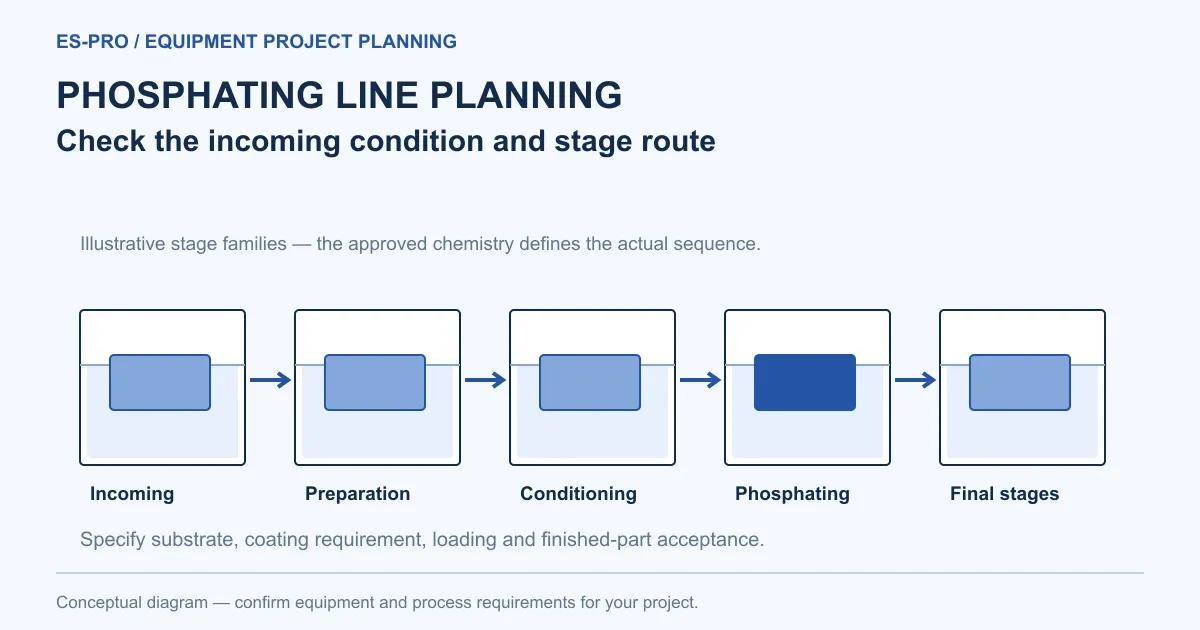
A phosphating line should be planned from the required final function, substrate and approved preparation and finishing route. Identify the phosphate coating requirement, incoming contamination, loading and acceptance checks before selecting tanks or handling. Surface conditioning, rinsing and subsequent treatment belong in the complete project brief wherever the process owner requires them.
Incoming partsApproved stage routeRelease the finish
Original editorial enquiry framework. Conceptual inputs, not an engineered layout or measured result.
What final finish or coating system should the phosphating line serve?
State what the part must achieve after the complete treatment sequence. Identify the substrate, alloy where relevant, and incoming surface condition. Provide the coating designation and the specification revision required by the customer. Include the next manufacturing operation so the assessor understands the condition in which the treated part leaves the line.
The official ISO9717:2024 catalogue identifies requirements for phosphate conversion coatings on specified metals and alloys. Use the applicable requirement agreed for the actual part. Phosphating is a conversion-coating project; the enquiry should not assume that equipment duties for electrodeposited zinc or nickel can be transferred unchanged.
Why record incoming surface condition before phosphating?
Describe the contamination and the operations performed before the proposed line. Include oil, scale or retained treatments where known, and identify variations among part families. State what information comes from observation and what has been tested. A single clean demonstration part may not represent the factory's normal incoming production.
Ask the process owner to define the approved preparation and surface-conditioning route. Record where conditioning is required and how its operation is controlled. The equipment assessor should quote that route, including service and inspection access, without inventing a universal cleaning or conditioning recipe. Any unresolved process choice should appear as a question for assessment.
How should the phosphating stage sequence be documented?
Create a stage-by-stage scope showing preparation, conditioning where specified, conversion coating, rinsing and required subsequent work. Identify retained and newly supplied equipment for each stage. Ask where the factory hands parts to the proposed system and where it accepts them back. Include temporary arrangements required during an upgrade.
Project boundary | Buyer record | Offer clarification |
|---|---|---|
Incoming parts | Material and normal contamination range | Preparation assumptions and required assessment |
Conditioning | Approved requirement and sequence | Included stage and control duties |
Conversion treatment | Coating designation and process-owner conditions | Tank, service and monitoring boundary |
Rinsing | Approved water requirement and connections | Included stages and factory supply assumptions |
Later treatment | Specified finishing or next operation | Equipment ownership and handoff condition |
Acceptance | Required inspection and release evidence | Trial sequence and responsible parties |
This original boundary worksheet organises a procurement enquiry. It is not a process formulation, engineered layout or claim of coating performance.
Which part-loading details affect a phosphating line proposal?
List part geometry, weight, orientation and the planned mix. Identify features that retain solution or complicate drainage. Show how the part is supported and where marks are restricted. Ask the assessor to explain how the complete route accommodates the largest load and the most restrictive part family.
Compare accepted output over the complete sequence. Include loading, preparation, transfers and unloading alongside treatment stages. Where operators perform a task, state the task and its assumed staffing in the production discussion. Our line setup checklist helps organise those factory inputs without substituting a generic cycle for the approved phosphating route.
Which phosphating bath-service and maintenance duties need definition?
Request an explanation of the proposed heating, movement, solution-service and monitoring functions where required by the selected process. Ask how routine inspection, cleaning and removal of process residues are accommodated. Identify the access, isolation and shutdown assumptions in the offer. Do not accept a service interval copied from an unrelated factory as a confirmed project requirement.
For retained equipment, provide available drawings and condition information. Identify the factory utilities and the boundary with other contractors. Ask which missing measurements or inspections are needed before a firm proposal. An upgrade plan should say which production functions remain available during installation and which require an approved shutdown.
How should phosphating water-supply and discharge interfaces be assessed?
List the water users, required quality points and available supply information. Identify the destination of rinse and service streams and the party responsible for their assessment. State the project country so local specialists can establish the applicable requirements. The equipment quotation should show its assumptions and any connections outside the supplied scope.
The EPA metal-finishing effluent guidance gives U.S. category context. It does not establish a universal discharge limit or confirm that an existing treatment plant can receive a changed stream. Keep the process route and the actual discharge arrangement available for the responsible assessment.
What should a phosphating production trial establish?
Use representative incoming parts and the agreed preparation sequence. Record material, contamination condition, loading and the relevant process data. Inspect the part in the final condition required by the contract or next manufacturing operation. Identify which records connect the demonstrated equipment operation to the acceptance decision.
For a mixed workload, state which families are represented and which still need assessment. If a later coating or manufacturing step is part of the acceptance requirement, include the responsible party in the plan. A visual result immediately after one tank does not establish performance of the complete agreed route.
Questions You May Have:
Is phosphating the same as zinc electroplating?
They are different treatment routes. Specify the required conversion coating and approved sequence, and use our surface-treatment overview for the wider distinction.
Is surface conditioning always a separate stage?
Use the approved process-owner route. The proposal should show where the required function occurs and what equipment or control is included, rather than assuming a stage from a generic diagram.
Can one incoming sample represent the whole factory mix?
Only if the agreed assessment establishes that it is representative. Provide the normal variation in material and contamination, and identify difficult part families separately.
Can an enquiry start without a full process schedule?
Yes. Share the part, final function and project location. Mark the missing route information so the assessment can identify the process-owner decisions needed before equipment selection.
Get Proposal and Demo
Introduce your phosphating project with company, name, email and project country. Other fields are optional. Provide the substrate, incoming condition, required final function and approved sequence when available. Ask which line interfaces and representative-part demonstration should be assessed.
Layouts and specifications can follow by sales email, or chat on WhatsApp. Use the quotation scope guide to compare included stages and retained factory duties.
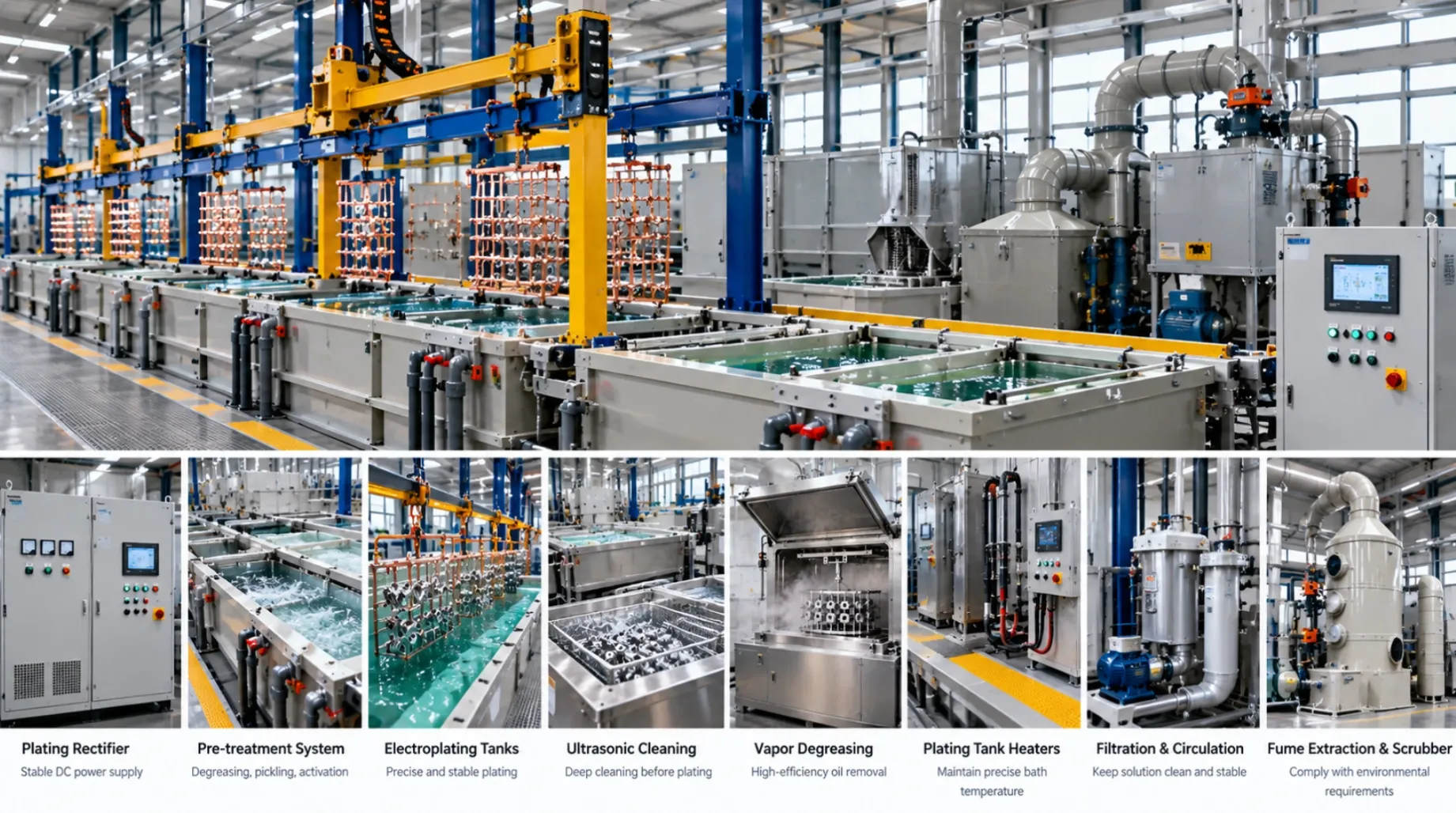
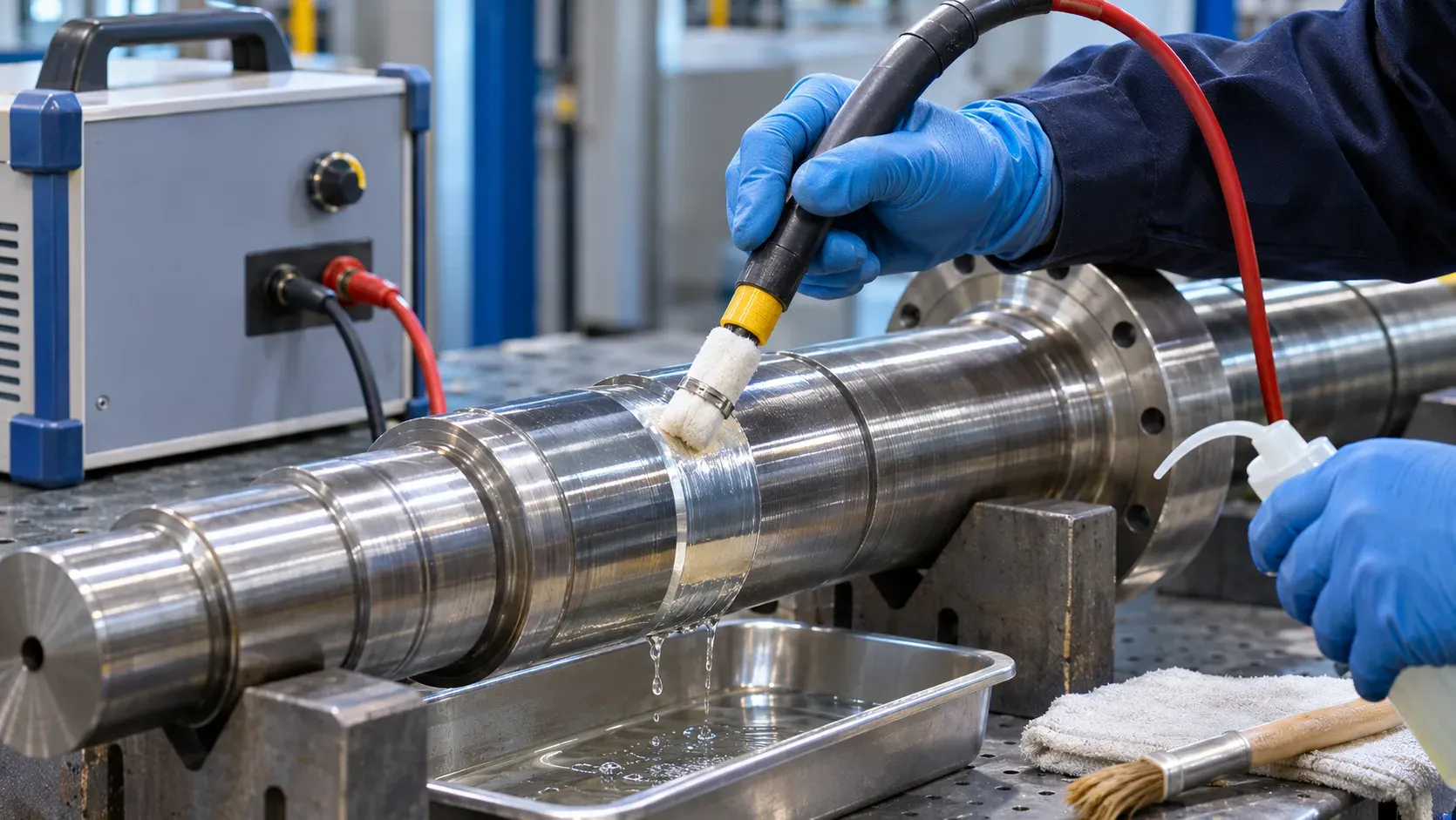
Image note: AI-generated cover illustration; not an ES-PRO installation, customer project or test result.