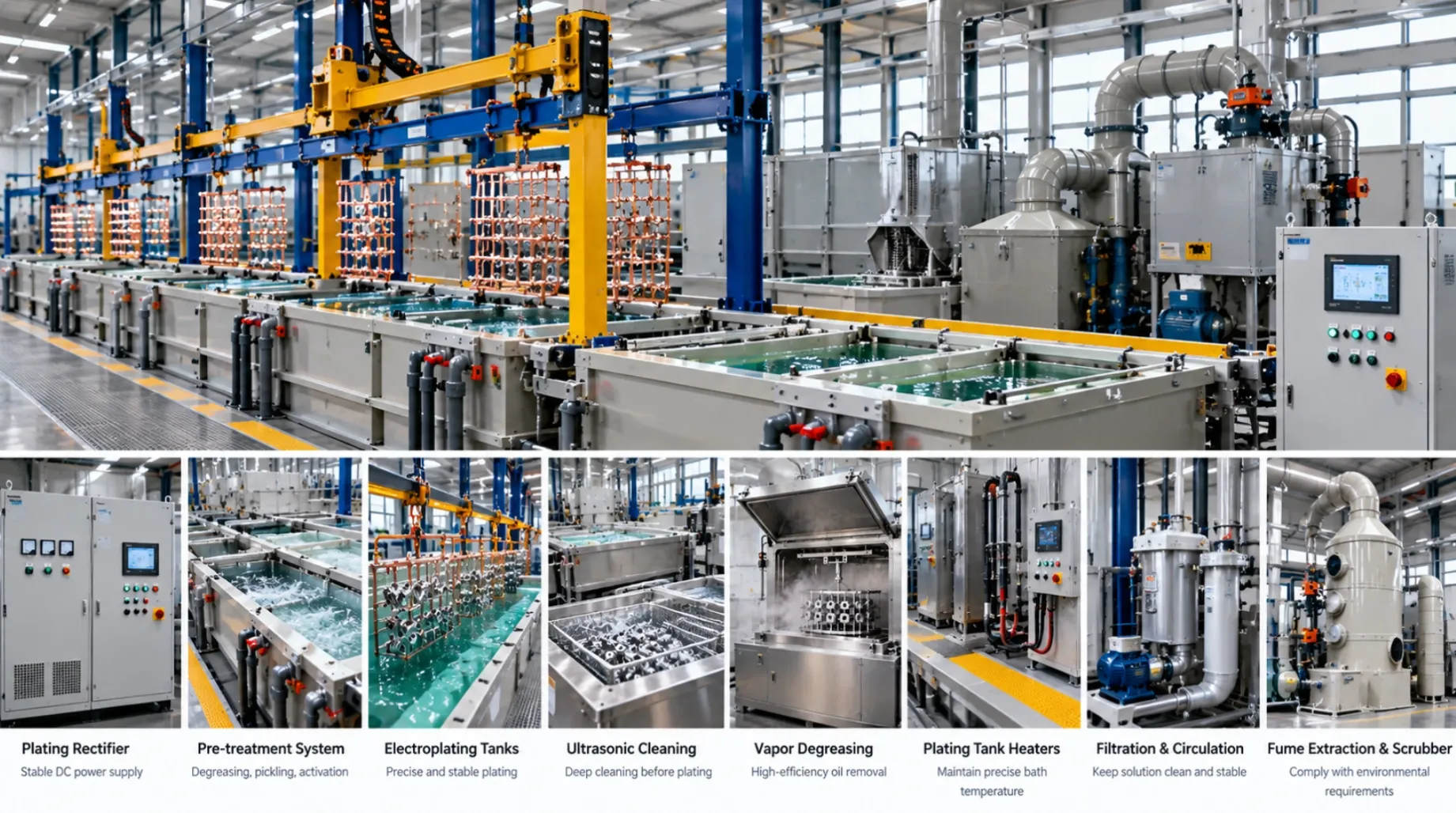
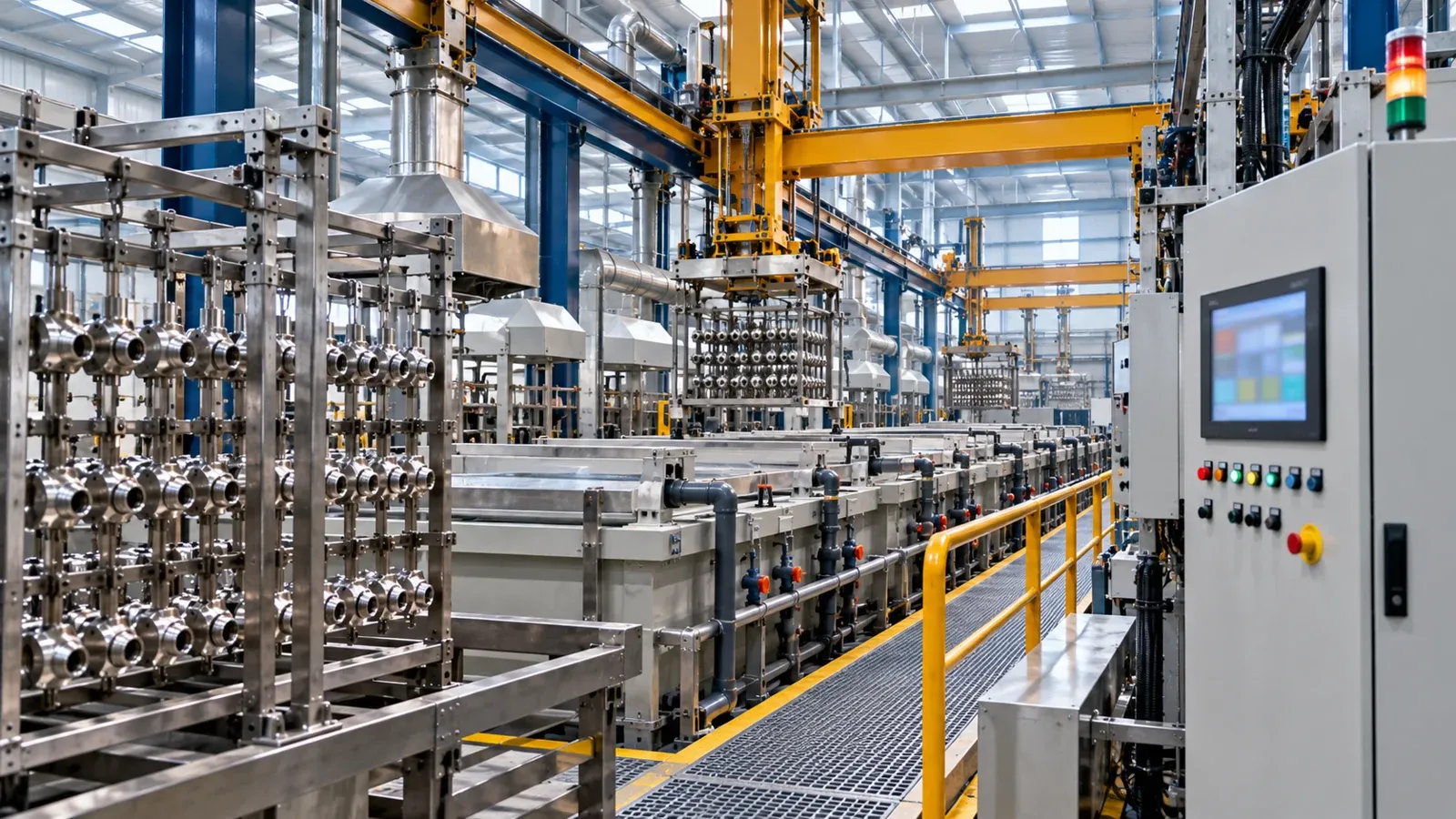
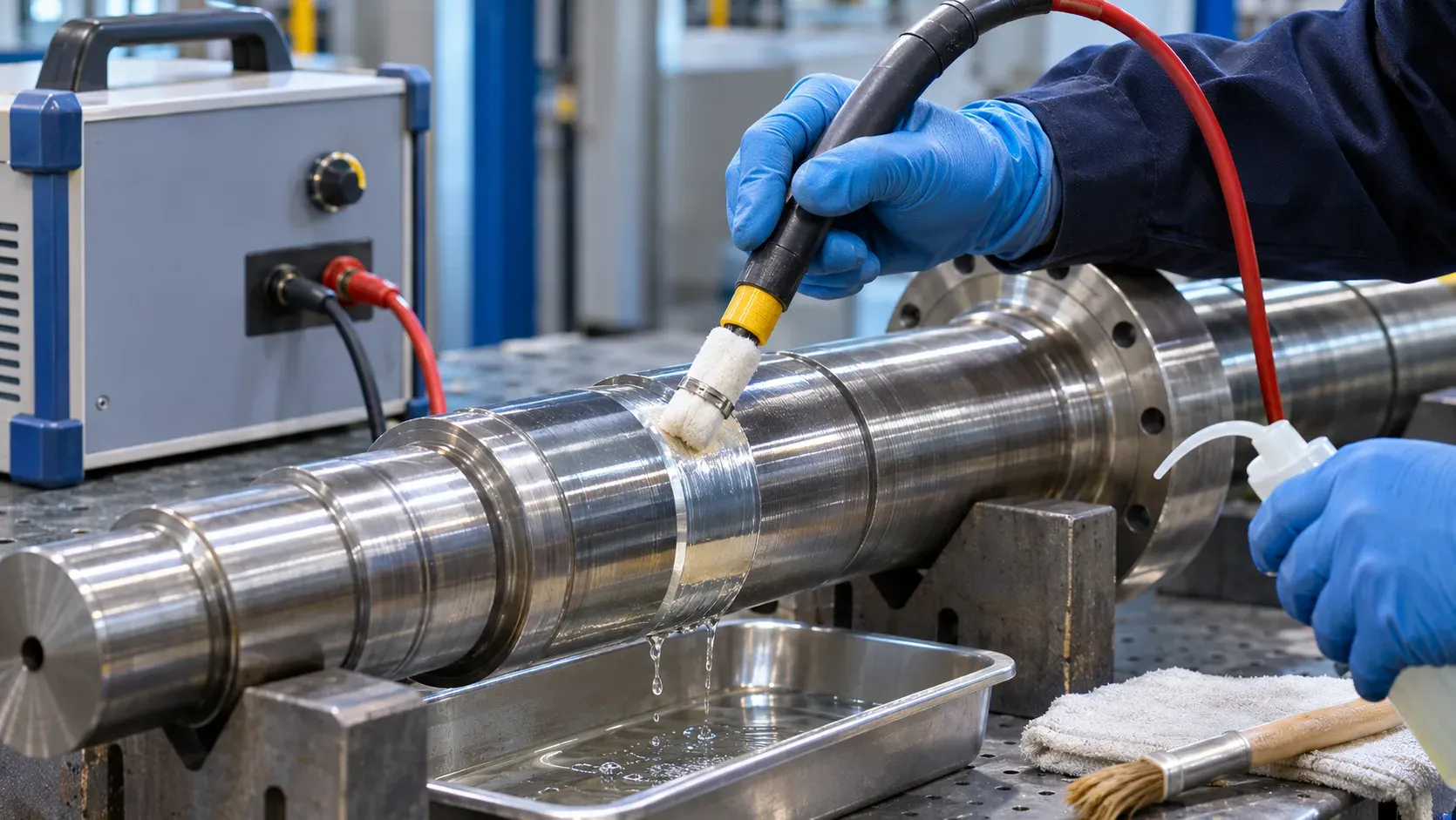
Plating Lines & Equipment
Electropolishing vs Electroplating: Removal vs Deposition Equipment Scope
Electropolishing and electroplating share the same tank infrastructure and do opposite things. Compare polarity, thickness control, electrolytes and what transfers between the two lines.
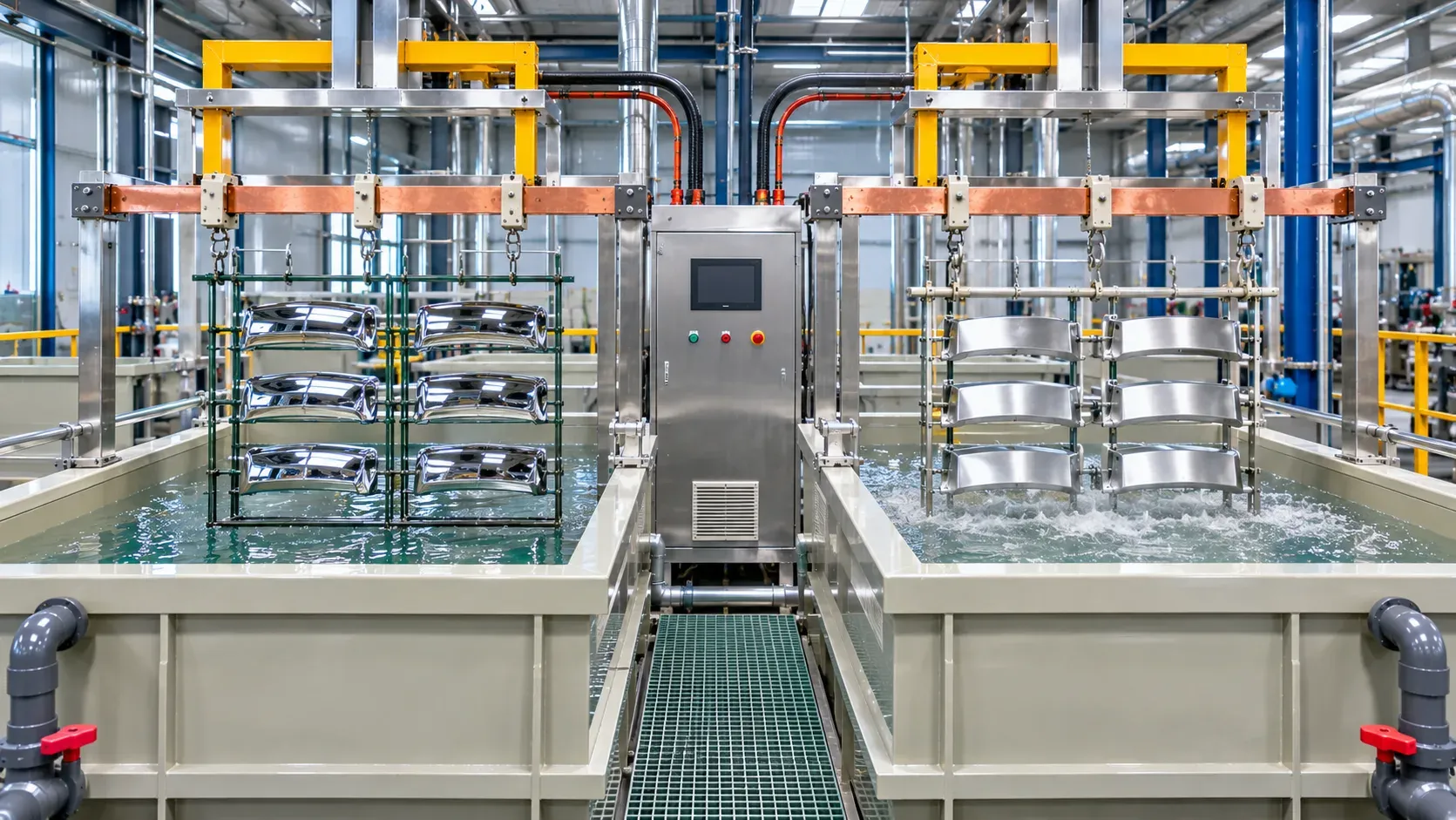
Electropolishing and electroplating use the same core infrastructure — a tank, a DC power supply, racks, an electrolyte — and they do exactly opposite things. One removes a thin layer of metal from the part; the other adds one. Buyers planning equipment often underestimate how much of one line's scope transfers to the other, and where the differences genuinely matter. This guide lays out both.
Planning document, not a process datasheet — confirm chemistry and parameters with your supplier.
The mirror-image principle
In electroplating, the part is the cathode: metal ions in solution deposit onto its surface, building thickness. In electropolishing, the part is the anode: metal dissolves from its surface into the electrolyte, removing thickness. Same tank architecture, opposite polarity, very different process control.
Aspect | Electroplating | Electropolishing |
|---|---|---|
Part polarity | Cathode (deposition) | Anode (dissolution) |
What changes | Adds a metal layer — thickness, appearance, properties | Removes a thin layer — smooths, brightens, passivates |
Thickness control | Central to the specification (deposit thickness targets) | Removal amount must stay inside tolerance stacks |
Electrolyte | Metal-salt solutions per finish (zinc, nickel, chrome...) | Phosphoric-sulfuric systems for stainless; chemistry per grade |
Current control | Current density sets deposit rate and quality | Current density sets removal rate and surface quality |
Typical parts | Decorative, protective, functional coatings | Medical, pharma, food, semiconductor stainless parts |
What transfers between the two lines
Because the architecture mirrors, a hall running electroplating can usually host an electropolishing tank with modest additions:
- Rectifier and busbars. Same DC infrastructure concept; sizing follows loaded area and current density either way — see the surface area and rectifier load guide.
- Racks and contacts. Contact points matter in both; in electropolishing the contact marks must land on non-critical faces — see the masking and loading guide.
- Rinse and effluent treatment. Both processes generate metal-bearing rinse water needing treatment — the scope is in the wastewater treatment brief.
- Controls and records. Current, time and temperature logging per batch serves both processes' evidence needs — see the traceability guide.
What genuinely differs
- Electrolyte chemistry. Plating solutions are metal-salt systems matched to the deposit; electropolishing electrolytes (phosphoric-sulfuric blends for stainless) are matched to the substrate. Different tanks, different handling, different effluent chemistry.
- Tolerance direction. Plating ADDS thickness — tolerance stacks must allow for the deposit. Electropolishing REMOVES it — stacks must allow for the removal. Both belong in drawing reviews, in opposite directions.
- Fume and gas. Electropolishing evolves gas at the anode during operation; extraction over the tank is part of the scope. Plating fumes depend on the chemistry.
- Quality evidence. Plating proves deposit thickness, adhesion and corrosion performance; electropolishing proves removal, surface quality and passivation. The instruments differ.
Which line to build
- The parts need corrosion protection or a specific finish color. Electroplating line — the finish is the product.
- The parts need smoothness, cleanability and enhanced corrosion resistance without coating. Electropolishing tank — the substrate is the finish.
- Both demands exist. Shared hall, shared treatment and controls infrastructure, separate tanks and chemistries — the common configuration for full-service finishing shops.
Key takeaways
- Same infrastructure, opposite polarity: cathode deposits, anode removes.
- Tolerance stacks run in opposite directions — plan plating thickness and electropolishing removal separately.
- The electrolytes differ fundamentally; effluent treatment must match each chemistry.
- Racks, rectifiers, rinsing and records transfer between the two lines.
- Full-service shops run both tanks in one hall — the infrastructure sharing is real.
Your next five steps
- Define what the parts need: added finish or removed roughness.
- Size the rectifier against loaded area for the chosen process.
- Confirm electrolyte chemistry and its effluent treatment requirements with the supplier.
- Design racking so contacts and racks land on non-critical faces.
- Put batch records (current, time, temperature) into the control system.
FAQ
Can one rectifier serve both processes?
In principle yes, if ratings match both tanks' demands — but dedicated units per tank simplify control and evidence. Confirm ratings with the supplier.
Does electropolishing change part dimensions?
Yes, by the removal amount — as little as 0.0025 mm on deburring passes. Include it in tolerance stacks for tight parts.
Which process improves corrosion resistance more?
Electropolishing enhances the stainless substrate's own passive layer; electroplating adds a coating whose performance depends on the deposit. They solve different corrosion problems.
Image note: AI-generated editorial photography illustrates equipment or workpiece contexts; it is not an ES-PRO installation, customer reference or evidence of coating performance.