Plating Wastewater Treatment Equipment: A Project Brief
Prepare a plating wastewater equipment brief using stream data, discharge requirements, peak flows and site interfaces. Compare proposals on a common basis.
Industrial wastewater treatment equipment for a plating plant should be specified from the actual wastewater streams, flow pattern and permitted discharge route. Provide analytical data and identify concentrated dumps separately from routine rinses. A treatment plant quoted against an undefined average flow cannot be compared reliably with one designed for a different wastewater duty.
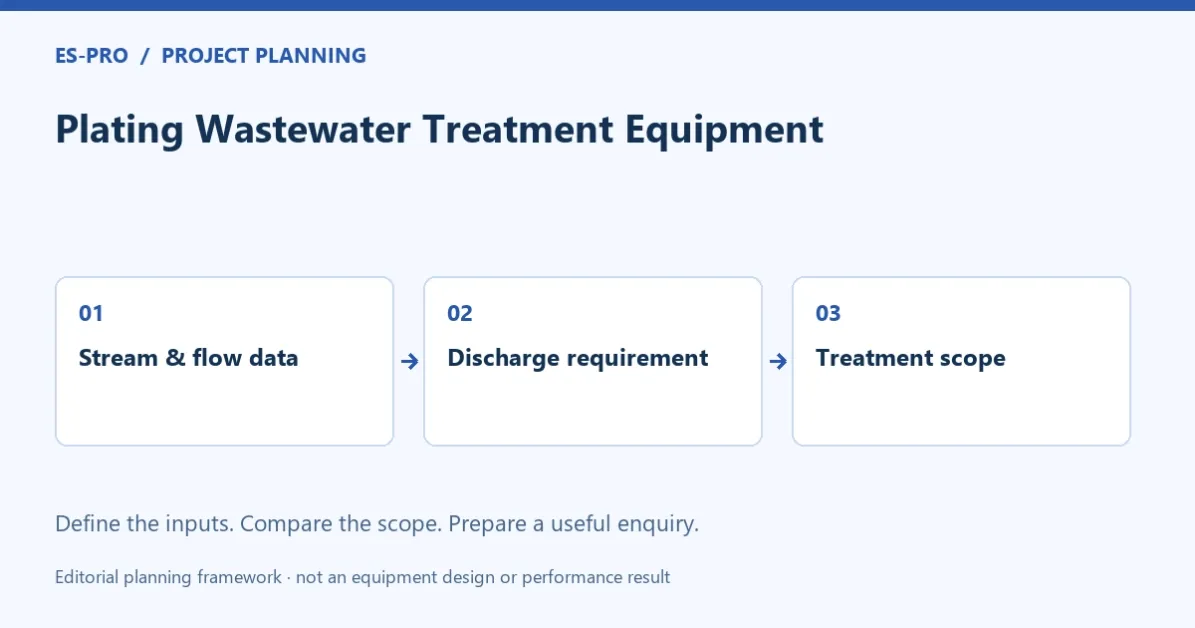
ES-PRO · EQUIPMENT PLANNINGPlating Wastewater Treatment Equipment01Stream & flow data→02Dischargerequirement→03Treatment scopeEditorial enquiry framework · not an equipment design or performance resultStream & flow data → Discharge requirement → Treatment scope. Source: ES-PRO editorial planning framework. Conceptual inputs; not a construction drawing or measured result.
This guide helps prepare an assessment brief. It does not prescribe chemical dosing or guarantee compliance from a generic equipment list. The treatment designer needs the plant data and applicable discharge conditions to define the process and acceptance basis.
Does the plating-water project concern supply, reuse or effluent treatment?
Name the duty first. Producing process water, recovering rinse water and treating effluent are related but different tasks. Show the intended flows between them instead of asking for an undifferentiated “water treatment system”.
Identify incoming water quality, the process-water requirement and the route of water after use. State which existing systems will be retained and their actual condition. If the reuse objective is provisional, record it as a design question rather than assuming every stream can return to the line.
The ES-PRO water treatment equipment page is a starting point for discussing those duties. The equipment and responsibilities for a particular project still need an itemised supply boundary.
Which plating wastewater streams should an equipment brief describe?
Prepare a stream schedule tied to the process route. Identify rinse streams, periodic tank dumps, cleaning wastes and other relevant discharges. Record where they originate, how they are currently collected and whether their composition changes with product or process changes.
Do not mix concentrated or intermittent wastes into a single average figure without explaining them. The treatment designer needs to assess the collection and operating strategy. Ask which streams require separate characterisation or handling before any combined treatment proposal is confirmed.
In the United States, the EPA Metal Finishing Effluent Guidelines describe category coverage and distinguish related regulatory categories. Applicability depends on the facility and discharge route. A project elsewhere needs its own authority and permit conditions rather than copied U.S. limits.
How should plating wastewater flow and sampling data be reported?
Provide available flow records with their period and operating context. Identify normal operation, start-up, cleaning, process changes and concentrated dumps. State how peak or intermittent flows were measured or estimated and which values remain uncertain.
Agree a sampling plan with the treatment specialist. It should identify sampling locations, operating conditions, relevant analytical parameters and who collects and tests the samples. Keep the results with the corresponding stream and operating record so an analysis is not separated from its context.
An old sample from an unidentified operating condition is limited evidence. It can be shared as background, but label its limitations and request the additional data needed. Missing analysis should lead to a sampling action, not invented wastewater characteristics.
A plating wastewater stream schedule for the enquiry
Project input
Information to supply
Plant route
Process stages and source of each wastewater stream
Stream identity
Routine rinse, periodic dump, cleaning waste or other defined source
Flow pattern
Measurement period, normal duty, peaks and intermittent discharge
Analytical data
Results linked to stream, sample date and operating conditions
Collection
Existing tanks, segregation, drains and proposed connection points
Discharge destination
Sewer, direct discharge, reuse or another agreed route
Required outcome
Applicable permit conditions and any reuse-quality requirements
Residuals
Responsibility for sludge, concentrates and other treatment outputs
This editorial schedule helps organise an equipment assessment. It is not a treatment design, sampling standard or declaration that a wastewater stream meets a discharge limit.
Which wastewater site interfaces belong in the equipment quotation?
Show the available footprint, access, utility supplies and connection points. Identify the party responsible for civil works, collection pipework, power, installation and commissioning. Include the operating and laboratory responsibilities required by the proposed treatment process.
Ask suppliers to state the influent conditions assumed in the design, operating limits and required monitoring. Compare those assumptions before comparing the price. Offers based on different wastewater compositions, discharge duties or residuals responsibilities are not the same scope.
Include arrangements for abnormal or out-of-range streams. The response and any storage or diversion duties need agreement with the responsible designer and plant team. A general purchase checklist cannot specify the safe response for an unidentified waste.
What should plating wastewater commissioning and handover establish?
Agree the feed conditions, operating period and sampling responsibilities for the acceptance assessment. State which results and records must be delivered, which authority or permit requirements apply and who accepts the handover.
Separate equipment-function checks from treatment-outcome verification. A working pump or successful control-screen demonstration does not establish that the discharged water meets the agreed requirement. The operating and analytical record needs to support the actual acceptance decision.
For European projects, the JRC surface-treatment BREF page offers technical context for associated plant activities. It is a reference document, not a permit or certification of a particular treatment system.
Questions You May Have:
Can I request an initial discussion without laboratory data?
Yes. Provide the process route, known streams and available flow information. Ask for the sampling and data plan needed before a treatment design or performance commitment can be confirmed.
Is the largest daily flow enough to size the equipment?
No. Identify flow variation, composition and intermittent discharges as well as volume. The designer needs the operating duty and treatment requirement together.
Can process-water and effluent systems share one brief?
They can be coordinated in one project, but describe each duty and its connections separately. Do not assume that their treatment objectives are interchangeable.
Does buying a treatment plant establish regulatory compliance?
No. Applicable permissions, operating conditions, monitoring and the demonstrated treatment result remain part of the plant's responsibility and acceptance plan.
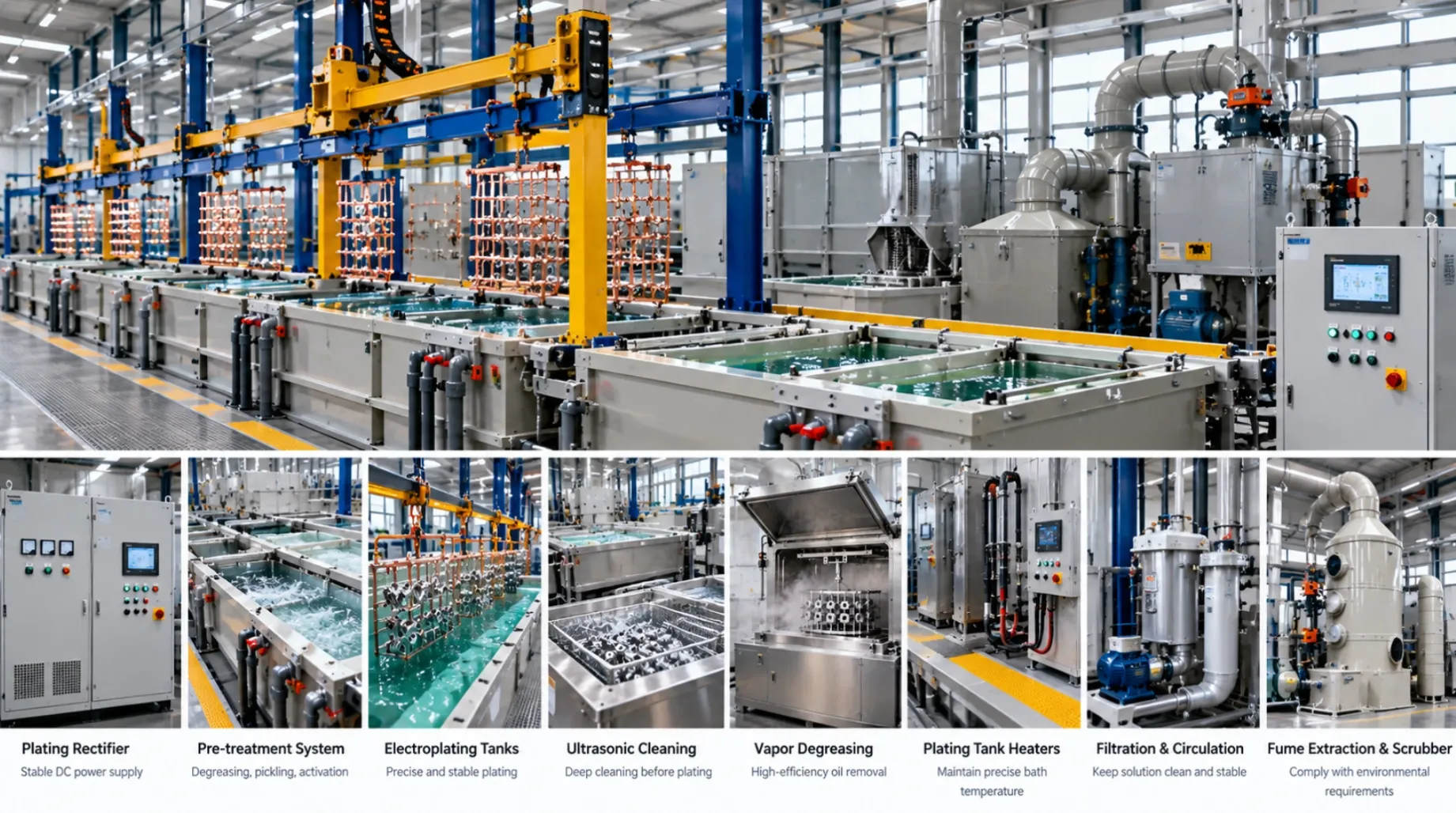
Image note: AI-generated cover illustration; not an ES-PRO installation, customer project or test result.
Industrial wastewater treatment equipment for a plating plant should be specified from the actual wastewater streams, flow pattern and permitted discharge route. Provide analytical data and identify concentrated dumps separately from routine rinses. A treatment plant quoted against an undefined average flow cannot be compared reliably with one designed for a different wastewater duty.
Stream & flow data → Discharge requirement → Treatment scope. Source: ES-PRO editorial planning framework. Conceptual inputs; not a construction drawing or measured result.
This guide helps prepare an assessment brief. It does not prescribe chemical dosing or guarantee compliance from a generic equipment list. The treatment designer needs the plant data and applicable discharge conditions to define the process and acceptance basis.
Is the project water supply, reuse or effluent treatment?
Name the duty first. Producing process water, recovering rinse water and treating effluent are related but different tasks. Show the intended flows between them instead of asking for an undifferentiated “water treatment system”.
Identify incoming water quality, the process-water requirement and the route of water after use. State which existing systems will be retained and their actual condition. If the reuse objective is provisional, record it as a design question rather than assuming every stream can return to the line.
The ES-PRO water treatment equipment page is a starting point for discussing those duties. The equipment and responsibilities for a particular project still need an itemised supply boundary.
Which wastewater streams should be described?
Prepare a stream schedule tied to the process route. Identify rinse streams, periodic tank dumps, cleaning wastes and other relevant discharges. Record where they originate, how they are currently collected and whether their composition changes with product or process changes.
Do not mix concentrated or intermittent wastes into a single average figure without explaining them. The treatment designer needs to assess the collection and operating strategy. Ask which streams require separate characterisation or handling before any combined treatment proposal is confirmed.
In the United States, the EPA Metal Finishing Effluent Guidelines describe category coverage and distinguish related regulatory categories. Applicability depends on the facility and discharge route. A project elsewhere needs its own authority and permit conditions rather than copied U.S. limits.
How should flow and sampling be reported?
Provide available flow records with their period and operating context. Identify normal operation, start-up, cleaning, process changes and concentrated dumps. State how peak or intermittent flows were measured or estimated and which values remain uncertain.
Agree a sampling plan with the treatment specialist. It should identify sampling locations, operating conditions, relevant analytical parameters and who collects and tests the samples. Keep the results with the corresponding stream and operating record so an analysis is not separated from its context.
An old sample from an unidentified operating condition is limited evidence. It can be shared as background, but label its limitations and request the additional data needed. Missing analysis should lead to a sampling action, not invented wastewater characteristics.
A stream-data schedule for the enquiry
Project input
Information to supply
Plant route
Process stages and source of each wastewater stream
Stream identity
Routine rinse, periodic dump, cleaning waste or other defined source
Flow pattern
Measurement period, normal duty, peaks and intermittent discharge
Analytical data
Results linked to stream, sample date and operating conditions
Collection
Existing tanks, segregation, drains and proposed connection points
Discharge destination
Sewer, direct discharge, reuse or another agreed route
Required outcome
Applicable permit conditions and any reuse-quality requirements
Residuals
Responsibility for sludge, concentrates and other treatment outputs
This editorial schedule helps organise an equipment assessment. It is not a treatment design, sampling standard or declaration that a wastewater stream meets a discharge limit.
Which site interfaces belong in the quotation?
Show the available footprint, access, utility supplies and connection points. Identify the party responsible for civil works, collection pipework, power, installation and commissioning. Include the operating and laboratory responsibilities required by the proposed treatment process.
Ask suppliers to state the influent conditions assumed in the design, operating limits and required monitoring. Compare those assumptions before comparing the price. Offers based on different wastewater compositions, discharge duties or residuals responsibilities are not the same scope.
Include arrangements for abnormal or out-of-range streams. The response and any storage or diversion duties need agreement with the responsible designer and plant team. A general purchase checklist cannot specify the safe response for an unidentified waste.
What must commissioning and handover establish?
Agree the feed conditions, operating period and sampling responsibilities for the acceptance assessment. State which results and records must be delivered, which authority or permit requirements apply and who accepts the handover.
Separate equipment-function checks from treatment-outcome verification. A working pump or successful control-screen demonstration does not establish that the discharged water meets the agreed requirement. The operating and analytical record needs to support the actual acceptance decision.
For European projects, the JRC surface-treatment BREF page offers technical context for associated plant activities. It is a reference document, not a permit or certification of a particular treatment system.
Questions You May Have:
Can I request an initial discussion without laboratory data?
Yes. Provide the process route, known streams and available flow information. Ask for the sampling and data plan needed before a treatment design or performance commitment can be confirmed.
Is the largest daily flow enough to size the equipment?
No. Identify flow variation, composition and intermittent discharges as well as volume. The designer needs the operating duty and treatment requirement together.
Can process-water and effluent systems share one brief?
They can be coordinated in one project, but describe each duty and its connections separately. Do not assume that their treatment objectives are interchangeable.
Does buying a treatment plant establish regulatory compliance?
No. Applicable permissions, operating conditions, monitoring and the demonstrated treatment result remain part of the plant's responsibility and acceptance plan.
Specify automated metal finishing with clear operator tasks, recipe control, load records and recovery rules. Compare automation scope before ordering a line.
Selective plating (also called brush plating or swab plating) is the electroplating equivalent of a precision tool — it deposits metal on a defined area of a part without immersing the whole component
Tell us about your workpiece, coating process and production target. We can review the handling format and equipment scope before discussing a line configuration.
Email
sales@electroplating-equipment.com
Project inquiry
Get Proposal and Demo
Company name, your name, email and project country are required. Phone, city and technical details are optional. Submit without files; send drawings or technical documents to sales@electroplating-equipment.com.