
Black oxide finishing can give suitable steel parts a dark surface with little dimensional buildup. It offers limited corrosion protection, so the preservative, exposure and acceptance requirements matter as much as the colour. Select the alloy and approved process before asking for tanks: a hot alkaline route, fused-salt route and room-temperature blackening system can require different equipment and cannot be assumed interchangeable.
In this guide
Which coating classes does MIL-DTL-13924F define?
The DLA ASSIST record links MIL-DTL-13924F, dated 10 May 2023. Its classification in section 1.2 (pages 1-2) lists five classes of inorganic black coatings. Classes 1-4 describe black-oxide routes; Class 5 is black nitriding, as appropriate. Match the drawing and contract edition before selecting a process.
| Class | Process family | Material scope to confirm |
|---|---|---|
| 1 | Black oxide, alkaline oxidizing | Carbon and low-alloy steels; specified iron families |
| 2 | Black oxide, alkaline chromate oxidizing | Certain corrosion-resistant alloys tempered below 900°F (482°C) |
| 3 | Black oxide, fused-salt oxidizing | Corrosion-resistant alloys tempered at or above 900°F (482°C) |
| 4 | Black oxide, alkaline oxidizing | Other applicable corrosion-resistant alloys |
| 5 | Black nitriding, as appropriate | Ferrous metals; confirm the specific alloy and approved process |
Class 5 needs a separate process brief from the black-oxide bath comparison below. Table I (page 7) leaves its process, processing temperature and immersion time to the manufacturer's process. Section 6.3.9 (page 9) says the detailed process steps and Objective Quality Evidence (OQE) will be defined further in future revisions. Agree the process and acceptance evidence with the responsible contract authority; this classification alone does not establish that a proposed line is suitable or compliant.
This is a scope map, not a chemistry recipe or permission to process every alloy in a row. Use the controlled contract edition for applicability, procedure and inspection. A supplier proposing an alternative must identify the class it meets and the evidence supporting that claim.
The specification describes limited protection in mildly corrosive conditions. Its preference for chrome-free finishes is conditional on the contract and documented performance. Neither a black appearance nor the absence of chromium demonstrates compliance by itself.
Hot versus cold blackening: how do line requirements differ?
First ask what the supplier means by cold blackening: process name, chemical supplier, substrate range and approval basis. A room-temperature product should not be labelled Class 1 merely because its finish looks similar.
The following matrix is an editorial equipment checklist. It compares duties to resolve in a proposal; it does not establish operating setpoints or a supplier's available product range.
| Line duty | Heated alkaline or fused-salt proposal | Ambient-temperature proposal |
|---|---|---|
| Heating and control | Specify approved operating range, heat-up duty, temperature monitoring and safe shutdown | Identify actual process range and any heated cleaning or drying steps |
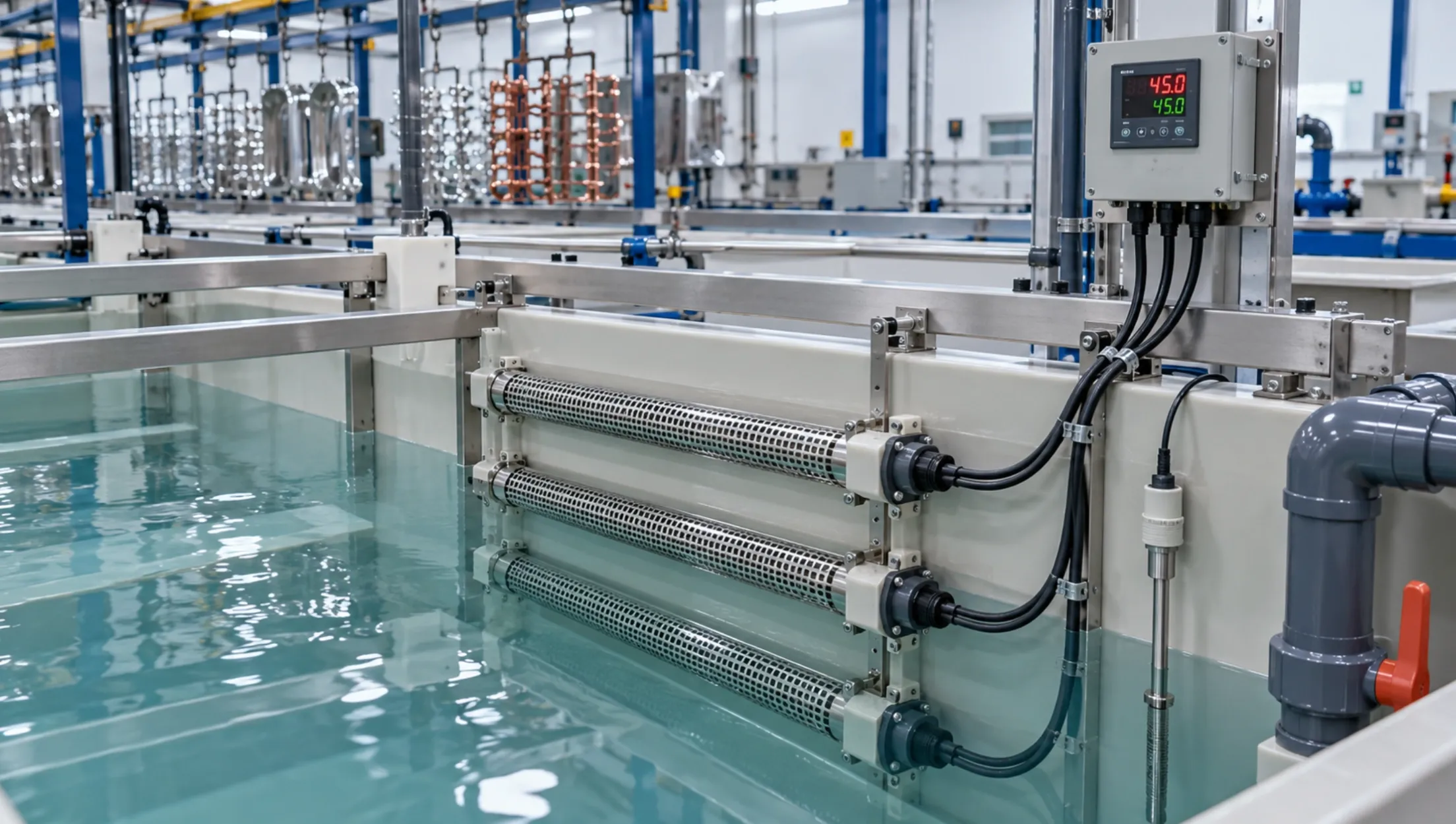
| Containment and extraction | Obtain chemistry-specific tank, heating and exhaust requirements | Confirm compatible materials and ventilation from the actual chemistry; lower temperature alone is insufficient |
| Handling and rinsing | Resolve transfer, drainage and carryover between approved stages | Resolve the same interfaces using the proposed sequence and part geometry |
| Final protection | State preservative, application method, draining and packing requirements | Define the complete final system and its acceptance evidence |
| Acceptance | Match the invoked class and contract tests | Identify the contractual route for accepting the proposed process |
Ask each bidder to mark these duties included, by others or unresolved. A cheaper offer may exclude exhaust, preservative application, drying or effluent handling. Those omissions change the installed project even when the quoted tank count matches. The quotation scope guide provides a wider equipment-boundary checklist.
Three buying examples for blackening equipment
These are hypothetical buying decisions, not customer projects or performance claims.
- Indoor carbon-steel shaft collar with a close mating bore: start with the drawing, material condition and final bore tolerance. Agree the coating callout, preservative and post-finish inspection. Do not size the line until representative loading and drainage have been assessed.
- Corrosion-resistant component with a recorded tempering history: send the exact alloy and heat-treatment record to the process authority. Resolve the applicable class before comparing heated-route equipment. The table's temperature boundary does not approve every alloy or assembly.
- Outdoor bracket currently zinc plated: define the required exposure and complete protective system before considering blackening. Colour matching does not justify replacing the existing coating. Retain the current approved finish until an authorized alternative and acceptance plan exist.
For mixed-material assemblies, identify every insert, braze, trapped space and excluded surface. For hardened or high-strength steel, flag hardness, residual stress and any embrittlement controls for specialist review. Do not assume that avoiding electroplating removes every preparation or thermal-process risk.
What belongs in a blackening line brief?
Start with one representative part family. Where sizes or materials differ substantially, separate them so a proposed load arrangement can be assessed against each family.
| Input | What to provide | What the proposal should resolve |
|---|---|---|
| Part identity | Drawing, alloy, heat treatment, hardness and incoming condition | Applicable route and any prohibited exposure |
| Quantity | Monthly accepted-part demand, batch size and part mix | Loading method, handling time and trial assumptions |
| Dimensions | Finished tolerances, threads, bores and masked features | Inspection stage and how fit is verified |
| Appearance | Approved reference part, significant surfaces and contact-mark limits | Representative trial and agreed viewing conditions |
| Protection | Preservative, handling, storage and service environment | Included final stages and packing handoff |
| Acceptance | Invoked class, contract tests, sampling and acceptance criteria | Responsible laboratory, specimen identification and records |
| Factory | Space, heating services, extraction and waste destinations | Equipment boundary and retained factory duties |
The MIL specification contains class-specific requirements; do not apply a class-specific salt-spray test to every black finish. Specify which test applies, whether the specimen carries a preservative, the exposure or examination conditions, and the acceptance criterion. Record departures before the trial, rather than interpreting an attractive sample after delivery.
Our line setup checklist covers the wider factory inputs. The steel finishing overview helps compare blackening with other finish families without treating them as interchangeable coatings.
Questions You May Have:
Is black oxide the same as bluing?
Bluing can describe black-oxide finishes in shop terminology, but the name alone does not identify an approved process. For a purchase order, state the material, specification, edition, class and final treatment.
Can black oxide replace zinc plating outdoors?
Not as an automatic substitution. Black conversion coatings provide limited protection; an outdoor application needs assessment of the exposure and complete protective system. A change requires the design authority's approval and agreed acceptance evidence.
How much does black oxide change dimensions?
MIL-DTL-13924F notes that black oxide on iron and steel should produce no appreciable dimensional change and that drawing dimensions refer to the finished part. That is not a blanket tolerance guarantee: identify close fits and verify the finished features. Do not transfer this note automatically to every process in the broader black-coating family.
Why do suppliers propose different routes for the same part?
They may have assumed different alloys, heat treatments, class requirements or preservatives. Compare those assumptions first. Ask each supplier to identify proposed departures and the evidence needed to accept them.
Official reference
- MIL-DTL-13924F — Coating, Inorganic, Black, for Ferrous Metals, DLA ASSIST. Edition checked: 10 May 2023. Classification: section 1.2, pages 1-2; coverage and colour: section 3.7, page 4; process outline: Table I, page 7; Class 5 limitation: section 6.3.9, page 9. Use the contract-controlled edition for detailed requirements and inspection.
Get Proposal and Demo
Introduce your blackening project with company, name, email and project country. Technical fields are optional. When available, share the part drawing, alloy and heat-treatment condition, required class, preservative and monthly output. Ask which equipment scope and representative-part demonstration can be assessed.
Drawings and specifications can follow by sales email, or chat on WhatsApp.