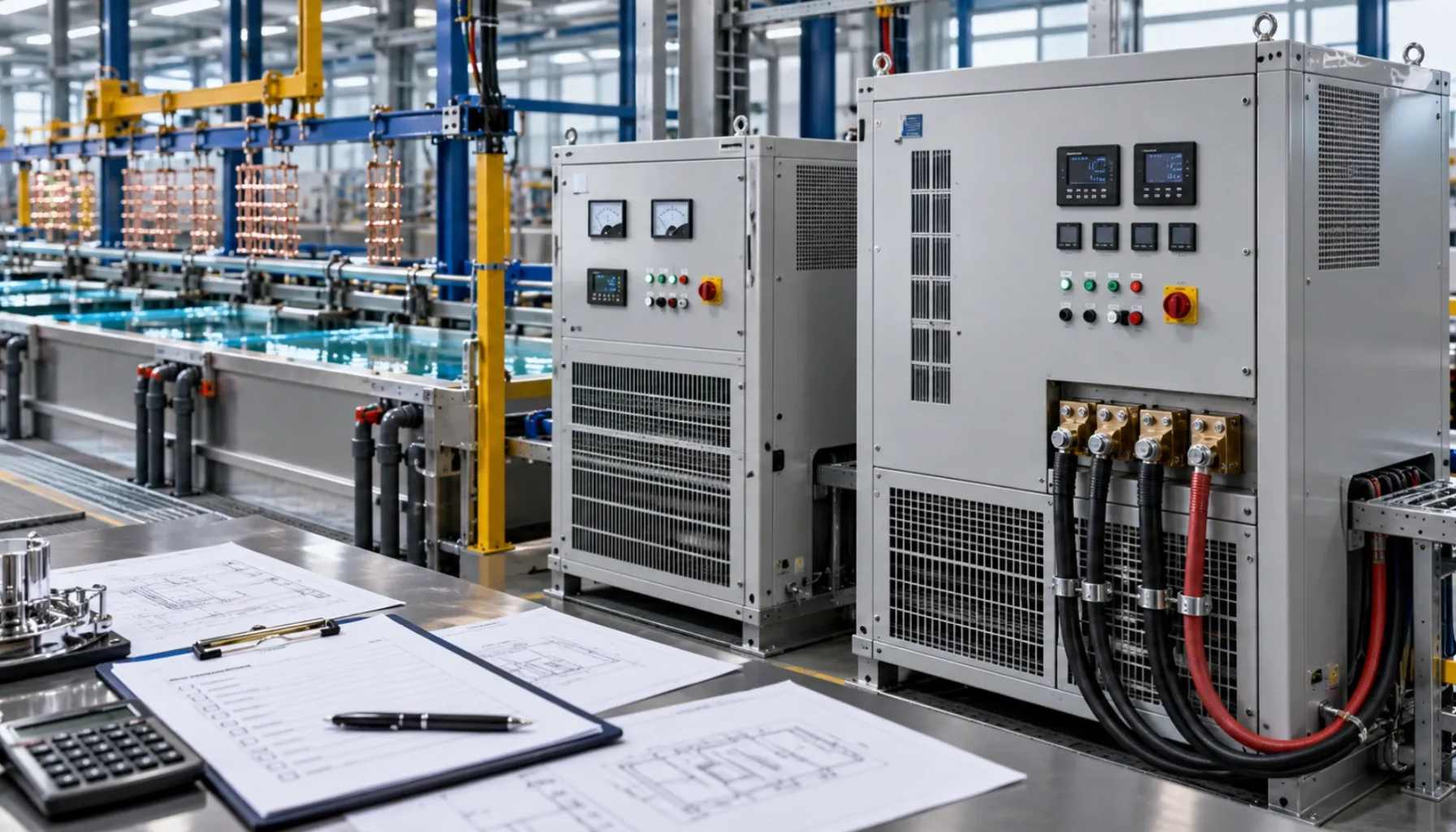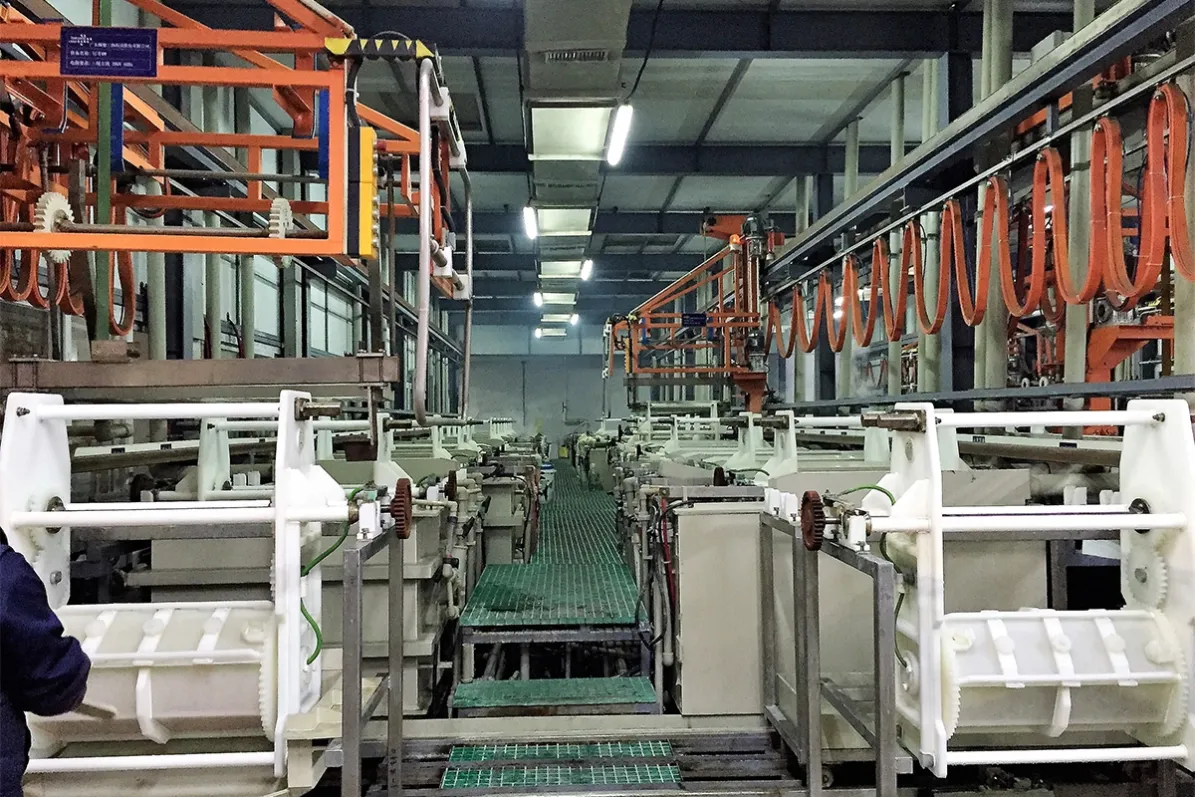
Plating Tank Heaters: Duty, Controls and RFQ Inputs
Specify plating tank heaters using approved bath conditions, heat-up and recovery duties, materials, controls and acceptance evidence for the actual load.
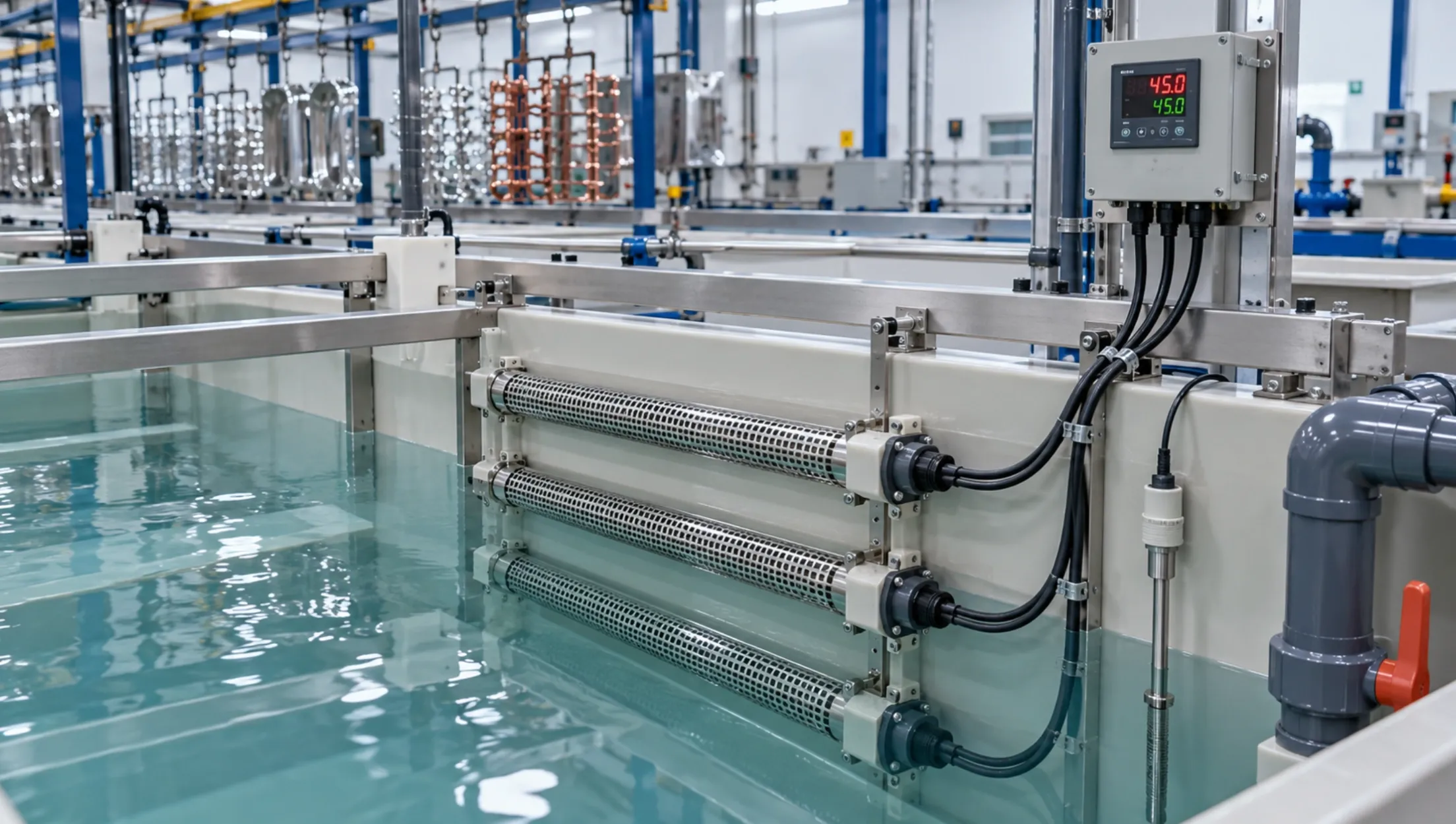
Plating tank heaters should be selected for the bath's approved operating range, required heat-up and recovery duties, compatible wetted materials, and the factory's utilities. Compare temperature control and protective functions alongside installed power. A heater rating alone does not establish uniform bath conditions or a complete, maintainable heating installation.
Original editorial enquiry framework. Conceptual inputs, not an engineered layout or measured result.
This guide helps a plating-line buyer prepare a heater or temperature-control enquiry. It concerns equipment requirements and acceptance evidence. The process owner supplies the chemistry and operating limits; qualified designers determine the installation and protective arrangements. Start with the complete plating equipment checklist to identify surrounding systems.
Which operating duties must be distinguished?
Describe initial heat-up, temperature holding and recovery after production loads as separate duties. Give the starting conditions, required operating band and time available for each event. Include the tank's normal working volume and the permitted operating levels. Specify whether the line must process parts while the bath recovers.
List the loads that affect those conditions: workpieces and fixtures entering the tank, make-up liquid, extraction, agitation and planned pauses. Their relevance depends on the actual process. Ask the supplier to explain the design basis it uses, including which information remains provisional, rather than accepting a general power-per-litre rule.
Where heating and cooling may both be needed, state the production sequence that creates each duty. Ask how the control system prevents conflicting commands and how the proposal handles changes in load or bath condition. Do not assume that the heating quotation includes a cooling circuit simply because both appear on a line drawing.
What does a useful heater brief contain?
| Requirement | Information to supply | Question for the proposal |
|---|---|---|
| Bath duty | Approved chemistry, concentration range and temperatures | Which service conditions support material selection? |
| Working tank | Dimensions, operating levels and retained fittings | Where can the heater or heat-transfer surface fit? |
| Heat-up | Initial condition, target band and available time | Which load and loss assumptions determine the duty? |
| Recovery | Workpiece/fixture loads and production sequence | How are recovery and continued production assessed? |
| Utilities | Electrical supply or thermal-service conditions | Which connections, controls and services are included? |
| Maintenance | Access constraints and expected service activities | How can components be inspected and replaced? |
| Acceptance | Agreed load case and measurement locations | What operating records will demonstrate the duty? |
This worksheet is an original enquiry framework. It is not an electrical design, a universal heating calculation or an equipment rating. Unknown inputs can be identified in the first enquiry and resolved during the engineering assessment.
How should control and protective functions be described?
Separate normal temperature regulation from the response to abnormal conditions. Ask which sensors, switching devices, protective functions and operator indications the offer includes. Identify the response proposed for conditions such as low liquid level, an unavailable temperature signal or interrupted circulation where circulation is part of the heating arrangement.
Request a cause-and-response schedule approved by the responsible designer. It should show the triggering condition, intended equipment response, operator information and conditions for restart. A general “temperature controller included” line in the quotation leaves those responsibilities unresolved.
For U.S. projects, OSHA 29 CFR 1910.124 addresses requirements relevant to dipping and coating operations, including tanks, ventilation and heating provisions. Its applicability depends on the operation. It does not supply a heater size or replace the project's electrical and process design.
What makes two heating offers genuinely comparable?
Use the same working volume, initial conditions and target operating band for both offers. Compare the proposed measurement locations and the definition of recovery. One offer may refer to a reading close to a heater, while another refers to conditions at the workpieces. Resolve that difference before comparing claimed heat-up times.
Identify the connection boundary. For electric heating, list who provides the supply, local controls and installation. For an indirect arrangement, list the required service conditions, heat-transfer equipment and associated pipework. The buyer should be able to locate each responsibility on a connection schedule.
Review material compatibility and maintainability together. Ask what information supports the proposed wetted materials, how deposits or damage are checked, and what replacement work requires a planned stoppage. A component that is difficult to remove can affect the maintenance plan even when its nominal power meets the enquiry.
The European Commission surface-treatment reference supplies EU technical context for these installations. Use it as background to the site assessment; equipment selection still needs the approved operating conditions and applicable local requirements.
What should be demonstrated before acceptance?
Agree on a representative operating test that matches the specified duty. Record the bath condition, load, operating level, measurement locations and timestamps. Decide what constitutes an acceptable recovery and whether the line is producing during the test. Keep these conditions visible in the acceptance record.
Also agree how protective functions will be checked safely by the responsible parties. Confirm which checks are demonstrated on the equipment, which are verified through documented design, and who approves the restart conditions. A successful heat-up does not establish the complete protective arrangement.
For a replacement, provide the existing heater identification and photographs, known failure symptoms and retained control equipment. Request an assessment of the reason for replacement. Increasing power alone should not be assumed to address a recurring sensor, liquid-level, material or circulation problem.
Questions You May Have:
Can the supplier quote from tank volume alone?
Tank volume is one input. The offer also needs operating conditions, timing, loads, utilities and control requirements before a fixed heating duty is established.
Does installed power prove temperature uniformity?
No. Agree on where temperature is measured and how the actual bath conditions are demonstrated under the selected operating load.
Are protective controls automatically included?
Only the written supply boundary establishes that. Ask for the included functions and the responsibilities retained by the factory or other contractors.
Can I begin with an existing heater nameplate?
Yes. Supply it with the known operating requirement and symptoms. Additional process and installation information can follow during the assessment.
Get Proposal and Demo
Describe your tank-temperature project using the known bath duty, working tank and required operating sequence. The initial form requires company, name, email and project country; technical information is optional. Ask for the relevant temperature-control and acceptance demonstration.
Send photographs and existing drawings to sales@electroplating-equipment.com, or chat on WhatsApp. Use the line quotation guide to record heating, cooling, installation and control boundaries separately.