
Plating Process
Should Parts Be Assembled Before Electroplating?
Compare plating an assembly with coating its separate parts. Map materials, joints and trapped liquid, then qualify coverage, fit and inspection access.
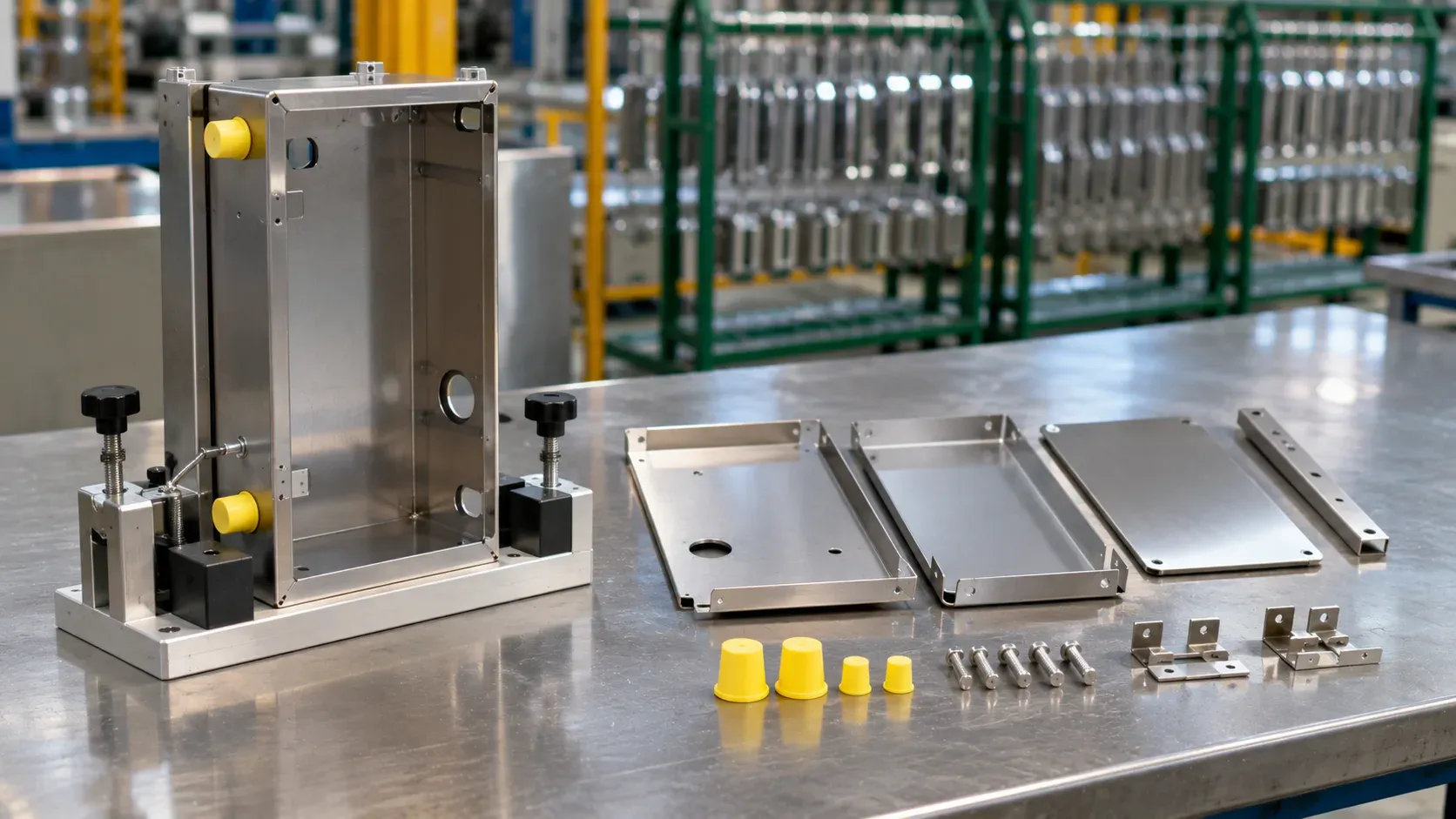
Choose between plating an assembly and plating its separate parts by reviewing every material, joint and required coated surface. Confirm the approved route, electrical contacts, liquid drainage and finished assembly checks. Use representative trials to compare coverage and function, then have the design and process owners approve the chosen sequence.
An assembly can include several substrates, joining materials and enclosed features. A route that works on one loose component needs review when the part becomes an assembly. The decision also affects which surfaces can be inspected and where a fixture may contact the work.
Build a material and joint map
List the materials and their conditions, including inserts, joining material and components that are already finished. Mark accessible and hidden surfaces and identify which areas the drawing requires to be coated. State whether the assembly can be separated for processing.
Mark crevices and spaces that can retain liquid or prevent access. Ask the process owner how preparation and rinsing will be verified at those features. Record the permitted contact points and how the current-fed stage reaches the surfaces it must plate. Keep these questions tied to the actual approved route.
Decision input | Assembly route question | Separate-part route question |
|---|---|---|
Materials and prior finishes | Can the approved sequence serve the complete material combination? | Which route applies to each component? |
Joints and enclosed features | How are wetting, drainage and relevant inspection demonstrated? | Can later assembly introduce damage or an exposed requirement? |
Electrical path | Which surfaces have the approved contact and current path? | How is each part held and contacted? |
Final fit | Does the coated assembly meet its function? | Does coating alter the fit before joining? |
The surface preparation guide helps structure the route review. The electroplating process guide provides the broader sequence.
Compare the two routes against the same requirement
Write a process and inspection sequence for each option. For an assembly route, identify how the hidden or joined features will be verified. For separate processing, identify the protection and checks needed during joining and subsequent handling.
If a surface is inaccessible after assembly, establish how its acceptance is demonstrated before it disappears from view. If joining changes the coated surface, include a representative joining trial and the final inspection. State who owns the decision when assembly requirements and coating requirements conflict.
The EPA metal finishing guide discusses the relationship between geometry and retained solution. Use the approved trial to assess the actual assembly. Geometry observations are one input alongside material compatibility and final function.
Worked example with an inserted housing
Suppose a housing includes an insert and a narrow joint. The drawing calls for a finish on the visible housing and controls the assembled fit. The team compares coating after insertion with coating the separate housing before insertion.
For the assembly option, the process owner reviews the complete materials and the joint. The trial checks the required surfaces, liquid retention and the specified final function. For the separate option, the team checks the coating at the insertion region and whether the joining operation damages it or changes the fit.
Record both sets of results against the same drawing. If either route still has an unverified hidden feature, name that question and its owner. The selected route needs a clear inspection boundary before it can become the equipment basis.
Specify what the line and assembly process must support
Give the line supplier the approved process unit, either the complete assembly or the separate component. Include its dimensions, weight, contact permissions and qualified orientation. State the handling sequence before and after coating and what the acceptance trial must show.
Use the equipment buyer's guide to review handling formats for the chosen unit. Ask the supplier to identify any assumptions about open features, part spacing or access that must remain true.
Record assembly revision · material and joint map · required coated surfaces · candidate routes · fixture and contact · retained-liquid observation · coverage and fit checks · approved sequence · open items and owners. Keep the trial parts and measurements linked to the route actually used.
For a design change, compare the new revision with this approved map. A deeper insertion, a new joining material or a previously open hole that becomes closed can change the evidence needed. Identify which earlier trial still applies and which feature needs another comparison before treating the changed assembly as the same production unit.
FAQ
Can two individually plateable materials automatically be plated together?
Review the complete material combination, joints and approved route with the process owner.
Is plating separate components always easier?
Compare the downstream joining, fit and coating-protection requirements as part of the same decision.
Who approves a change from assembled to separate processing?
Use the drawing authority and the project's process and quality approvals. Record the revised inspection and assembly sequence.
Discuss the process unit for your line
Share the assembly drawing and material map. Include the required surfaces, joint details and candidate inspection sequence. Send drawings by sales email, or discuss the project on WhatsApp.


