Plating Process
Sulfamate Nickel Plating: Equipment and Process Inputs
Plan sulfamate nickel plating equipment using deposit requirements, approved bath conditions, loading, electrical duty, services and acceptance evidence.
@media (max-width:600px) { .espro-guide { font-size: 17px; } .espro-guide .comparison-scroll { overflow: visible; } .espro-guide table, .espro-guide tbody, .espro-guide tr, .espro-guide td { display: block; width: auto; } .espro-guide thead { display: none; } .espro-guide tr { border-bottom: 2px solid #d7e3f4; } .espro-guide td { padding: 12px 15px; } .espro-guide td:before { content: attr(data-label); display: block; color: #2454a6; font-size: 12px; font-weight: 700; margin-bottom: 5px; } .espro-guide .brief-flow { display: block; } .espro-guide .brief-flow span { display: block; margin-bottom: 10px; } }
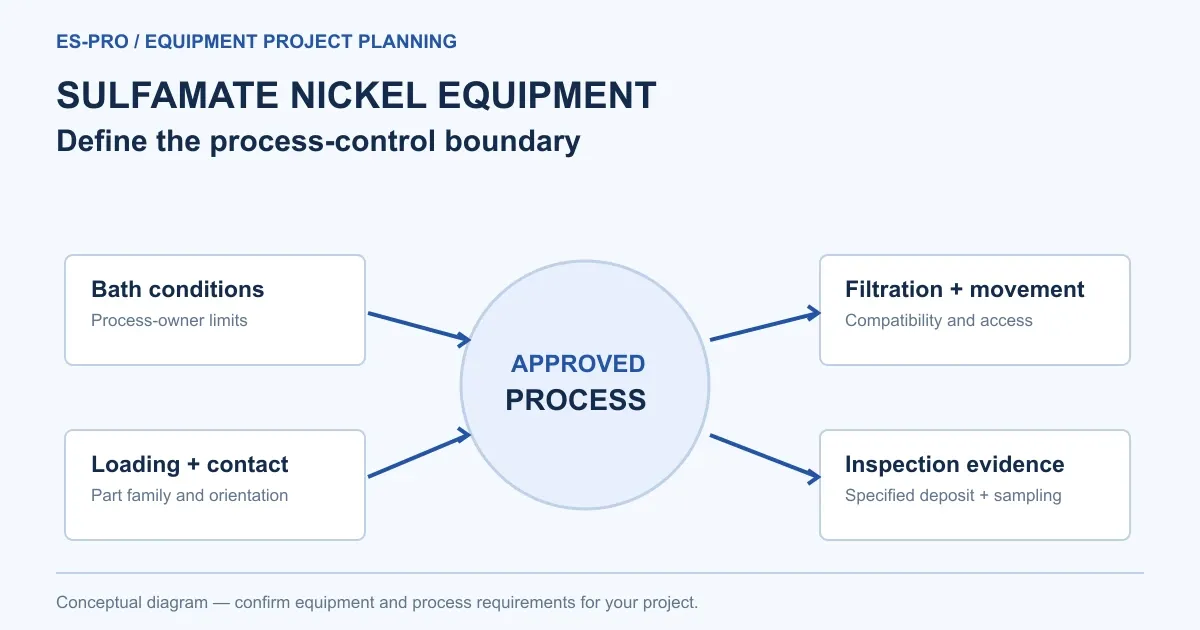
Sulfamate nickel plating equipment should be assessed against the approved deposit requirement, bath system, part loading and production sequence. Provide the process owner's operating conditions and acceptance plan before selecting power supplies, tanks, movement or service equipment. A useful enquiry connects the required nickel coating to equipment duties without assuming a bath name determines the complete line.
Deposit requirementApproved bath dutiesDemonstrate the load
Original editorial enquiry framework. Conceptual inputs, not an engineered layout or measured result.
What should the sulfamate nickel deposit requirement establish?
Start with the coating designation, substrate and significant surfaces. State the required condition of the finished part and identify any later machining or treatment. If the project concerns electroforming rather than a coating retained on a substrate, say so explicitly. The purpose changes the discussion of tooling, handling and the final item being accepted.
The Nickel Institute Nickel Plating Handbook is an official industrial reference that includes sulfamate nickel practice. Use the actual process owner's validated route for the project. A handbook's representative process information should not be copied into an equipment offer as a guaranteed operating window for every part and solution system.
Which sulfamate bath data belong in the equipment brief?
Identify the approved bath system and the responsible chemistry provider. Provide confirmed operating conditions, monitoring requirements and permitted materials where available. Mark an unresolved choice clearly. Ask which process information the equipment assessor needs before materials, thermal duty or the electrical arrangement can be established.
For an existing installation, provide the process and maintenance history relevant to the proposed change. Identify retained tanks, anodes, electrical connections, filters, instruments and pipework. A project described as a tank replacement may involve several retained interfaces. Record who checks their condition and which components are outside the new equipment quotation.
How should sulfamate nickel electrical requirements be developed?
Give the part family, coated area definition and loading arrangement used by the process owner. Request a proposal explaining the operating current and voltage assumptions for that arrangement. Identify what is controlled and measured, and where those measurements are taken. Maximum nameplate output is insufficient for comparing operation across the planned production mix.
Describe interruptions and the approved response during production. Ask how the proposed controls communicate alarms and record the information needed to assess a load. Any automatic recovery sequence should be defined and agreed. Do not infer that a control-system feature establishes coating suitability after an unassessed process interruption.
Brief topic | Confirmed buyer input | Evidence requested |
|---|---|---|
Deposit | Coating designation and final condition | Requirement-to-process scope |
Bath | Approved system and process-owner limits | Material and service assumptions |
Electrical load | Part areas, load mix and operating requirement | Output and monitoring boundary |
Loading | Contact locations, orientation and weight | Assessed tooling and handling concept |
Bath services | Temperature, movement and filtration requirements | Included equipment and factory interfaces |
Release | Inspection locations and test requirements | Demonstration and acceptance records |
This is an original purchasing worksheet. It is not a bath formulation, tooling design or confirmed ES-PRO equipment rating.
Which sulfamate nickel bath services need coordinated equipment scope?
Ask how the proposed temperature control, movement, filtration and solution-service duties relate to the approved route. Identify the location of monitoring points and the assumptions about available factory utilities. Where another party supplies a service, name that boundary in the offer. Compare the included duties rather than treating similarly titled packages as equivalent.
Discuss inspection, replenishment and maintenance access with the process owner and supplier. State whether the factory needs retained equipment to remain operational during installation. Identify any transfer of solution, shutdown or recommissioning work that requires separate approval. The line planning checklist helps organise those dependencies.
Which part-loading details affect sulfamate nickel equipment selection?
Provide the largest and normal parts, including geometry, orientation, contact restrictions and the intended load mix. Identify surfaces where the coating result is critical. Ask how the candidate arrangement will be assessed for that actual part rather than a convenient test shape. Separate the mechanical loaded weight from the electrical process requirement.
Our barrel and rack comparison helps frame the handling decision. The approved deposit, part protection and tooling assessment still determine which arrangement is suitable. If the enquiry concerns a previously used rack, provide its drawing and condition instead of assuming it can be transferred unchanged to the proposed process.
What should a sulfamate nickel demonstration record?
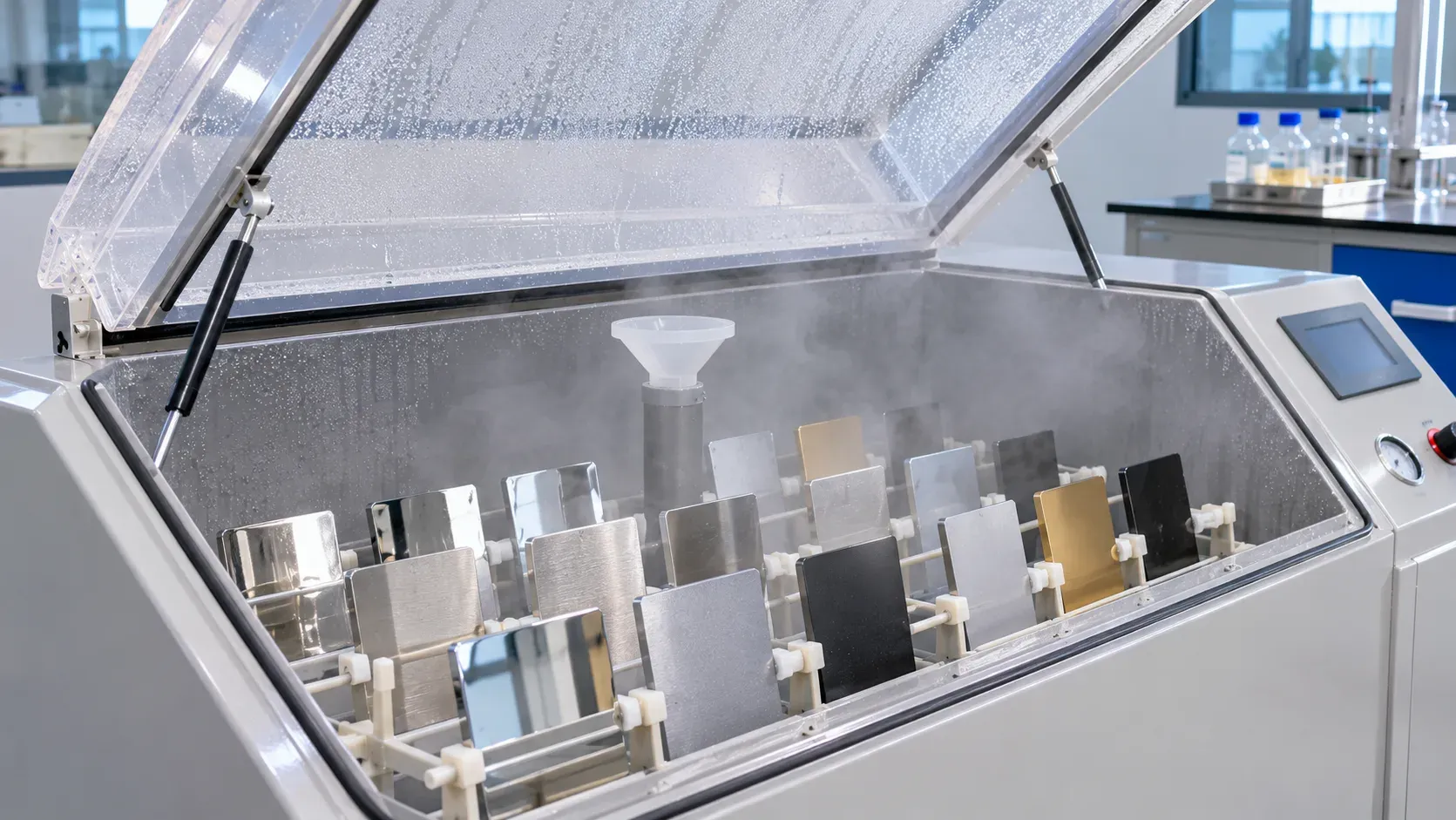
Agree the part, process conditions, loading and inspection plan before the trial. Identify which operating records are needed to connect the equipment sequence to the coated item. State the measurement locations and the condition in which the part will be inspected, including any later operation required by its specification.
For mixed production, identify which part families the trial represents and which remain unassessed. Record the limitations of a demonstration performed with temporary utilities or a different loading pattern. The coating thickness guide provides related measurement context, while the actual contract controls the acceptance method.
Questions You May Have:
Does a sulfamate bath name define the complete equipment package?
No. The part, approved process, loading and factory services determine the duties that must be assessed. Ask the proposal to list its assumptions and included interfaces.
Is sulfamate nickel the same project as electroless nickel?
They need different process discussions. Identify the actual route and read our electrolytic versus electroless nickel comparison before preparing a common quotation schedule.
Can existing fixtures be reused?
They can be considered after their condition, contacts, geometry and compatibility with the approved process are assessed. Provide drawings and representative parts for that assessment.
Do I need to provide a process recipe in the first enquiry?
An introduction can start with the part, deposit requirement and project location. Technical detail is optional initially; identify the process owner and the information still needed for firm selection.
Get Proposal and Demo
Introduce your sulfamate nickel project with company, name, email and project country. Share the coating designation, process-owner requirements and representative parts when available. Request an assessment of equipment interfaces and a relevant demonstration rather than assuming a standard configuration.
Send specifications and drawings by sales email, or chat on WhatsApp. The quotation scope guide helps compare supplied equipment and retained factory responsibilities.
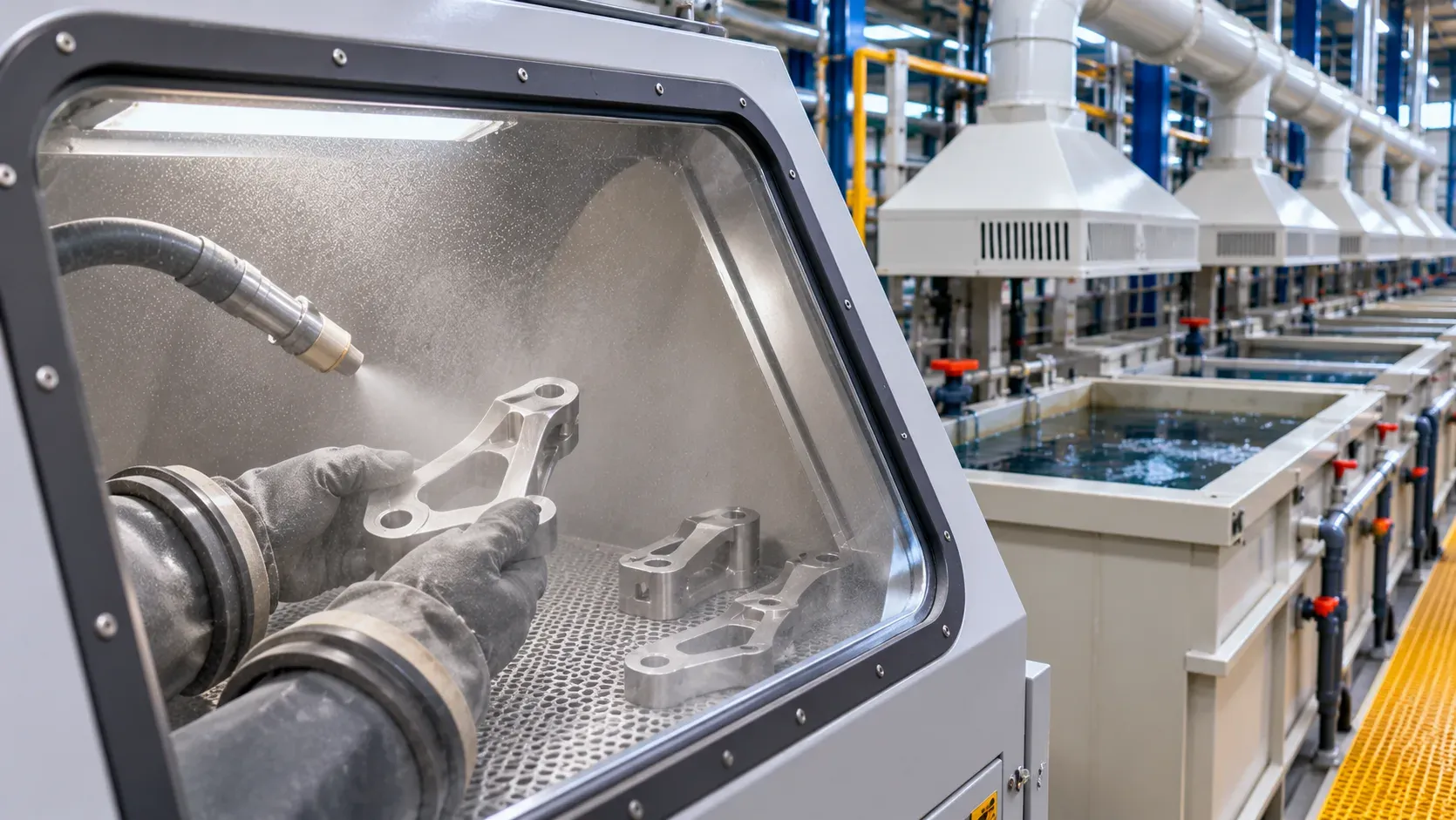
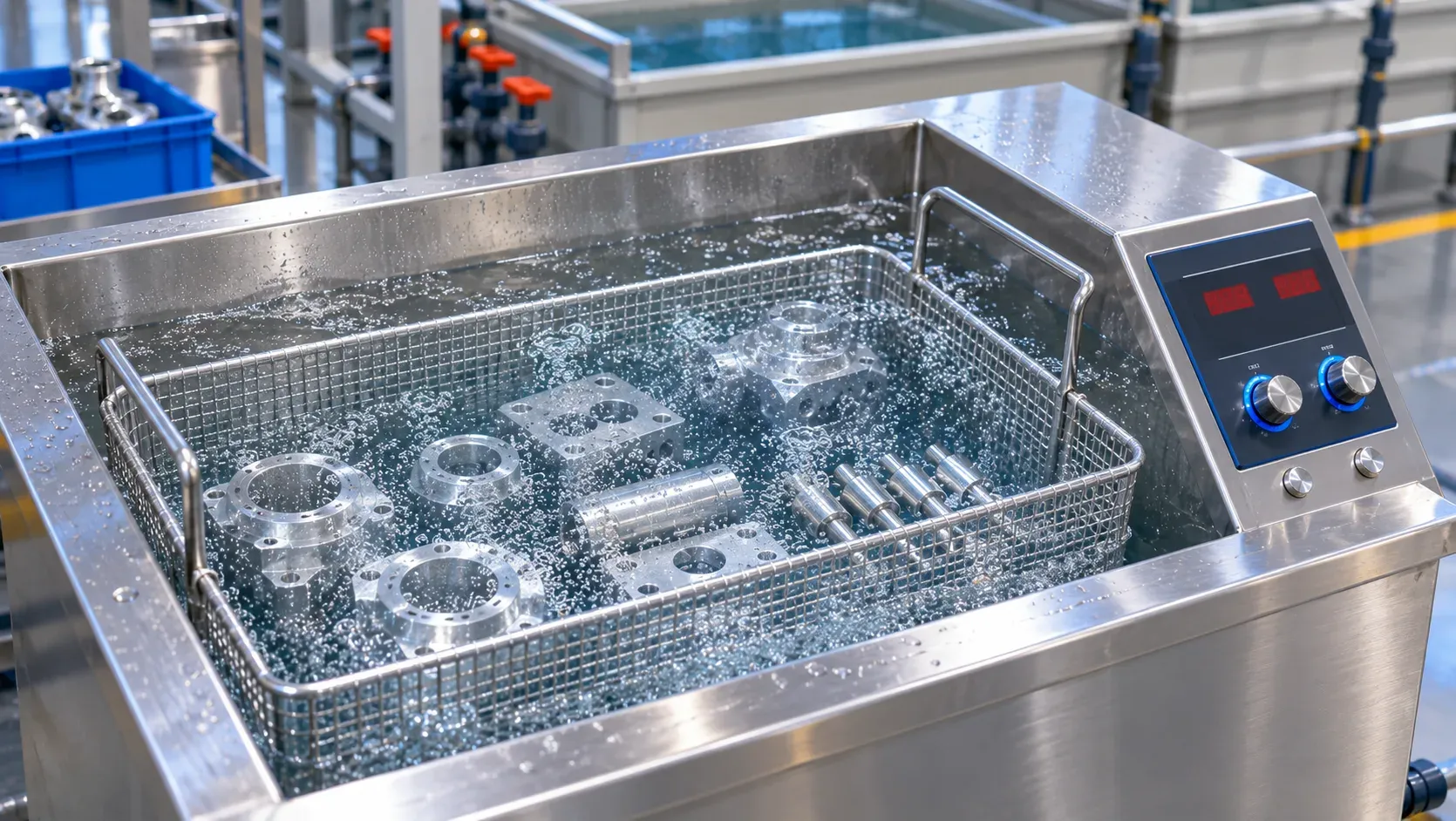
Image note: AI-generated cover illustration; not an ES-PRO installation, customer project or test result.