How to Qualify Reusable Masks for Electroplating
Qualify a reusable electroplating mask over repeated cycles. Inspect the boundary, part fit and mask condition, then set a documented retirement rule.
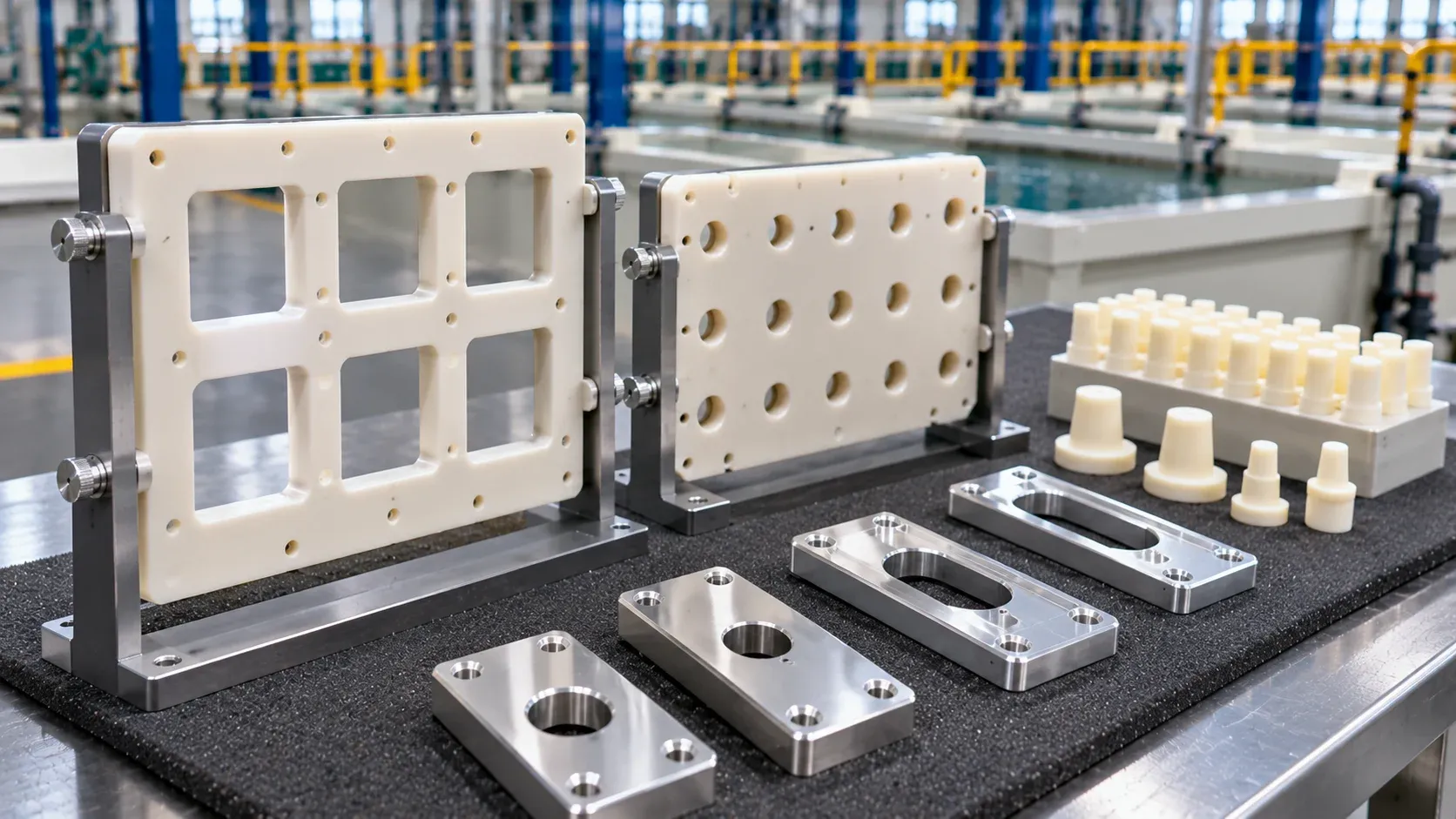
Qualify a reusable plating mask through the approved process, including loading, removal, cleaning and reuse. Inspect the coating boundary and protected feature at defined checkpoints. Set a retirement rule using the condition of the mask and the observed part results, then confirm that operators can apply the rule consistently.
ES-PRO editorial team · Updated 11 November 2026
A successful first part shows initial fit. Production also needs a mask that seats repeatably, comes off without damaging the part and can be identified after cleaning. This guide focuses on qualifying reuse and setting inspection points. The selective plating methods guide covers the broader route choice.
Define the protected feature and transition zone
Start with the drawing. Mark the surface that must remain free of coating, the surface that needs coating and any transition width the drawing permits. Agree the test method and viewing or gauge conditions with the quality owner. Keep mating dimensions and thread checks separate from the visual check.
Specify how the mask is seated and removed. Show the contact face, orientation and the operator access needed with the part in its fixture. If the mask can sit in two visually similar positions, document the positioning feature or check that distinguishes them. Confirm compatibility with the full approved route, including preparation, rinsing and the cleaning used before reuse.
If the coating edge has a measurable thickness requirement, review the coating thickness method guide with the inspection team before choosing the gauge or sample geometry.
Trial the mask over a documented service period
Identify each trial mask by revision and specimen ID. Run parts representing the agreed dimensional range. Use the approved cleaning and inspection method between uses and track cycles. Examine the mask and part at the checkpoints set by the qualification owner. Preserve the mask condition and part result together so the team can see how one changed with the other.
Checkpoint | What to record | Decision it supports |
|---|---|---|
Before loading | Seat, fit, wear or damage, part revision and mask ID | Whether the mask can enter the run |
After removal | Coating edge, deposits in protected zone, part fit and damage | Whether the masked feature meets the drawing |
After cleaning | Surface condition, residue, shape and identifiable wear points | Whether the same mask is eligible for another run |
At an agreed checkpoint | Cycles, failure history, results by operator and part family | Whether to release, shorten the interval or revise the design |
EPA's metal finishing pollution prevention guide provides process context on solution carried between stages. For the trial, check pockets that may hold liquid under or around the mask and ask the process owner how that should be observed and handled. Choose service limits from the approved materials, process and evidence.
Worked example with a protected sealing land
Suppose a plated housing has a circular sealing land that must remain clear of coating. New masks seat well and the first parts pass. Later, a narrow coating crescent appears on the land. The operator also notes a change in seating feel on one mask.
Hold the affected parts for the agreed disposition and compare their mask IDs, locations and dimensions. Check whether the same mask produces a similar crescent with another representative part and whether a verified mask works with the original part. Use an approved trial sequence. A repeated pattern can help distinguish an individual mask problem from part geometry or seating access.
If the trial supports a wear-related limit, qualify an observable reject condition and a cycle checkpoint. A cycle count can trigger inspection, and a damaged seating surface can trigger earlier retirement. Agree how to keep retired or suspect masks out of usable stock.
Include a handover check with someone who did not build the trial mask. Have that operator identify the mask revision, seat it on a representative part and apply the agreed visual or gauge check. Record any step that depends on an undocumented cue. Fix that cue before handing the reuse decision to a different shift.
Copy the mask release record
Record part revision · protected feature · mask ID and revision · material approval · process route · cycle count · pre-use condition · edge result · fit result · cleaning check · disposition · owner. Include the approved sample photos or gauges. Ask the equipment supplier to include the fixtures, handling or staging needed to apply the checks without interrupting the validated sequence.
The surface preparation sequence guide can help the buyer map where a mask first encounters the route and which operations remain on the part after removal.
FAQ
How many times can I reuse one plating mask?
Set the interval from repeated trials and the approved retirement criteria. Record the part and process conditions the result covers.
Can the same mask serve parts with different tolerances?
Compare seating and boundary results across the permitted dimensional range. Qualify each variant that changes fit or the protected feature.
Can a visual edge check release a sealing surface?
Use the drawing and acceptance plan. Include a dimensional or functional check when the protected feature requires one.
Discuss masking and fixture requirements
Share the protected feature and trial conditions. Include the drawing zone, route and intended reuse pattern. Send marked drawings by sales email, or discuss the project on WhatsApp.
Image note: AI-generated editorial photography illustrates equipment or workpiece contexts; it is not an ES-PRO installation, customer reference or evidence of coating performance.