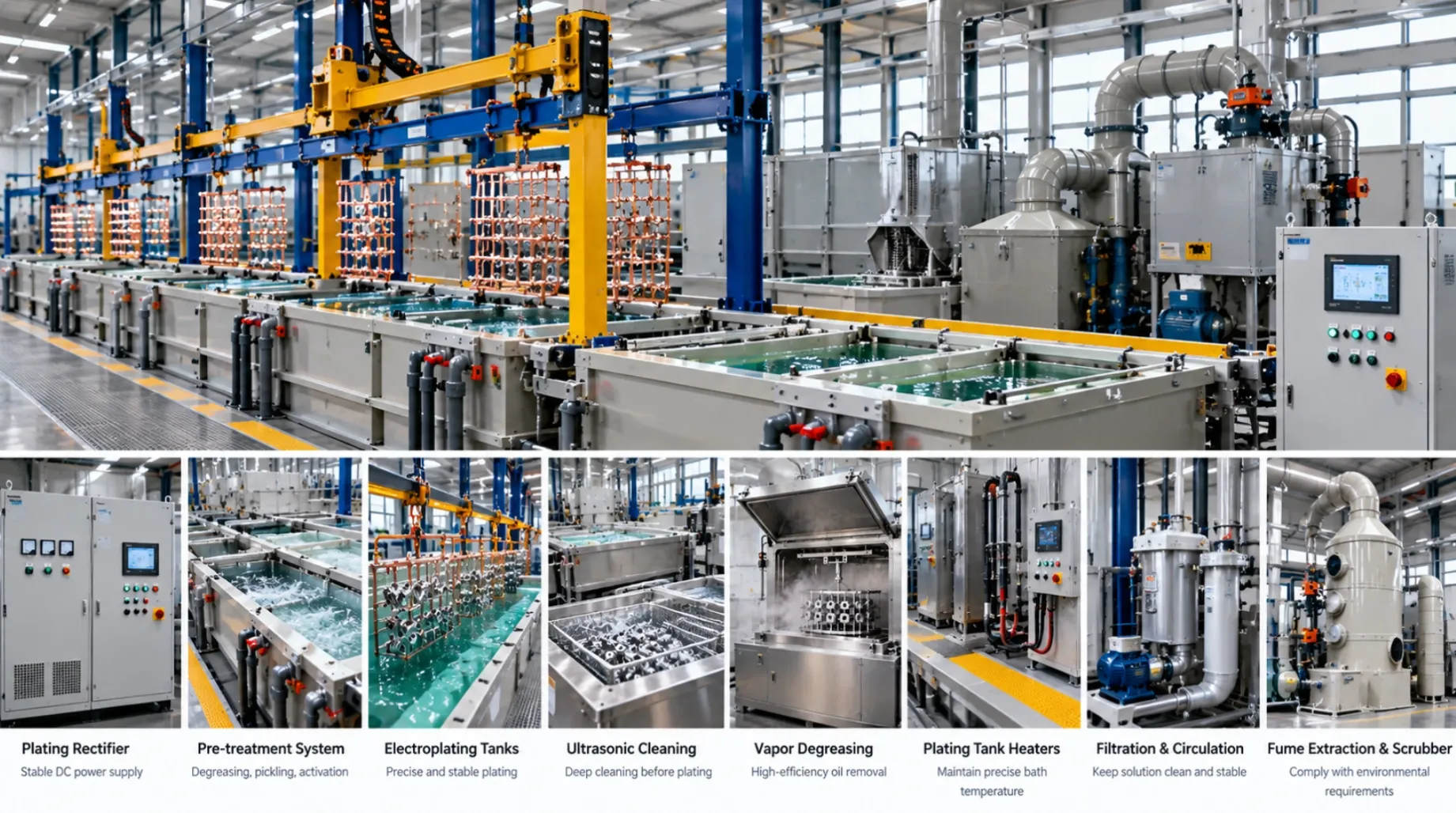
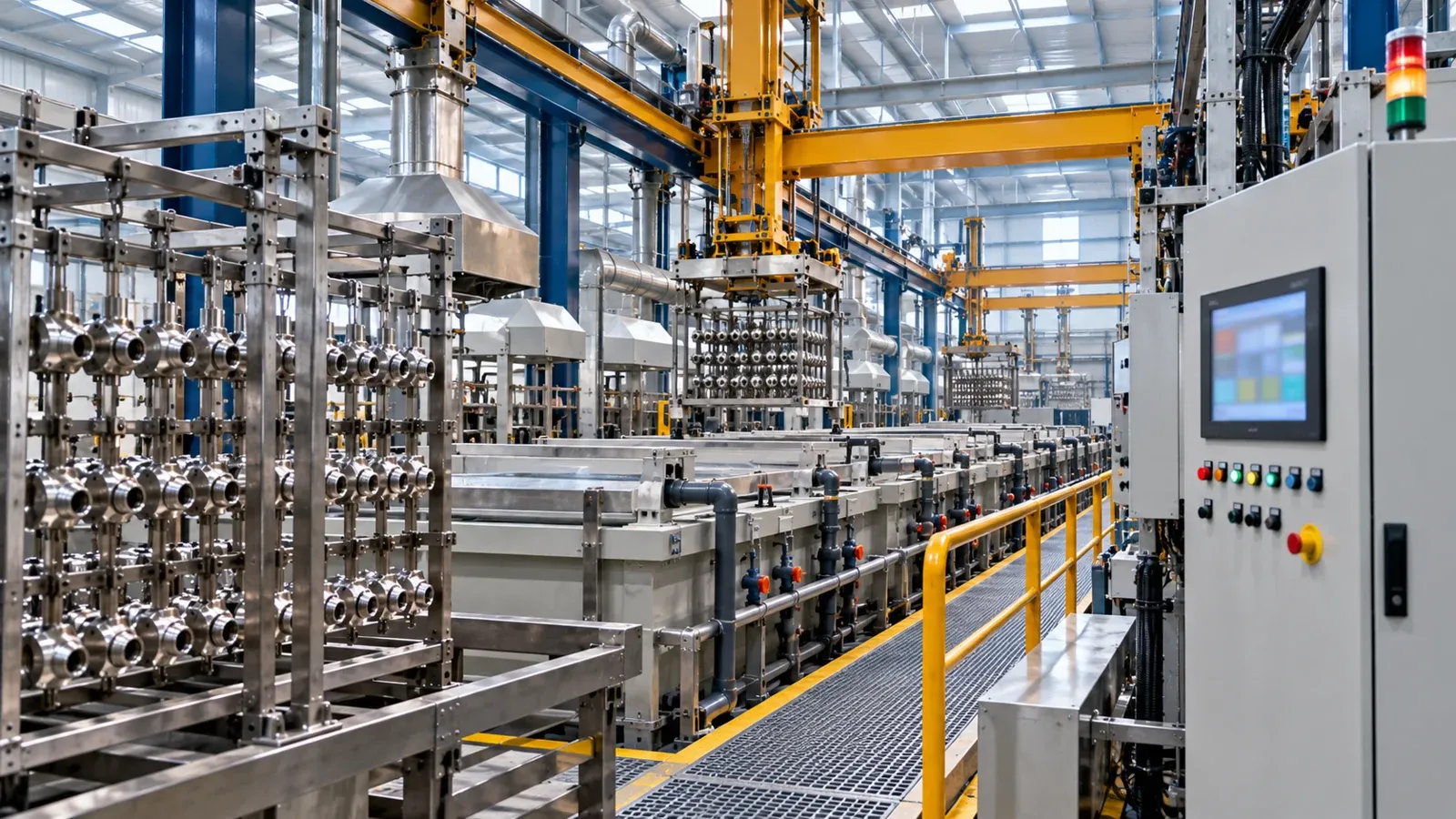
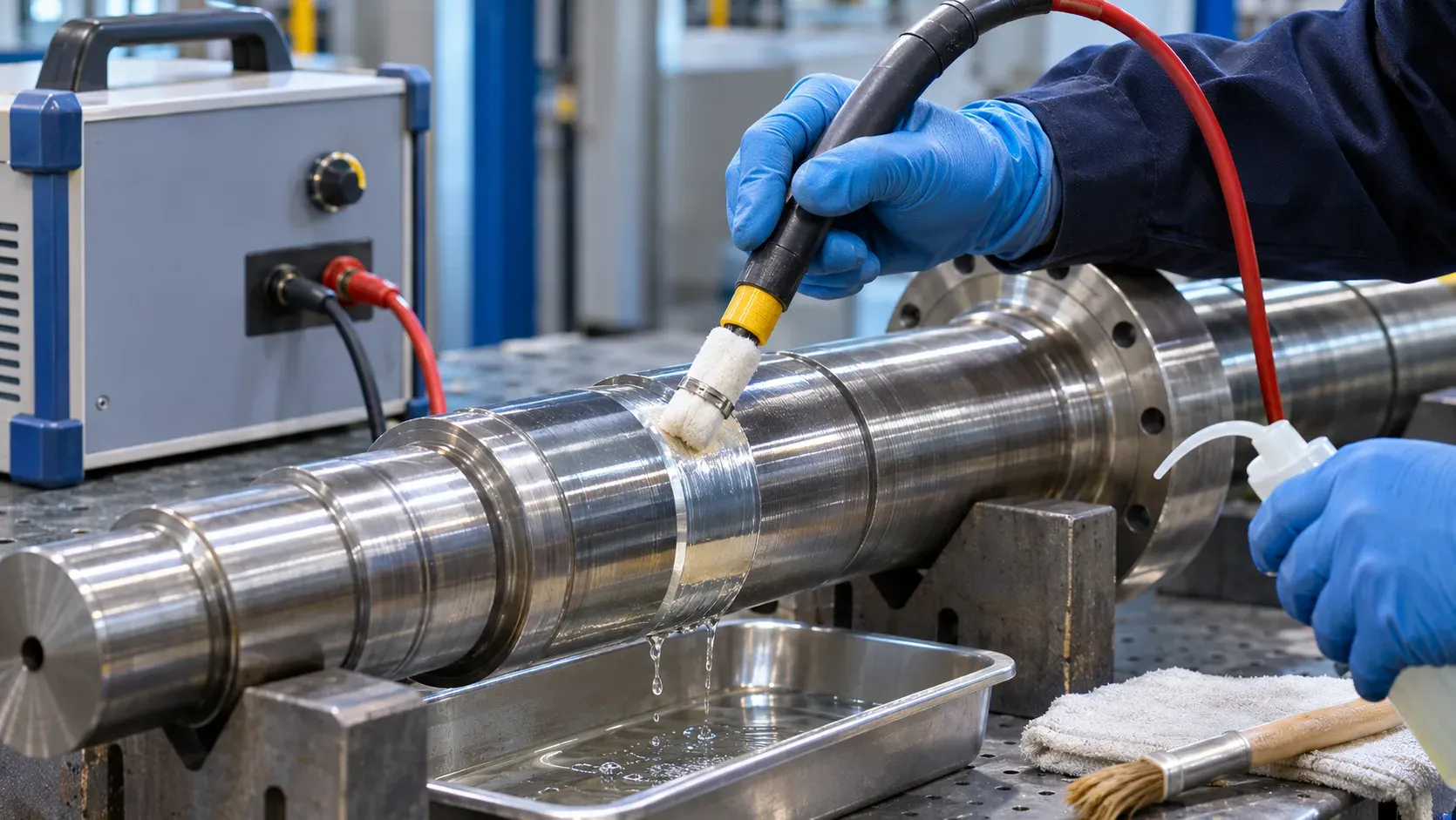
Plating Lines & Equipment
Plating Tank Materials Selection
The tank material is one of the longest-lived equipment decisions in a plating line — tanks last 10–20 years if specified correctly, and fail in months if specified against the wrong chemistry. This g
The tank material is one of the longest-lived equipment decisions in a plating line — tanks last 10–20 years if specified correctly, and fail in months if specified against the wrong chemistry. This guide covers the four main tank materials, their compatibility with common plating solutions, and the specification criteria that prevent expensive mistakes.
Technical planning document — confirm chemical compatibility with your chemistry supplier and tank fabricator.
The four main tank materials
Material | Max temp | Compatible with | Not compatible with | Typical cost |
|---|---|---|---|---|
Polypropylene (PP) | 70°C | Most acids, alkalis, cyanides, nickel, zinc, copper solutions | Concentrated sulfuric above 70%, chromic acid above 50 g/L | Low–medium |
PVC (rigid) | 60°C | Chromic acid, most acids, nickel solutions | Some solvents, high-temperature alkalis | Low |
CPVC | 90°C | Higher-temperature acids and chromic acid | Some solvents | Medium |
Steel with lining (rubber, lead, PVC) | Depends on lining | Large tanks where plastic is impractical; heavy loads | Lining failure — any chemistry attacks bare steel | Medium–high |
PP is the default choice for most modern plating tanks — it is weldable (repairs are possible), chemically resistant to the broadest range of solutions, and affordable. PVC is used for chromic acid tanks and other solutions where PP is not compatible. Steel with rubber lining is used for large tanks where plastic fabrication is impractical.
Compatibility with common plating solutions
Plating solution | Recommended tank material | Notes |
|---|---|---|
Nickel (Watts, sulfamate) | PP | Operating temperature 45–60°C is within PP's range |
Acid zinc | PP or PVC | Both compatible; PP preferred for structural strength |
Alkaline zinc | PP or steel with rubber lining | Alkaline solutions at elevated temperature need liner compatibility check |
Acid copper | PP | Standard choice for acid copper sulfate lines |
Chromic acid (hard chrome) | PVC, CPVC or lead-lined steel | Chromic acid attacks PP at high concentration — PVC or lined steel required |
Cyanide solutions | PP or steel | PP is compatible; steel tanks used for large alkaline cyanide baths |
Electropolishing electrolyte | PVDF, PP or 316L stainless | Phosphoric-sulfuric electrolyte at elevated temperature — confirm compatibility |
Electrocleaning (alkaline) | PP or steel | Alkaline cleaners at 60–80°C — PP handles most, steel for large tanks |
Pickling (HCl or H₂SO₄) | PP, PVC or fibreglass | Acid-resistant material mandatory; fume extraction in matching material |
The specification criteria
- Chemical compatibility. Confirm the tank material against the exact chemistry, concentration and temperature — not just the solution name. Additives and breakdown products change compatibility.
- Temperature. PP softens above 80°C and degrades above 100°C. If the solution needs 70°C, PP is at the edge — CPVC or lined steel gives margin.
- Structural load. Large tanks (over 2000 L) full of solution exert enormous pressure on the walls. PP needs external stiffening frames or steel reinforcement.
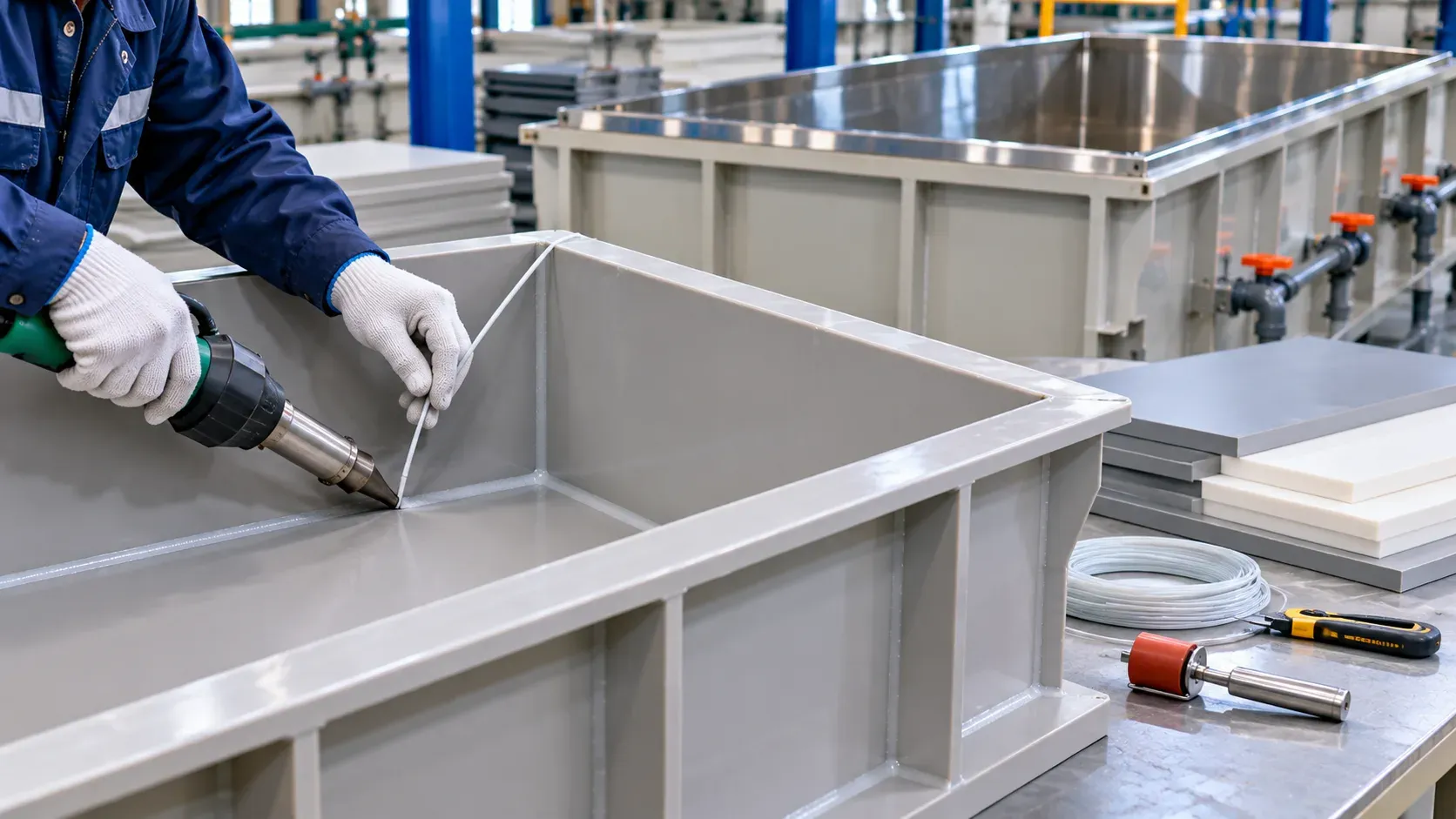
- Weldability. PP can be extrusion-welded for repairs. PVC and CPVC can be solvent-welded. Lined steel repairs require the lining to be replaced.
- UV and ageing. Plastic tanks degrade over 10–15 years — plan replacement in the capital budget.
Common failure modes
- Wrong material for the chemistry. PP tank used for chromic acid: wall thinning, then catastrophic failure. Always confirm compatibility with the supplier.
- Overheating. Solution temperature exceeding the tank material's rating causes softening and deformation.
- Structural failure. Large PP tanks without external stiffening frames bow outward under solution load.
- Lining failure. Rubber or PVC linings on steel tanks develop pinholes that let solution reach the steel shell.
- Ageing. Plastic becomes brittle over years, especially with UV exposure or repeated thermal cycling.
Key takeaways
- PP is the default tank material for most plating solutions — weldable, chemically resistant, affordable.
- Chromic acid needs PVC, CPVC or lined steel — PP is not compatible at production concentrations.
- Temperature rating limits material choice — PP above 70°C needs CPVC or lined steel.
- Large tanks need structural reinforcement regardless of material.
- Confirm compatibility with the chemistry supplier against the exact formulation, not the solution name.
Your next five steps
- List every solution in your planned line with its chemistry, concentration and operating temperature.
- Match each solution to a tank material from the compatibility table.
- Flag any solution where PP is marginal — get written compatibility confirmation.
- Size the tanks and specify external stiffening for tanks over 1500 L.
- Plan the tank replacement cycle in the capital budget (10–15 years for plastic tanks).
FAQ
Can we use PP for chromic acid?
No — chromic acid at production concentration attacks PP. Use PVC, CPVC or lead-lined steel. Confirm the chromic acid concentration and temperature with your supplier.
What is the maximum temperature for PP tanks?
PP softens above 80°C. Most suppliers rate PP tanks to 70°C for continuous use. For higher temperatures, use CPVC or steel with a compatible lining.
Can we repair a PP tank?
Yes — PP is extrusion-weldable. Small cracks and pinholes can be repaired with a plastic extrusion welder. This is a significant advantage over PVC and lined steel.
Image note: AI-generated editorial photography illustrates equipment or workpiece contexts; it is not an ES-PRO installation, customer reference or evidence of coating performance.