Plating Lines & Equipment
Fume Hood Scrubbers for Plating: A System Brief
A fume hood scrubber for plating is one element of an extraction system. Define the substances and operating conditions, how emissions are captured at the tanks, the duct and treatment boundaries.
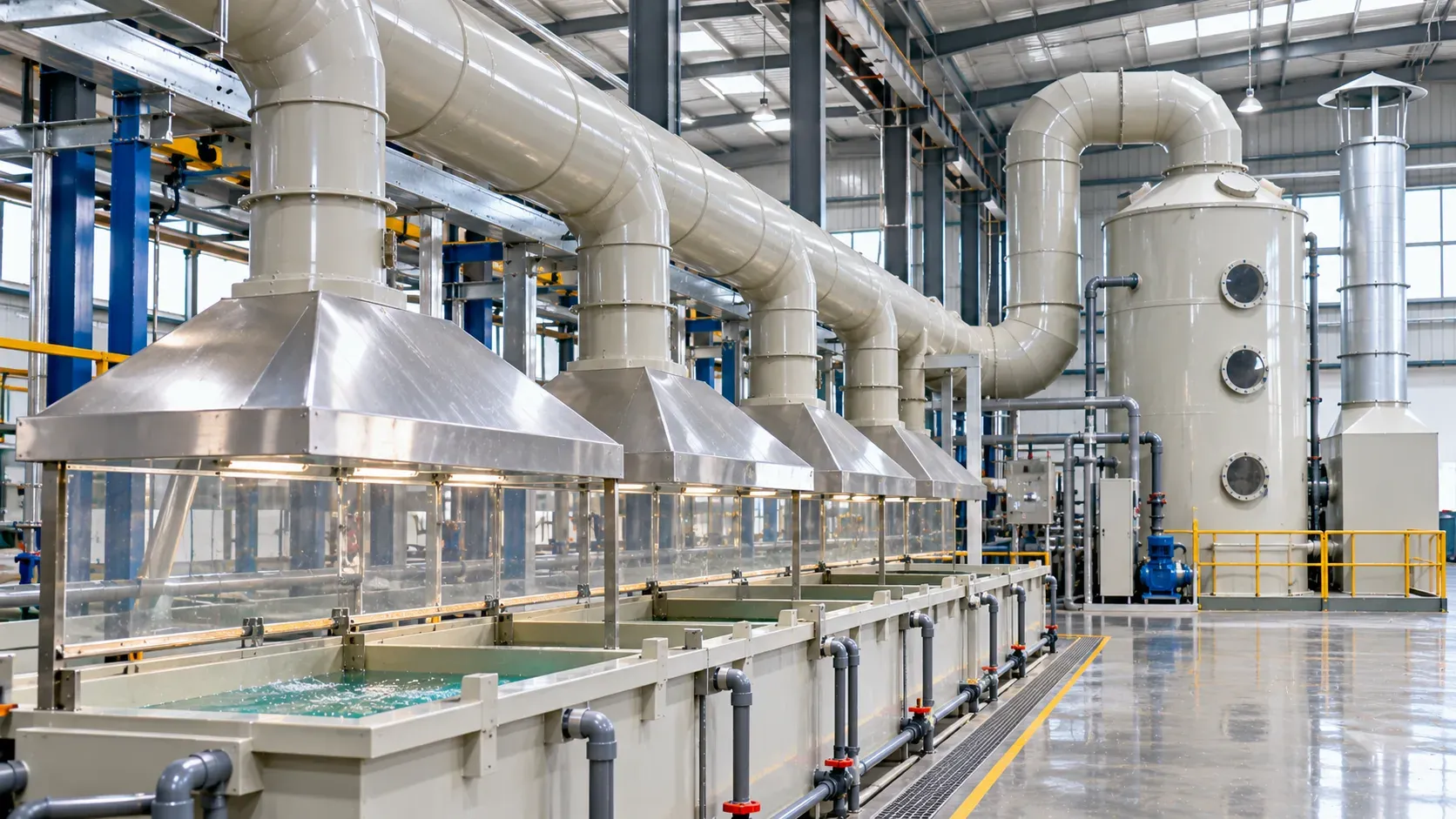
A fume hood scrubber for plating is one element of an extraction system. Define the substances and operating conditions, how emissions are captured at the tanks, the duct and treatment boundary, and the discharge and verification requirements. Purchasing a scrubber without those interfaces leaves essential parts of the project unspecified.
Capture at tankDuct & treatmentVerify the boundary
Original editorial enquiry framework. Conceptual inputs, not an engineered layout or measured result.
This guide is for buyers coordinating plating equipment with ventilation and environmental specialists. It is an enquiry and responsibility checklist, not a ventilation design or an operating procedure. Identify your project country and the competent parties who approve the worker-exposure and discharge requirements.
Which plating processes should the extraction design schedule identify?
Provide a tank-by-tank description of the approved process. Identify chemistry, normal operating range, planned agitation and the loading arrangements that can affect capture. Include operations around loading, withdrawal and maintenance that the designer needs to assess. Where the final process is unresolved, mark the affected stages as provisional.
Supply the available safety data and the process owner's information on substances requiring assessment. Ask the specialist to distinguish the capture requirement from the choice of downstream treatment. A name such as “acid fume scrubber” does not establish the complete assessment for a mixed process line.
For U.S. operations, OSHA's dipping and coating provisions include ventilation requirements relevant to vapor areas. The responsible designer determines applicability and the necessary measures for the actual operation. Do not use a product brochure as evidence that workplace exposure requirements are met.
Where should the plating fume-extraction supply scope begin and end?
Make a boundary drawing or schedule covering tank capture, branch ducts, main ducting, treatment, the fan arrangement and discharge. State what exists already. Locate each connection and identify who supplies, installs, checks and maintains it. If several contractors are involved, appoint an owner for the interfaces.
The design needs the plant layout as well as the tanks. Give available space, routes, structural interfaces, access restrictions and known building services. Mark proposed loading and handling movements so the capture arrangement can be assessed with the actual equipment operating envelope.
Interface | Buyer input | Evidence requested from the responsible supplier |
|---|---|---|
Tank capture | Process, working opening and handling movements | Proposed capture boundary and assessment assumptions |
Duct route | Layout, retained ducts and connection constraints | Route, material basis and installation responsibility |
Treatment stage | Substances and applicable release requirements | Proposed treatment duty and operating-service assumptions |
Fan and services | Available utilities and proposed operating sequence | Included controls, monitoring and service connections |
Liquid streams | Make-up, drain and service arrangements as applicable | Interface with the site's wastewater assessment |
Verification | Agreed exposure and discharge checks | Test plan, measurement locations and responsible parties |
The table is an original coordination worksheet. It does not specify airflow, duct dimensions, treatment performance or compliance for a particular factory.
How do plating fume capture and exhaust treatment acceptance differ?
Capture concerns what happens at the process and the surrounding working area. Downstream treatment concerns the stream entering and leaving the treatment equipment. A favorable downstream result should not be treated as proof that emissions are effectively captured during all relevant loading and production conditions.
Ask for the operating conditions associated with every proposed performance figure. Identify which tanks are active, the handling condition, the agreed measurement method and any service conditions required by the treatment package. The quotation should make these conditions traceable to the process schedule.
Record how the system indicates unavailable extraction or treatment services and which process functions depend on them. The process and ventilation specialists should agree the intended response and release decision. A fan-running indication alone does not explain the monitoring and operating boundary.
The European Commission JRC surface-treatment reference offers EU technical background on surface-treatment installations. It is not a permit for the proposed discharge or a certification of a hood, fan or scrubber.
Which extraction operating duties and costs belong in the offer?
Request the utilities and consumables associated with the proposed operating conditions, together with the monitoring and maintenance duties. Identify service access, inspection activities and the conditions under which production must pause. A comparison of equipment prices is incomplete if one offer assumes substantial factory-provided services.
Clarify ownership of service liquid streams. A wet treatment arrangement, where selected by the specialist, needs its associated water and drain interfaces assessed. Do not assume those streams can join any existing drain. The EPA metal-finishing effluent guidance provides U.S. category context; the facility's applicable requirements and discharge route govern its wastewater assessment.
For an upgrade, document changes in chemistry, tank operation, loading or output since the existing system was installed. Ask for an assessment of retained equipment against the new operating duty. Retaining a fan or duct should be a stated design decision, not an unexplained cost-saving assumption.
What should a plating fume-extraction handover include?
Agree on the process conditions used for commissioning and verification. Record the tested operating state, measurement locations, instrument details and responsible assessors. Separate evidence supplied by the equipment vendor from assessments supplied by the ventilation specialist, environmental adviser or factory.
Include the operating and maintenance documents for the actual installed boundary. Identify inspection responsibilities, monitoring records and the procedure owner for abnormal conditions. Confirm how later changes to tank chemistry, handling or production duty trigger reassessment.
Use the plating-line setup checklist to coordinate these interfaces with the rest of the factory. The quotation scope guide helps make capture, treatment, installation and verification explicit comparison items.
Questions You May Have:
Does a scrubber replace tank-side capture?
No. Capture and downstream treatment are separate duties within the coordinated extraction assessment. Both need a defined boundary and acceptance basis.
Can one system serve every tank chemistry?
That requires specialist assessment of the actual processes and streams. Supply the process schedule rather than assuming a common system is appropriate.
Does the quotation include ductwork and installation?
Only if those items are listed. Identify every connection and the party responsible for completing and verifying it.
Can a first enquiry proceed before the permit review is complete?
Yes. State the project location, planned process and review status. Final design and acceptance conditions require the applicable requirements to be resolved.
Get Proposal and Demo
Introduce your extraction interfaces with the planned processes and known layout constraints. Company, name, email and project country are required; process details and files can follow later. Ask which line interfaces can be assessed and which specialist information is needed for the project.
Email layouts and process schedules to sales@electroplating-equipment.com, or chat on WhatsApp. For associated liquid-system boundaries, explore the water treatment equipment family.
Image note: AI-generated cover illustration; not an ES-PRO installation, customer project or test result.