Plating Lines & Equipment
Nickel Anodes: Tank, Holder and Maintenance Requirements
Nickel anodes should be specified with the approved bath requirement, anode material and form, holder arrangement, electrical connection and maintenance duties. Treat the anode as part of the tank sys
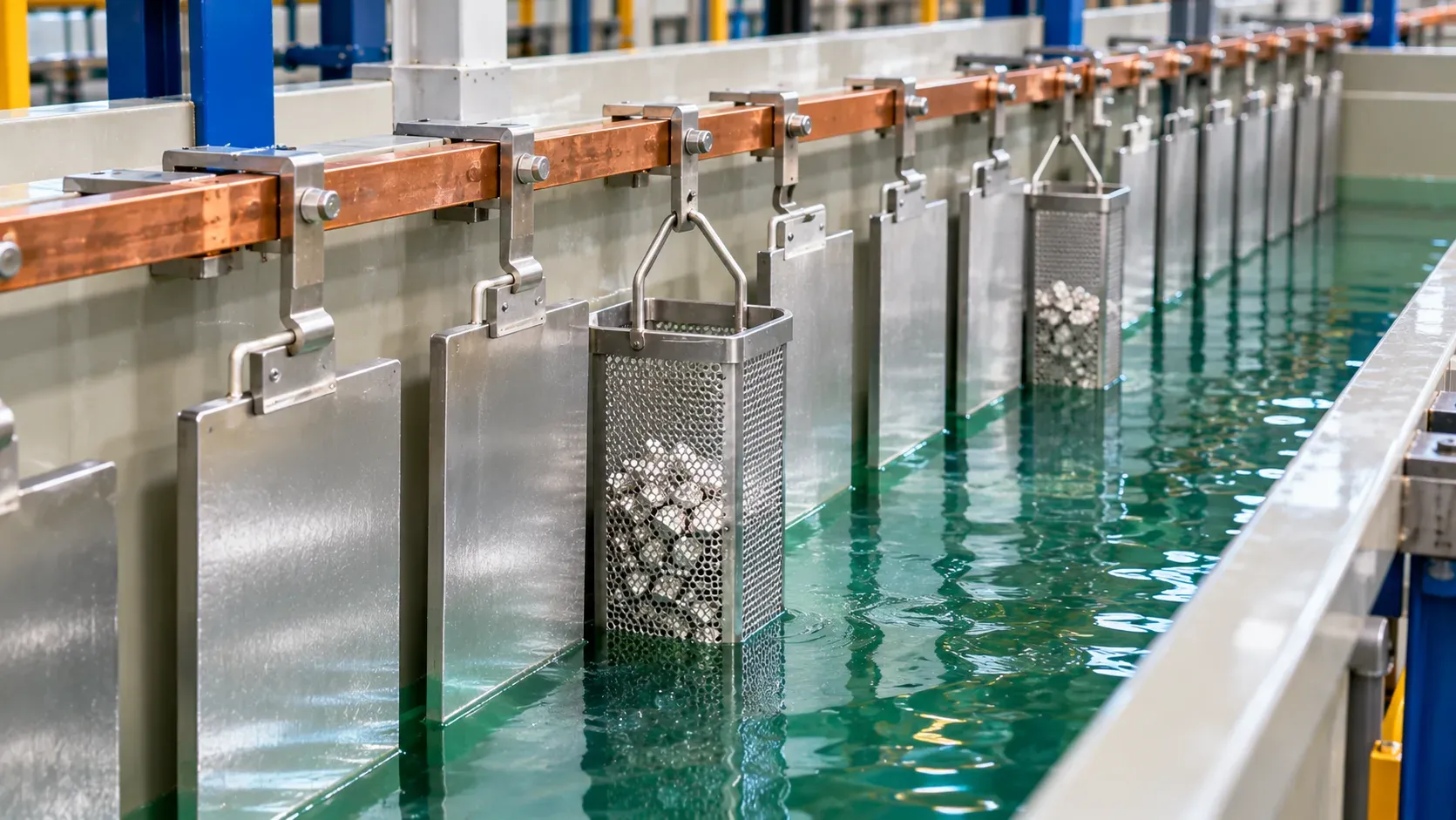
Nickel anodes should be specified with the approved bath requirement, anode material and form, holder arrangement, electrical connection and maintenance duties. Treat the anode as part of the tank system rather than an isolated consumable purchase. The enquiry should explain how material is identified, replenished and inspected during normal production.
Approved materialHolder & connectionsInspect & replenish
Original editorial enquiry framework. Conceptual inputs, not an engineered layout or measured result.
This guide is for buyers replacing anode equipment or coordinating it with a new nickel-plating tank. The chemistry supplier and process owner approve the material and operating requirements. The equipment discussion then addresses holders, access, contacts and records for the actual production duty.
What should a nickel anode material specification identify?
Give the bath identity and the process owner's approved anode requirement. Record the supplier's material designation, form and relevant documentation. If an existing line uses a specified material successfully, identify it accurately rather than replacing it with the general term “nickel.”
The Nickel Institute Nickel Plating Handbook provides industry technical background on nickel-plating practice, including anodes. Use that background to frame questions; it does not establish the compatible anode material or operating settings for an unspecified proprietary bath.
Ask what evidence accompanies delivered material and how the factory distinguishes approved stock from alternatives. Record whether a proposed change concerns material grade, form, supplier, holder or operating practice. Those changes should remain traceable to the process owner's approval rather than being combined into an unexplained replacement.
How does the nickel anode holder arrangement affect procurement?
Identify the tank, working levels, cathode load and the proposed anode locations. Include retained fittings and the clearances needed for handling equipment. Ask how the holder arrangement is assessed against the approved process and how it can be serviced without damaging surrounding equipment.
Where baskets, bags or other components are part of the approved arrangement, specify their duties separately. The enquiry needs the proposed material basis, usable arrangement and replacement responsibilities for each. Do not assume that an anode-material offer includes the complete holder and connection system.
Item | Information to provide | Evidence to request |
|---|---|---|
Bath requirement | Process identity and approved anode specification | Material designation and suitability basis for review |
Material form | Approved form and delivery documentation | Identification and replenishment arrangement |
Holder | Tank geometry, locations and retained components | Proposed arrangement, access and replacement boundary |
Electrical interface | Existing contacts and approved operating duty | Connection responsibilities and inspection provisions |
Bags/ancillaries | Process-owner requirements where applicable | Included components and service/replacement duties |
Records | Approved-stock control and maintenance expectations | Traceable inspection and replenishment record |
This is an original procurement worksheet. It does not prescribe anode area, a replenishment rate or a basket design for a particular bath.
Which operating records should a nickel anode enquiry include?
Ask how the proposed arrangement will be inspected during normal production. Identify the components requiring condition checks, the records the factory expects, and the party responsible for deciding when maintenance or replacement is needed. The answers should relate to the actual approved process.
For an existing line, provide the observed issue and supporting records. Distinguish changes in material supply, loading, bath conditions and holder condition. A surface-quality concern should not automatically be assigned to the anode without a process investigation.
Review electrical contacts and mechanical access with the responsible equipment designer. Ask which connection components are supplied and who installs and verifies them. The plating equipment checklist places those duties alongside rectifiers, handling and other tank services.
What should a complete nickel anode replacement scope cover?
Make an inventory of retained and replaced items. Include supports, holders, contacts, bags or other approved ancillaries, and the access needed for service. Mark the condition and compatibility of retained components as confirmed or requiring assessment.
Request a written basis for proposed substitutions. Compare offers using the same approved material, tank arrangement and operating duty. A lower consumable price is not a complete comparison if the proposal assumes a different holder, additional servicing or unresolved process approval.
Describe the planned shutdown and restart boundary. Identify which work requires the tank to be unavailable, which parts are supplied by others and what checks are needed before return to released production. Those responsibilities belong in the replacement offer alongside the consumables.
What should a nickel anode trial and handover demonstrate?
Agree the representative load and approved process before assessing a changed arrangement. Record material identity, holder configuration and the conditions of the trial. Inspect the finished parts using the agreed coating acceptance methods, while preserving the equipment and process records needed to interpret the outcome.
Identify unresolved conditions explicitly. A trial is useful when it tells the buyer what was demonstrated, what still requires investigation and who makes the next decision. It should not turn one favorable sample into an unsupported production guarantee for every load.
For a new line, connect the anode arrangement to the tank and handling drawings. Use the line quotation guide to list material, holders, connections, installation and commissioning as distinct supply items. The nickel-plating method comparison provides context for selecting the appropriate process route before specifying its equipment.
Questions You May Have:
Is any nickel material suitable as a plating anode?
Use the material and form approved for the actual bath. A general metal description should not substitute for the process owner's specification.
Does an anode quotation include baskets or bags?
Only if they are listed in the supply boundary. Specify the holder, ancillary components and electrical interfaces as separate comparison items.
Can a consumable change fix a recurring coating defect?
That needs process investigation. Supply the observed defect and operating records, and distinguish confirmed causes from proposed changes.
Can the first enquiry begin without a complete tank drawing?
Yes. Provide material identification, tank photographs and the known requirement. The supplier can identify the additional dimensions and interfaces needed for assessment.
Get Proposal and Demo
Introduce your anode-system enquiry with the bath requirement, retained arrangement and known service problem. Company, name, email and project country are required; technical information is optional. Ask which material, holder or line-interface scope can be assessed and confirmed in the offer.
Photographs, approved material records and drawings can follow by sales email. For an initial discussion, chat on WhatsApp. Explore the gantry equipment family when the enquiry includes the surrounding production line.
Image note: AI-generated cover illustration; not an ES-PRO installation, customer project or test result.