
Plating Process
Hydrogen Embrittlement Relief: Baking Equipment Brief
Hydrogen embrittlement relief baking equipment should implement a treatment approved for the steel, coating and applicable product specification. Define the transfer requirement, batch loading and rec
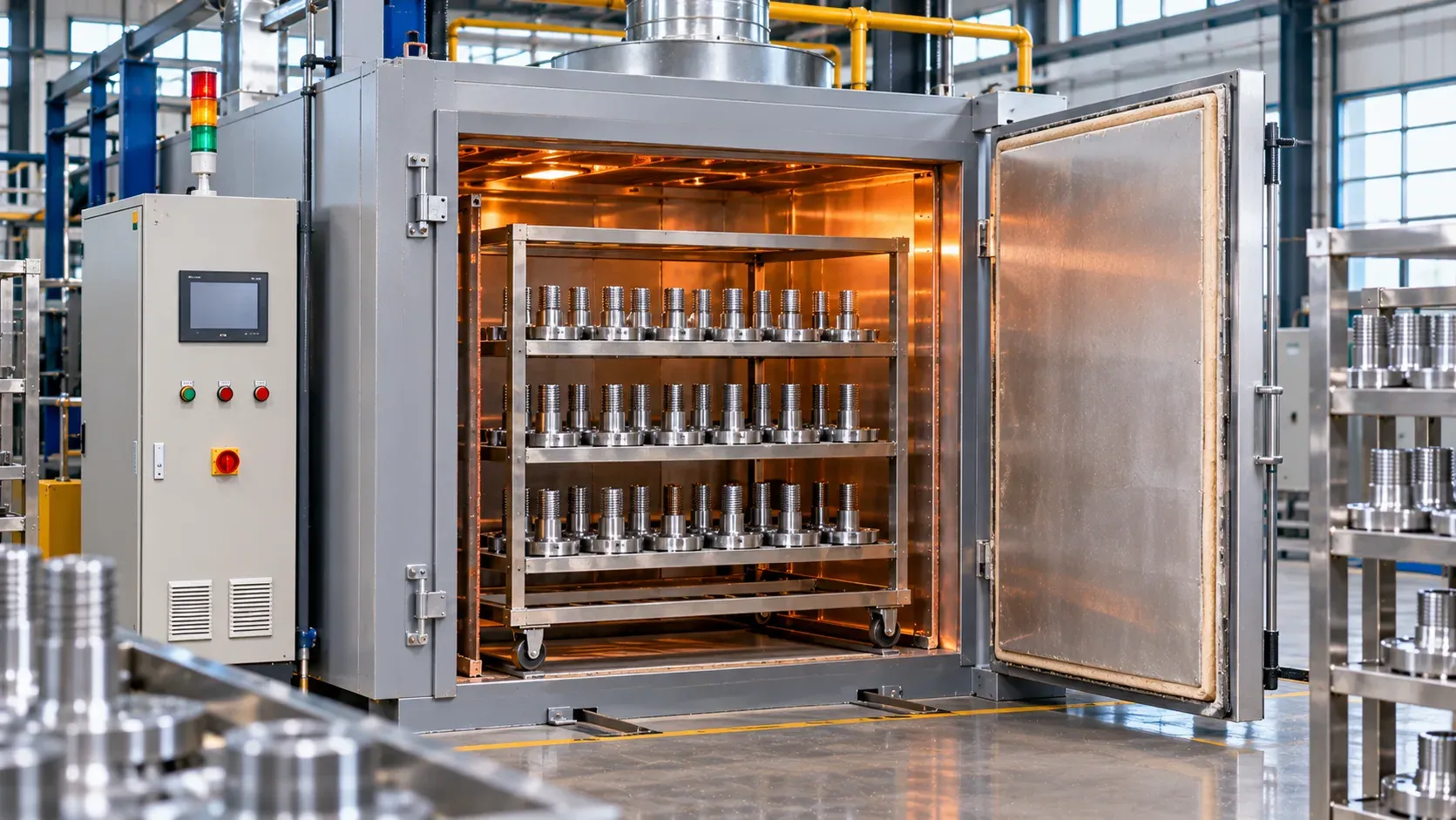
Hydrogen embrittlement relief baking equipment should implement a treatment approved for the steel, coating and applicable product specification. Define the transfer requirement, batch loading, temperature records and validation responsibilities before comparing ovens. Baking must not be presented as a universal assurance that plated steel is free from hydrogen-related failure risk.
Approved requirementBatch & treatment recordValidate & release
Original editorial enquiry framework. Conceptual inputs, not an engineered layout or measured result.
This guide is for buyers coordinating a plating line with an approved post-coating treatment. It concerns production interfaces and equipment evidence, not a heat-treatment recipe. The product or process authority determines applicability, treatment conditions and validation. For the surrounding line boundary, use our equipment setup checklist.
Which specification governs post-plating embrittlement-relief treatment?
Identify the steel grade and condition, relevant strength or hardness information, the coating system and the customer's applicable specification and edition. State which organization approves the treatment and who is authorized to interpret conflicting requirements. A generic material description is insufficient for assigning an embrittlement-risk treatment.
The official ASTM B1031-26e1 record discusses pre- and post-coating heat treatments and validation of baking practice. It describes guidance rather than universal mandatory treatment conditions. Its discussion also cautions against assuming that baking always eliminates internal hydrogen embrittlement risk. The agreed product or process specification governs the required treatment for a project.
Do not choose time and temperature from a general blog example. Give the equipment supplier the approved operating requirement, its permitted variations and the required evidence. Where those requirements are unresolved, mark the enquiry as preliminary and identify the responsible decision owner.
How does transfer to the relief oven affect the plating line?
Map the route between the relevant coating operation and the approved baking stage. Identify any intervening handling, inspection, sorting or production queue. The process authority should define the relevant start point, permitted transfer conditions and treatment timing. The equipment brief should show how the factory plans to maintain that requirement.
Include shift changes, abnormal loads and oven availability in the production discussion. Ask how a batch remains identified while waiting and who makes its release decision. A nominal oven capacity does not explain what happens when the plating line completes several loads close together.
Planning item | Information from the buyer/process authority | Evidence to request |
|---|---|---|
Applicability | Steel condition, coating and agreed specification | Traceability to the approved treatment requirement |
Transfer | Defined timing basis and intervening operations | Route and batch-identification arrangement |
Oven loading | Batch mass, fixtures and representative loading pattern | Stated usable load and operating assumptions |
Temperature record | Approved measurement and recording requirements | Included sensors, records and verification responsibilities |
Abnormal condition | Authority-approved hold, review and release rules | Indications, records and operator decisions |
Validation | Required component/process tests and acceptance owner | Clear separation of equipment tests and process validation |
This original worksheet coordinates responsibilities. It is not a validated treatment schedule, an oven rating or a claim about ES-PRO manufacturing capability.
What should an embrittlement-relief oven quotation specify?
Ask for the usable loading arrangement under the proposed operating conditions. Include baskets, fixtures and access requirements in the comparison. The offer should identify what a quoted capacity measures and which load pattern its performance statement assumes.
Define the recording boundary. Identify the temperature measurements and timestamps required by the approved procedure, how batches are associated with records and which equipment supplies that information. Ask how records are retained and retrieved for the factory's release decision.
Also separate normal control from protective and abnormal-condition responses. The responsible designers should define these functions and their verification. An equipment vendor's temperature display is not, by itself, evidence that the product's complete heat-treatment and validation requirements have been met.
Which tests verify relief-oven equipment and which approve the process?
Equipment acceptance should demonstrate the agreed equipment functions under the specified loading and test conditions. Process approval concerns whether the actual treatment meets the component and coating requirements. Record who owns each assessment, which evidence is required and whether a customer or other authority must witness or approve it.
Where a specification calls for a mechanical or process-qualification test, confirm the applicable method, sample requirements, laboratory responsibilities and acceptance authority. Do not substitute a routine oven run for that evidence. The B1031 catalogue's scope identifies validation as an essential consideration; it does not make any particular equipment package a qualified process.
For changes to a retained production line, document the proposed change separately from the current approved treatment. Ask which approvals, loading assessments or qualification evidence need review before the changed equipment is used for released production.
How should relief-oven capacity and interrupted batches be planned?
Build a batch schedule using the approved treatment and the line's actual output pattern. Include loading, unloading, necessary recovery and the records required for release. State which ovens or other assets already exist and how they are shared with other production.
Ask the supplier to show the assumptions behind any proposed throughput. The comparison should reveal waiting points and the response to unavailable equipment. The safe disposition of a delayed or interrupted batch belongs to the approved process procedure and its decision authority, not to an improvised equipment workaround.
Use the plating-line quotation guide to identify whether handling, recording, installation, commissioning and qualification support are included or provided by other parties. The steel coating overview gives the wider coating context without replacing the part's specification.
Questions You May Have:
Does every plated steel part need the same bake?
No universal schedule should be assumed. Applicability and treatment conditions come from the actual material, coating and agreed product or process requirement.
Does a completed oven cycle prove that embrittlement risk is eliminated?
No. Required process validation and component acceptance remain separate responsibilities, and baking should not be described as a universal guarantee.
Can oven capacity alone establish line output?
It does not describe the timing of completed plating loads, transfer constraints, loading pattern or release requirements. Compare a complete batch schedule.
Can an enquiry begin while treatment requirements are under review?
Yes. Introduce the component and review status. The final equipment duty and acceptance plan require the responsible authority's approved requirements.
Get Proposal and Demo
Introduce your post-coating equipment interfaces with the component family, coating and known batch schedule. Company, name, email and project country are required; technical requirements are optional for the initial introduction. Ask which equipment assessment is appropriate and confirm the proposed supply boundary.
Approved treatment documents and layouts can follow by sales email. For an initial discussion, chat on WhatsApp.
Image note: AI-generated cover illustration; not an ES-PRO installation, customer project or test result.


