
Plating Process
Electroless Nickel or Hard Chrome for Engineering Parts?
Compare electroless nickel and hard chrome using critical geometry, finish and service tests. Turn the approved route into equipment and acceptance duties.
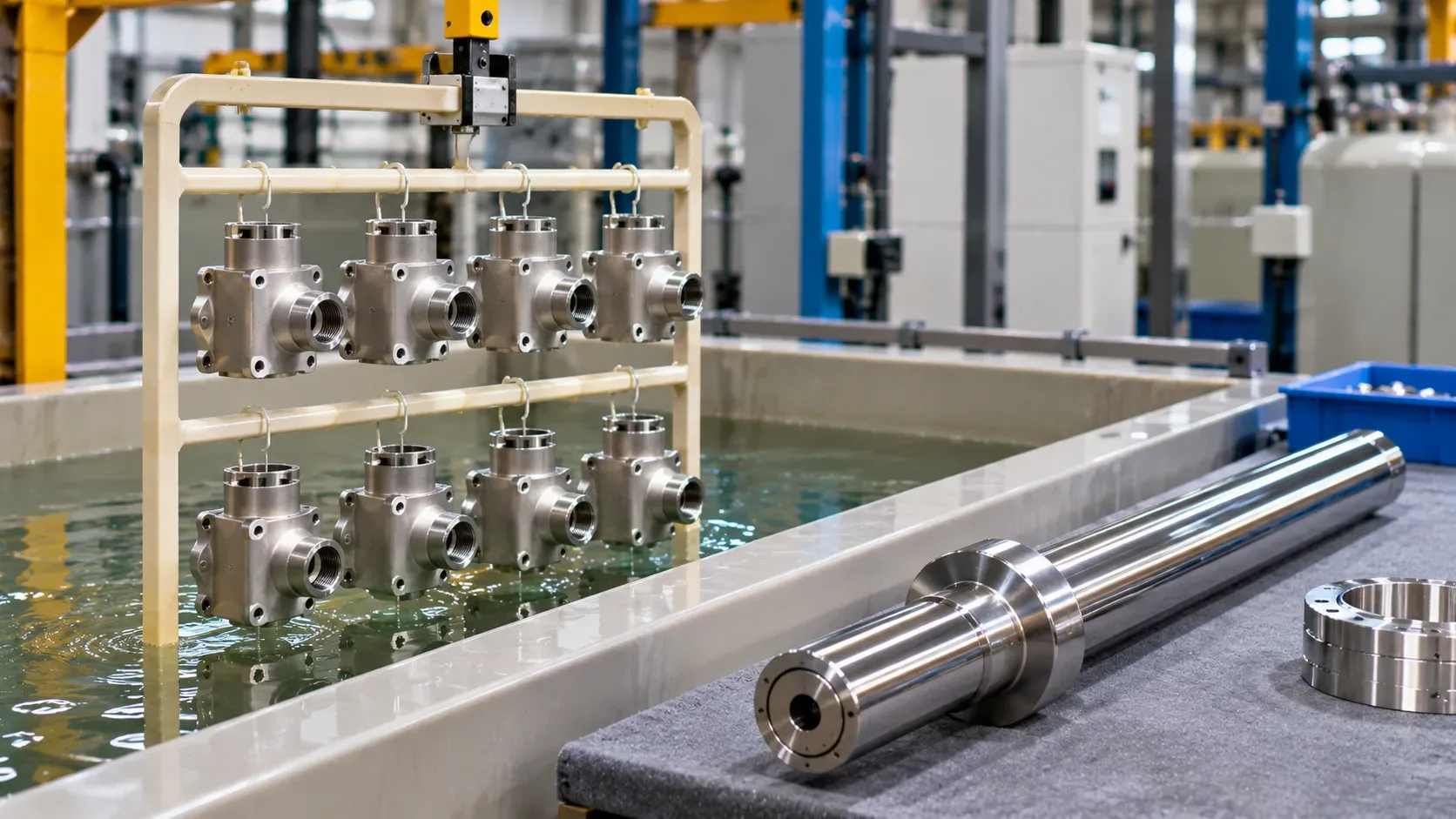
Compare electroless nickel and hard chromium against the specific part's required surface function, dimensions and service evidence. Identify the controlling coating specification and approved final condition. Trial representative features and any finishing operations, then define the production and inspection equipment needed for the route the drawing authority accepts.
The two processes have different deposition mechanisms and process-control needs. Electroless nickel uses chemical reduction. Hard chromium is electrodeposited. Neither process name alone establishes the correct material condition, thickness distribution or finished-part performance for a particular component.
Begin with the functional surfaces
Mark wear, sealing, mating and corrosion-critical surfaces. Record the substrate and condition, the required final dimensions and whether the part is coated before or after a relevant machining operation. Identify any permitted finishing after deposition.
Clarify the coating specification and revision. The SAE AMS2406R public scope concerns hard chromium deposits. The ASTM B733 catalogue covers autocatalytic nickel-phosphorus coatings. The applicable complete documents and drawing determine the actual requirements.
Comparison point | Question for the qualification | Equipment consequence |
|---|---|---|
Geometry and thickness locations | Can the approved route meet each named feature? | Fixture, inspection access and any approved auxiliary tooling |
Final surface condition | Which deposition and finishing sequence meets the requirement? | Process stages and downstream finishing interfaces |
Substrate and treatment history | Which preparation and special controls apply? | Approved route, records and responsible parties |
Service function | Which test or experience supports the choice? | Trial samples, test plan and release evidence |
Compare final conditions rather than isolated property claims
A hardness value needs its material condition and test basis. A friction or wear result needs its counterpart, load and environment. Ask which final state the proposed evidence represents, including any post-deposition treatment and finishing.
If the supplier proposes a different route from the drawing, have the responsible authority define the substitution decision. A coating that performs well in one test can still fail a separate dimensional or service requirement. Record the outstanding questions before assigning a production capacity or price basis.
Worked example with a recessed shaft feature
Suppose a steel shaft has a controlled sealing diameter and a recessed shoulder. The team compares two proposed coating routes. One candidate meets the sealing-diameter requirement after an approved finishing operation. The other candidate needs additional evidence at the recessed shoulder.
Use identified parts and compare the named locations before and after the agreed final operations. Include the required service check for the sealing surface. Keep the treatment history and the inspection results linked to each route.
If the recess cannot be assessed using the proposed production instrument, agree a suitable method or representative feature before the trial. If a route needs extra finishing, include the associated handling, material allowance and final dimensional verification. The accepted decision is the complete sequence that meets all requirements.
Turn the route into an equipment comparison
Ask each bidder for its process list and inspection boundary at the same accepted output. For electroless nickel, the process owner identifies bath monitoring, replenishment and other required operating duties. For hard chromium, confirm the approved electrical load and geometry as well as the complete preparation and finishing route.
The hard and decorative chrome comparison helps clarify which chromium job the buyer means. The coating thickness testing guide supports location and method planning. The line setup guide connects the selected sequence with utilities and space.
Record part and substrate · functional surface · invoked specification · final treatment and finishing state · dimensional map · service evidence · approved load · unresolved questions and owner. Use this record to compare offers on the same accepted-part basis.
Close the finishing and maintenance assumptions
List the consumables, fixtures and services that each approved route requires during normal production. Identify which duties belong to the chemistry supplier, the equipment supplier and the plant. Keep the basis specific to the proposed system rather than transferring requirements from an unrelated coating line.
Then review the finishing operations after deposition. Ask where parts wait, how they are protected and which dimensions are measured after finishing. If an outside contractor owns that operation, include its input condition and acceptance records in the comparison.
For a retrofit, ask which existing equipment has actually been assessed for the candidate duty. A reusable tank or machine needs a verified interface and an approved role in the new sequence. Record the evidence needed before any retained-equipment assumption becomes part of the price and schedule.
Procurement checklist
- A drawing separating functional coating zones, masked zones and final machined dimensions.
- The required final condition, including any approved heat treatment and finishing sequence.
- Separate prices and responsibilities for deposition equipment, subsequent finishing and verification of the finished part.
FAQ
Is electroless nickel always a direct replacement for hard chrome?
Use an approved qualification against the actual drawing, final condition and service requirements.
Can I compare hardness figures from two brochures?
First match material condition, test method and the function that the hardness result is intended to support.
Should finishing after coating appear in the line quote?
Identify its owner and interfaces whenever it is part of the sequence required for final acceptance.
Discuss an engineering-coating route
Share the functional surfaces and final requirements. Include the substrate, proposed routes and test basis. Send drawings by sales email, or discuss the project on WhatsApp.


