Deplating and Chemical Stripping: Plan the Rework
Plan deplating around the coating stack, substrate limits and three release points. Use a dimensional example, trial records and a stripping-line RFQ checklist.
Plan deplating around the coating to remove, the substrate to preserve and the evidence needed before replating. Identify the complete incoming stack, approve the removal endpoint and inspect the stripped part against its own requirements. Specify a stripping line only after the trial defines the process, handling and waste interfaces.
Removing an unwanted coating is one stage in a rework decision. The important procurement question is whether the proposed route can produce a part that is acceptable for the next operation, repeatedly and within an agreed scope. A visibly bare surface alone does not answer that question.
Decide what deplating must accomplish
State whether the task concerns rejected production parts, worn service parts, fixtures or material recovery. The endpoint and inspection responsibilities may differ. A fixture-cleaning process should not be assumed suitable for a precision component simply because both carry the same plated metal.
Give the process owner the substrate designation, condition and known processing history. Identify each coating layer to be removed, any layer to remain, repairs, masked zones and critical features. Where the incoming stack is uncertain, list the identification work that must precede a committed process proposal.
Ask who can authorize rework and what requirements remain applicable afterward. The drawing owner may need to resolve previous processing, restrictions on repeated rework, or additional inspection. Record those decisions before treating every rejected part as a candidate for stripping and replating.
Choose a route from the actual coating and substrate
Chemical, electrochemical and mechanical removal describe process families, not interchangeable settings. Have the responsible process supplier assess the actual stack, substrate, geometry and final condition. A polarity reversal by itself is not a qualified removal procedure.
The supplier should state the intended removal sequence and how completion is detected. Discuss what happens at exposed edges, recesses and areas where one layer clears before another. Define the response to an unresolved layer or unexpected substrate condition instead of simply extending processing until the surface looks clean.
Hubbard-Hall's remanufacturing overview places stripping alongside cleaning and preparation in a restoration workflow. It provides supplier context, not permission to transfer a route to an unqualified component. Obtain the actual approved process and compatibility assessment for the project.
Establish three release points for a stripping trial
Treat incoming acceptance, stripped-part acceptance and final replated-part acceptance as separate decisions. The first establishes what entered the trial; the second examines the substrate and removal endpoint; the third tests the finished coating system.
Release point | Evidence required | Decision owner to name |
|---|---|---|
Before stripping | Part identity, stack, material condition, baseline measurements | Rework or quality authority |
After stripping | Removal evidence, dimensions and specified substrate inspection | Authorized product disposition owner |
After replating | Final dimensions, coating tests and required functional checks | Final product release authority |
The checks depend on the part specification. This table does not establish universal allowable loss, a default rework count or an inspection method that applies to every alloy. If a critical requirement cannot be assessed, keep the trial open rather than recording a complete pass.
Preserve the same specimen identity across all three points. Relabeling stripped samples without retaining the original lot or rack position breaks the connection between what was removed and what subsequently passed.
Worked example: a plated sleeve with a controlled bore
Consider a hypothetical steel sleeve rejected for a coating defect. The buyer proposes stripping and replating. The bore and an external locating face are controlled features, and some surfaces must retain their existing condition. The proposed stripping trial needs to address those requirements explicitly.
Start with a marked drawing, the incoming stack and a baseline dimensional record. Agree whether coating is included in each baseline reading. Compare like process states: an as-plated diameter and a bare-substrate diameter cannot automatically be subtracted and reported as substrate loss.
For a dimensional planning example, suppose the design authority defines an acceptable bare bore of 20.000–20.020 mm at the specified stripped-part inspection stage. A trial reading is 20.018 mm. The arithmetic margin to the upper limit is 20.020 minus 20.018, or 0.002 mm: two micrometres. These numbers are fictional drawing inputs, not a recommended stripping allowance.
Ask the metrology owner how measurement uncertainty affects the acceptance decision. Also check the remaining defined locations and required surface inspections. A reading near the upper limit neither demonstrates process capability nor authorizes further stripping. Document its disposition under the agreed inspection rule.
Only accepted stripped parts proceed to the approved preparation and replating sequence. Measure the finished part again at its final drawing state and complete the specified coating checks. If replating produces an unacceptable bore or a separate adhesion problem, a successful removal trial cannot be used to declare the whole rework route qualified.
Record the endpoint and deviations while they are observable
Agree the observations or tests used to establish removal of the specified layers. Name the surfaces, inspection method and hold point. Where some coating is intentionally retained, mark that boundary rather than applying a blanket requirement for a completely bare part.
Record the approved process identity, actual part arrangement, observed endpoint and deviations. Preserve evidence of incomplete removal and unexpected surface changes before further processing hides them. A later coating can make it harder to reconstruct the stripped condition.
Use the coating thickness testing guide to discuss measurement options with the inspector. Do not assume a method selected for the original deposit can prove every aspect of a stripping endpoint. Its suitability depends on the retained stack, substrate and inspection purpose.
Specify stripping equipment from the demonstrated route
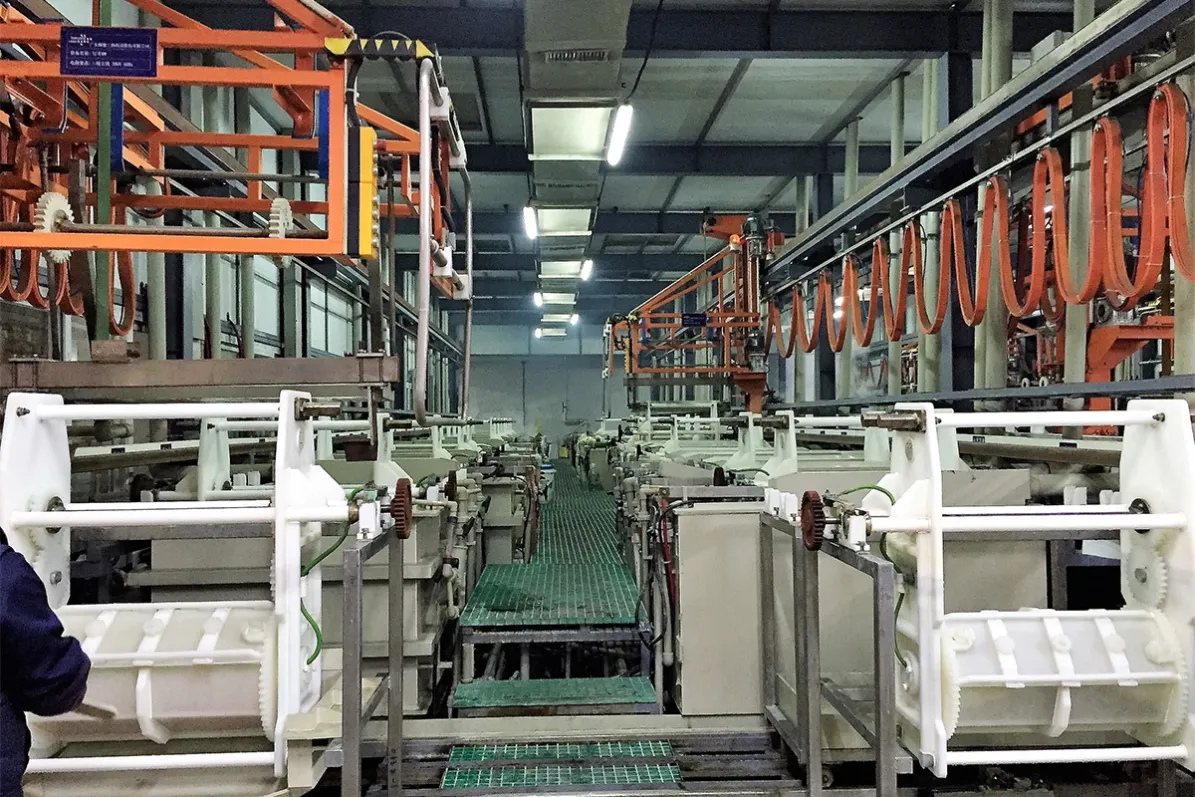
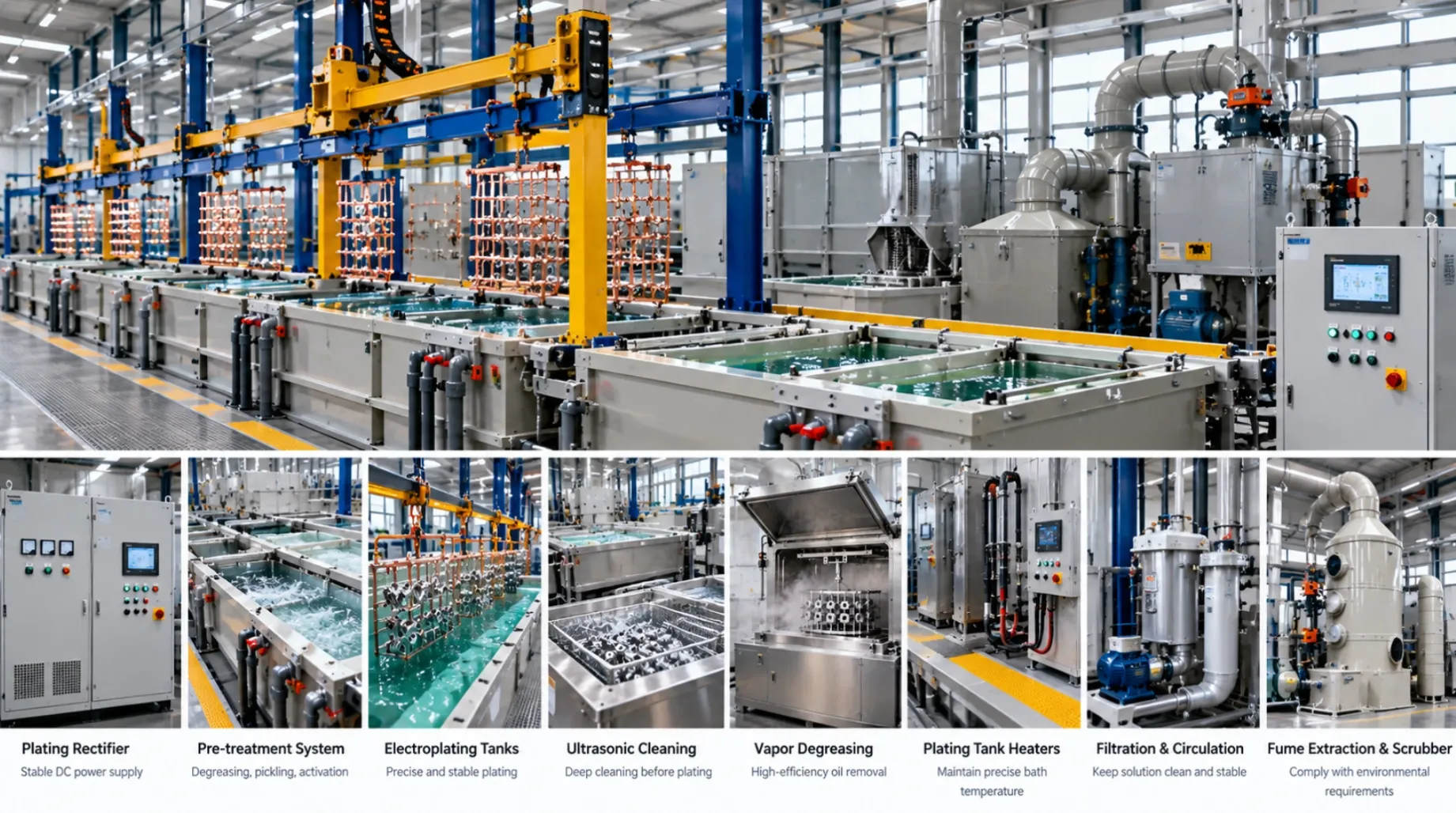
Build the equipment scope from the approved stage list. Identify which stages require thermal control, electrical functions, movement, filtration or other services. The quotation should show required duties and ownership; it should not invent a generic package around an unidentified stripping solution.
Request a compatibility assessment for the tank, fixtures, seals, pipework and instruments at the proposed operating and maintenance conditions. If existing equipment is retained, record its condition and the survey needed before reuse. A familiar tank material is not sufficient evidence for every stripping duty.
The equipment buyer's guide supports the wider interface list. Include handling between release points, sample access, quarantine locations and means of retaining lot identity. Ask how the installation will support the required inspection without forcing operators to mix accepted and unresolved parts.
Give waste streams a defined destination
List process solutions, rinses and collected residues separately for assessment. Identify the party responsible for characterization, collection, treatment and any recovery decision. Existing treatment equipment must be assessed against the new stream before it is included as an assumed destination.
The EPA metal-finishing guidance provides a United States regulatory starting point and links to coverage information. It is not a universal discharge approval. Have the responsible local specialist establish the applicable requirements and translate them into the physical interfaces included in the equipment offer.
Keep a possible recovery value separate from an assured credit in the project economics. The actual material, collection route and commercial terms must support any recovery allowance. This prevents a speculative value from concealing the cost of inspection, rejected parts or waste management.
Compare rework quotations on accepted parts
Ask bidders to identify the complete scope: incoming assessment, removal stages, inspection, preparation, replating, final testing and unresolved-condition handling. Distinguish duties provided by the equipment supplier from duties retained by the buyer or chemistry supplier.
Quotation item | Clarification to request | Why it changes the comparison |
|---|---|---|
Trial basis | Actual stack, substrate and representative geometry | Determines what the trial demonstrates |
Accepted output | Release points and unresolved-part treatment | Removal rate alone does not describe usable output |
Retained equipment | Survey and remedial-work boundary | Prevents assumed reuse from hiding cost |
Inspection | Methods, access, records and ownership | Makes acceptance evidence deliverable |
Streams and residues | Collection interfaces and exclusions | Defines the receiving systems that must be assessed |
Use the plating-line cost guide to organize broader cost questions. Keep uncertain remedial work visible until the survey or trial resolves it.
Procurement checklist for a deplating project
- Part family, material designation, incoming condition and complete known coating stack.
- Marked retained surfaces, critical dimensions and baseline process state.
- Authorized rework restrictions, previous cycles and unresolved identification work.
- Approved removal route, endpoint evidence and stripped-part inspection plan.
- Preparation, replating and final acceptance requirements with traceable specimen identity.
- Equipment compatibility, handling, utility and maintenance interfaces.
- Defined stream destinations, characterization duties and commercial recovery assumptions.
- Trial deviations, open actions, responsible owners and final disposition authority.
FAQ
Is deplating simply electroplating with reversed polarity?
That description is insufficient to approve a process. Select and qualify the actual removal route against the coating, substrate and final requirements.
Does a clean-looking stripped part prove no substrate damage?
No. Apply the agreed dimensional and substrate inspections before releasing it to the next operation.
Can every rejected part be stripped and replated?
Check the design requirements, material history and approved rework limitations. Some parts may require another disposition.
Can a stripping trial authorize the final replated product?
Keep the release points separate. A final replated part must meet its own specified acceptance requirements.
Discuss a coating-removal and rework scope
Share the incoming stack and required final condition. Include the material, critical features and known rework history. Send records by sales email, or discuss the project on WhatsApp.