Plating Lines & Equipment
Brush Plating Equipment: Define the Repair Requirements
Brush plating equipment should be assessed against an approved local-coating or repair requirement, including the substrate, treatment boundary, required deposit, operator access and acceptance eviden
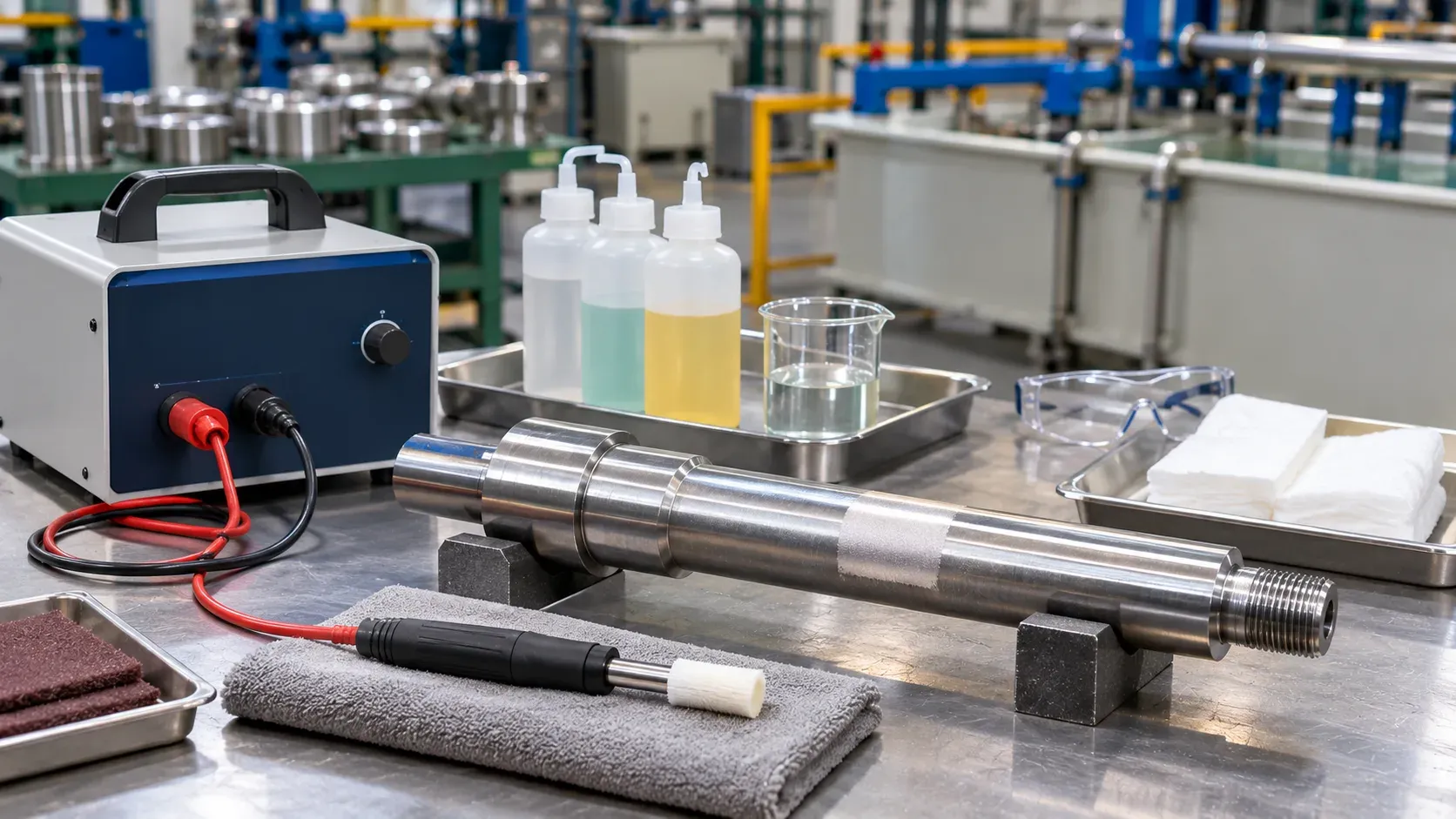
Brush plating equipment should be assessed against an approved local-coating or repair requirement, including the substrate, treatment boundary, required deposit, operator access and acceptance checks. Define the work before selecting a kit or power supply. The ability to coat a local area does not establish that a proposed repair is approved for the component.
Approved local areaTool & operator accessInspect the repair
Original editorial enquiry framework. Conceptual inputs, not an engineered layout or measured result.
This guide is for an industrial buyer preparing a selective local-treatment enquiry. It focuses on equipment and process responsibilities for a specified component. Product authority and process qualification remain part of the project; a general equipment description cannot approve a structural, dimensional or service-critical repair.
What should a brush-plating repair drawing show?
Identify the substrate and component condition. Mark the area requiring treatment, the permitted coating boundary and the dimensions before and after the proposed work. State whether the task is an approved repair, a new local deposit, or a feasibility assessment that has not yet received product approval.
List nearby surfaces and features that must remain unaffected under the approved process. Identify masking requirements, access restrictions and the means of supporting the component. A local area may be reachable physically while still presenting unresolved treatment or inspection constraints.
The official SAE AMS2451E record concerns brush-plating requirements and accompanying detail specifications. Identify the applicable requirement, deposit-specific document and edition with the product authority when they are called up. The catalogue does not qualify a repair or confirm a supplier's equipment capability.
Which brush-plating equipment duties follow from the repair process?
Give the process owner's required electrical operation, deposit and preparation sequence. Ask which power-supply functions, tools, contacts, monitoring and ancillary items are needed to implement it. Distinguish confirmed requirements from options being explored during development.
Identify operator access and movement constraints. Supply component orientation, working space, handling limits and the required treatment boundary. Request an explanation of how the proposed tools reach and follow the selected area under the approved method.
Requirement | Information to provide | Question for the equipment assessment |
|---|---|---|
Component | Substrate, condition and approved repair status | Which process authority approves the work? |
Local area | Marked boundary and neighboring protected features | What access, masking and tool arrangement is required? |
Deposit | Agreed material, thickness/finished dimensions and specification | Which process and electrical functions must be supplied? |
Operator task | Positioning, access and approved method | What manual responsibilities and training are assumed? |
Verification | Required inspections and acceptance owner | How will the selected area be assessed after treatment? |
Site services | Work area, utilities and waste/ventilation interfaces | Which supporting items are included or provided locally? |
The table is an original enquiry worksheet. It is not a repair authorization, a validated method or an equipment performance result.
How does a brush-plating repair differ from an immersion-line project?
The first questions concern a particular area, its access and the component's release authority. An immersion-line enquiry usually begins with repeatable loads and coordinated processing stages. Do not transfer the assumptions from one enquiry to the other without reviewing the actual method and workpiece.
State whether the task will occur in a dedicated work area, as part of a production sequence or at another approved location. The surrounding services and responsibilities must be assessed for that location. The equipment offer should name the factory-provided items it assumes.
For repeated work, define the part mix, preparation, operator tasks and inspection sequence used to assess output. A demonstration on an easily accessible patch does not establish the processing time or acceptance of a complex repair area. Ask for the operating assumptions behind any proposed capacity statement.
What should a brush-plating repair demonstration establish?
Agree the representative component or approved test piece, the local boundary and the required finished condition. Record the incoming condition, process requirements and tools used. The demonstration should be judged using the selected inspection methods rather than appearance alone.
Identify who provides the test piece, who approves the method and who assesses the result. If a particular repair needs customer, engineering or other authority approval, preserve that step explicitly. Equipment demonstration and repair qualification should have distinct owners and records.
Ask which conditions remain unproven after the trial. They may concern geometry, access, masking, deposit acceptance or operator method. A useful report defines those next steps instead of converting an incomplete trial into a general supply commitment.
How should buyers compare brush-plating repair proposals?
Compare offers against the same approved work scope and electrical duty. List included tools, contacts, power-supply functions, instruments, process materials where applicable, training and documentation. Identify recurring consumables and the responsibilities assumed of the operator and factory.
Separate equipment supply from any chemistry, process approval or repair service included in an offer. If these duties come from different providers, identify the interface owner. A kit description with a long accessory list can still omit the requirements that govern release of the treated component.
Use the plating-line quotation guide for a common included/optional/supplied-by-others schedule. The equipment overview helps place electrical output, preparation, rinsing and site services in the wider equipment discussion.
Questions You May Have:
Does local coating automatically make a repair acceptable?
No. The applicable product authority and approved repair requirements determine whether the treated component can be released.
Is a general brush-plating kit enough to specify the project?
It describes possible equipment. The actual component, approved deposit, access, method and inspection requirements define what the offer needs to contain.
Can production output be inferred from the power-supply rating?
No. Preparation, local tool work, handling, operator duties and inspection belong in the operating assessment alongside electrical requirements.
Can an initial enquiry begin without a finalized repair drawing?
Yes. Describe the component, affected area and approval status. Mark missing requirements so the assessment can identify the needed information.
Get Proposal and Demo
Introduce the local-treatment project with the component, affected area and approval status. Company, name, email and project country are required; technical details are optional for the introduction. Ask ES-PRO to assess the requested equipment scope and confirm which items and demonstration can be proposed.
Drawings and approved requirements can follow by sales email, or chat on WhatsApp. See the electroplating machine guide when comparing local work with a broader production-handling project.
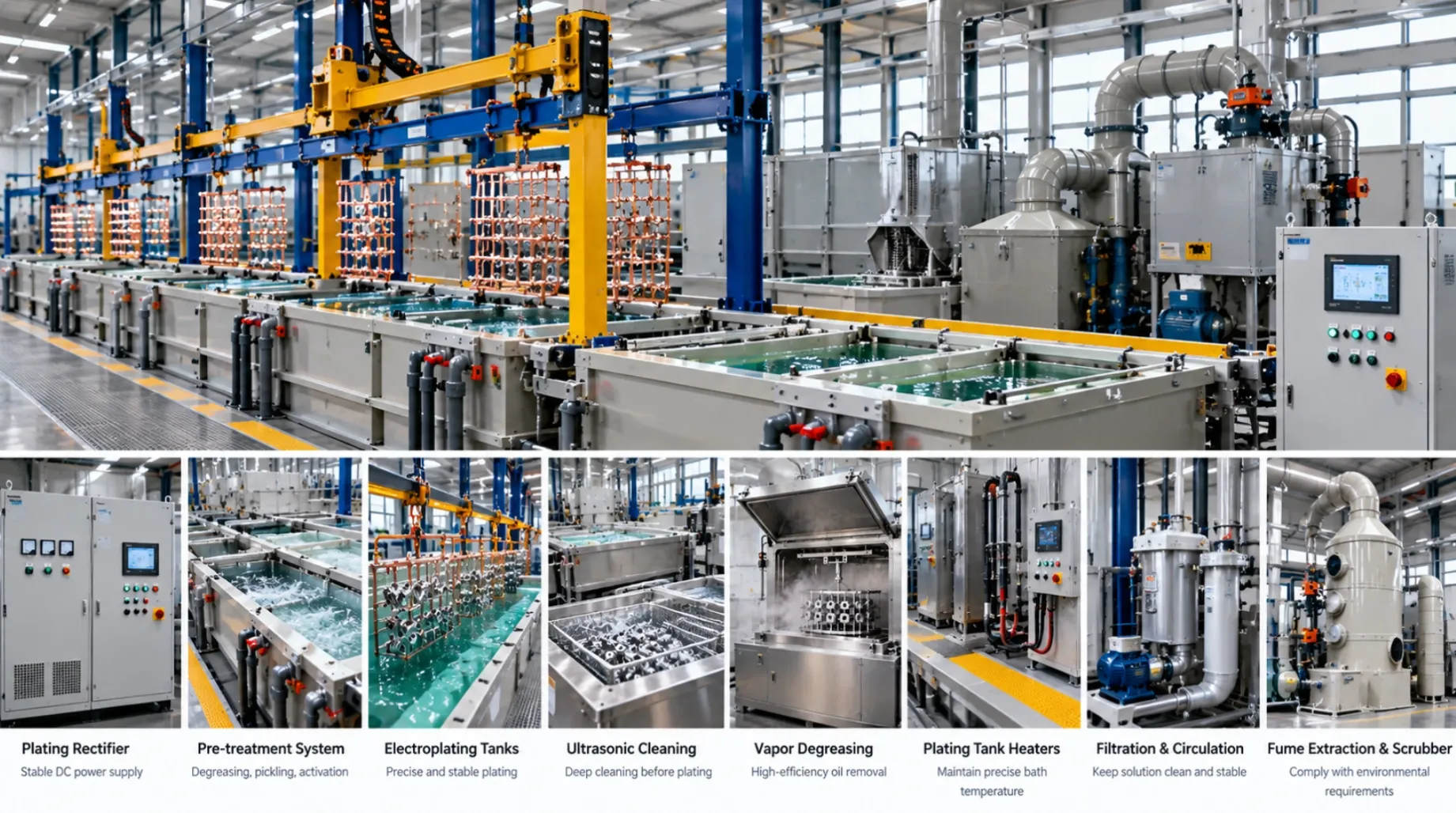
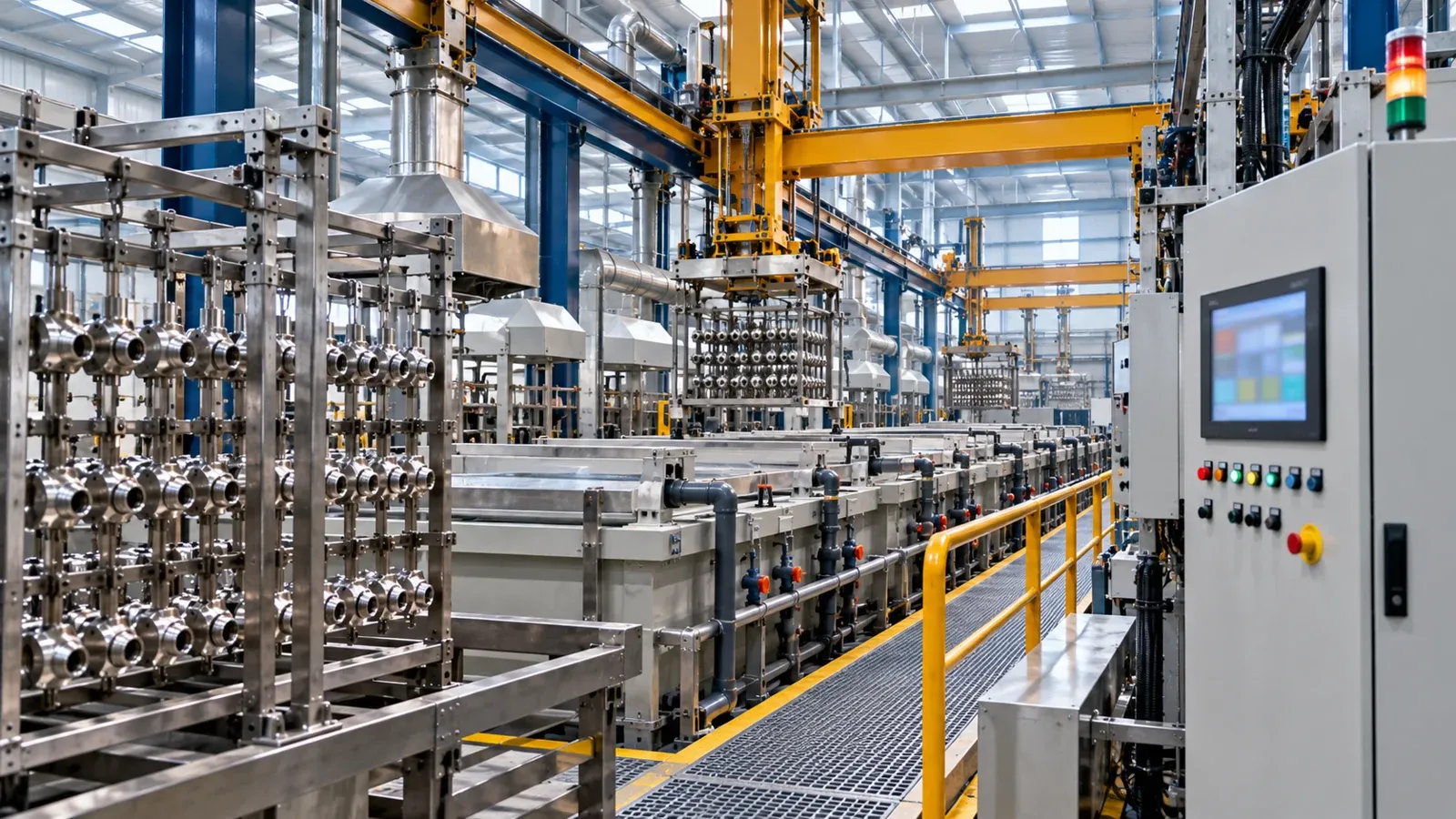
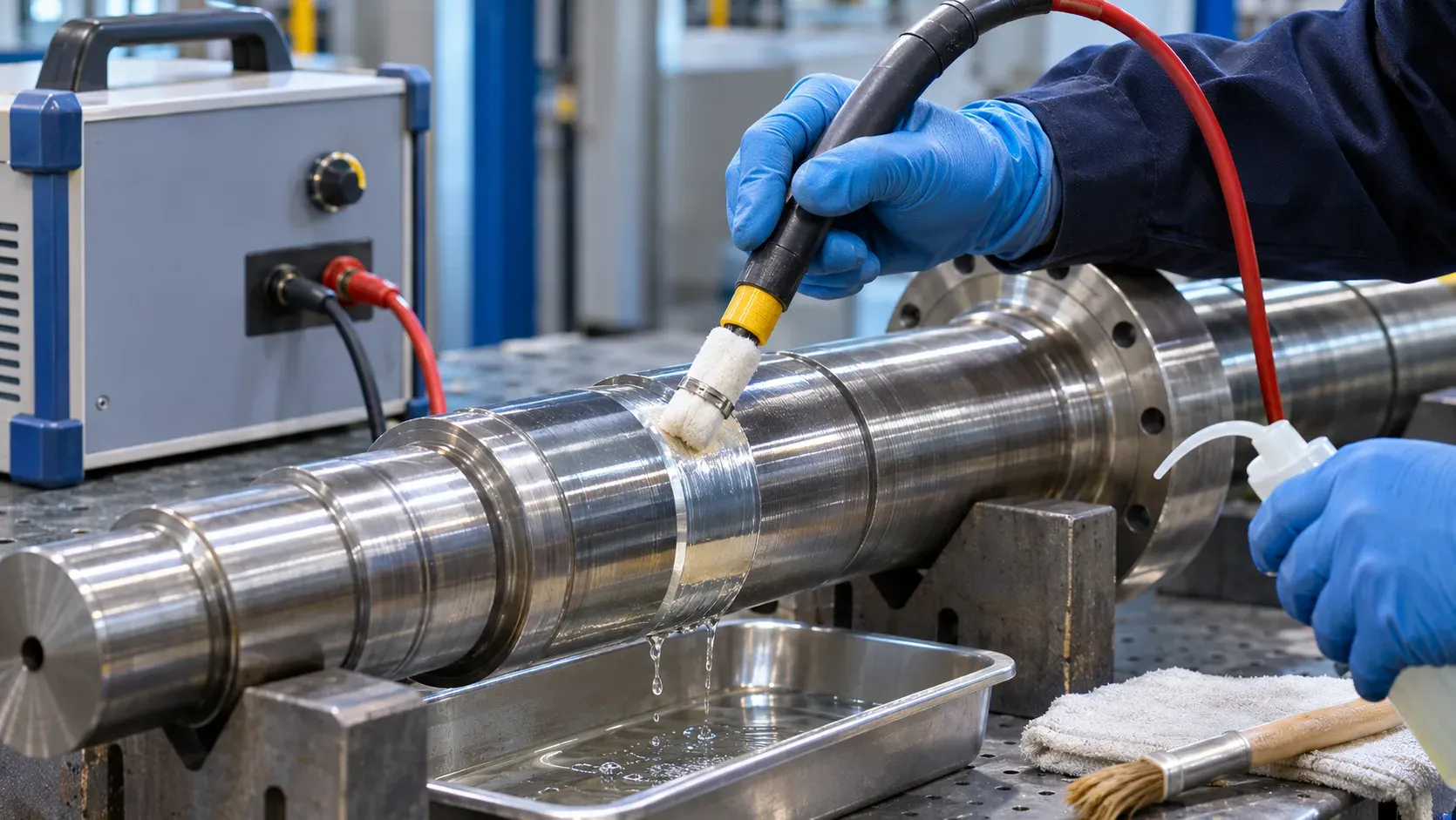
Image note: AI-generated cover illustration; not an ES-PRO installation, customer project or test result.