
Plating Process
Acid or Alkaline Zinc Plating for a New Line?
Compare acid and alkaline zinc routes using real parts, thickness maps and accepted output. Turn the trial results into clear equipment and service duties.
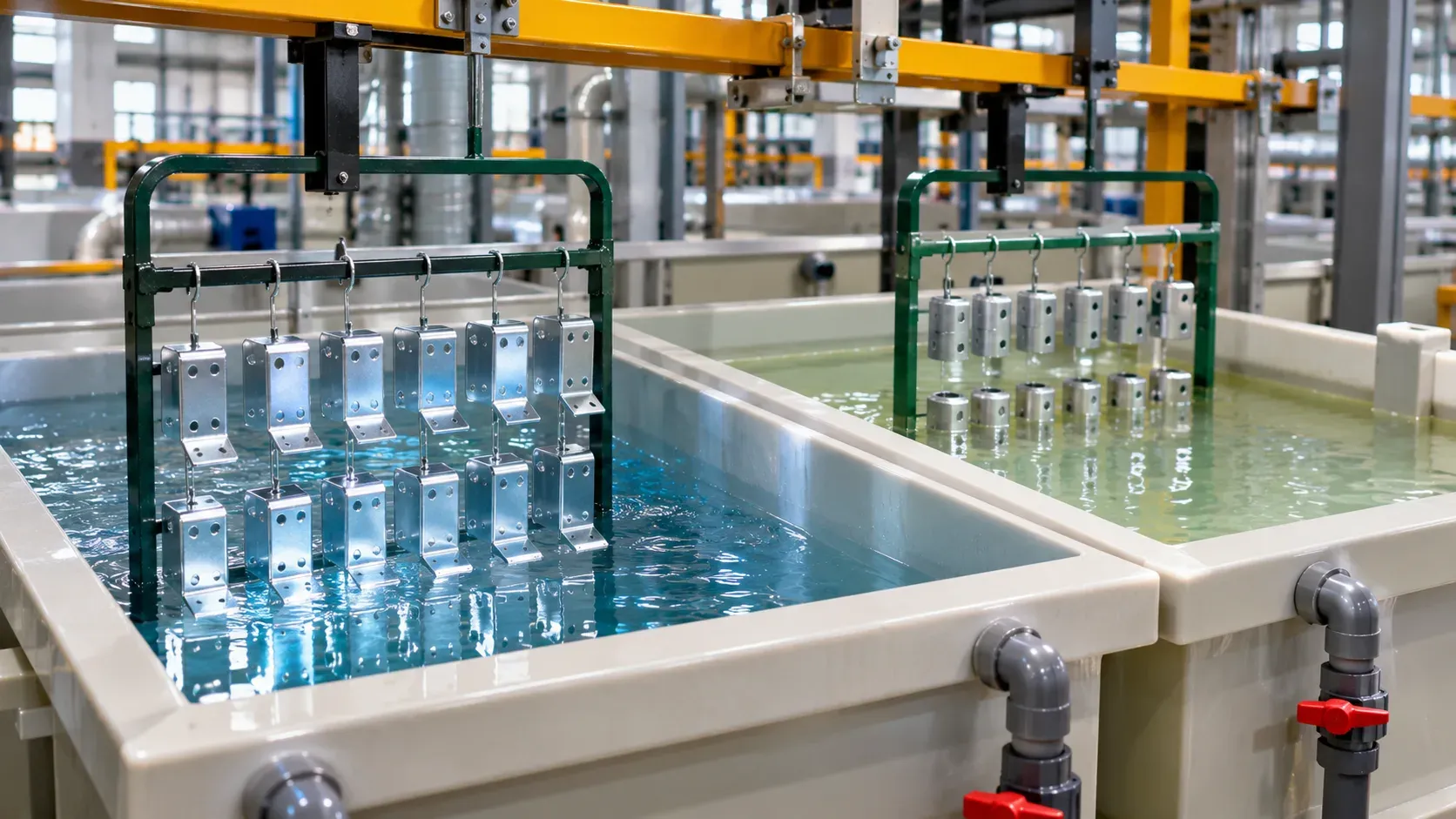
Choose an acid or alkaline zinc route by qualifying the required coating on representative production parts. Compare the approved chemistry systems at the critical thickness locations, full load and intended post-treatment. Use accepted output and the actual utility and maintenance duties to turn the preferred route into an equipment brief.
The route name alone cannot determine the best line. Part geometry, substrate, loading and the complete finish all affect the comparison. A simple test piece may give a different picture from a heavily loaded rack with deep recesses.
Define the two proposed systems precisely
Ask the chemistry supplier to identify each proposed system and its approved application range. Record the substrate and incoming condition, rack or barrel format, complete post-treatment and the evidence needed for the drawing. Confirm which stages and auxiliary equipment each proposal assumes.
The MKS Atotech zinc portfolio illustrates the range of zinc and zinc-alloy systems offered by chemistry suppliers. Their product-specific performance figures apply to the stated conditions. Ask for the data and trial conditions behind a recommendation before using it in an output or equipment guarantee.
Comparison input | What the trial should establish | Equipment consequence |
|---|---|---|
Critical surfaces and recesses | Thickness and appearance at named locations | Qualified load, electrical geometry and inspection access |
Approved part load | Repeatable first-pass output | Tank positions, transfer schedule and rectifier duty |
Complete coating system | Acceptance after required post-treatments | Stage sequence, rinses and handling interfaces |
Operating and maintenance duties | Services required by the specific system | Auxiliary equipment, access and planned service work |
Compare coating maps before comparing cycle claims
Use the same drawing and agreed acceptance criteria for both routes. Mark the measured features and preserve the measurement method. If one route uses a different load pattern, document that configuration and report output per qualified load.
The coating thickness testing guide helps define measurement access. Confirm that readings at accessible faces do not silently replace a required recess measurement. Record raw values as well as the final pass decision.
Use the chemistry owner's approved conditions for each trial. Changing several settings without documenting them makes it difficult to understand why a result changed. A route comparison can use different approved programs, provided that the report identifies them and compares the same finished-part requirement.
Worked example with a recessed steel bracket
Suppose two candidate systems can coat a steel bracket. A flat outer face passes with both. One proposed load also meets the required recess thickness, while another needs reduced occupancy or a different approved electrical arrangement.
Compare the final qualified configurations. Record accepted pieces per load and the sustained rack interval, including drain and rinse requirements. A nominally shorter deposition stage may not improve output if the qualified load contains fewer accepted pieces or the shared hoist becomes the constraint.
For example, an illustrative 20 accepted pieces every six minutes gives 200 per hour. A second qualified configuration delivering 24 every eight minutes gives 180. These are arithmetic examples, not chemistry performance claims. Repeat the relevant production sequence and use actual first-pass results before selecting a capacity basis.
Translate the selected route into an RFQ
Give the equipment supplier the chosen chemistry system, part family, load, electrical duty and full stage list. Ask the chemistry supplier to confirm the required circulation, filtration, heat transfer and other auxiliary functions. Record who supplies each item and who verifies compatibility.
Use the zinc plating process guide for the wider route and the rectifier selection guide for the electrical basis. Include representative low and high loads where both belong in production.
Copy part and finish · system identity · approved program · load map · critical readings · accepted count · sustained interval · services and auxiliaries · open actions and owner into the bid basis.
Challenge the preferred route with the production mix
After choosing a candidate, repeat the comparison with the part family that is expected to be most demanding for the proposed load or geometry. Record why it was selected. A trial that qualifies one open bracket may leave another part's deeper recess or different substrate outside the demonstrated range.
Ask the supplier to identify the equipment feature that changes if this second family needs another load pattern or longer approved stage. The answer may concern the scheduler, rack count or a process station. Keep that response linked to the actual trial result so the quotation can be revised deliberately.
For each open item, assign the sample or observation needed to close it and a responsible owner. An untested claim about thickness distribution should remain an open qualification item until the agreed map is available.
Procurement checklist
- The named acid and alkaline systems, chemistry supplier and approved trial programs.
- A marked thickness map, accepted pieces per load and demonstrated rack interval for each route.
- A supplier-by-supplier scope for tanks, rectifiers, filtration, temperature control and maintenance access.
FAQ
Is alkaline zinc always the better choice for recesses?
Compare the actual systems on the required geometry and load. Record the critical thickness map rather than relying on a route label.
Can a faster bath automatically increase line output?
Check the qualified load, complete route and shared transfer schedule before assigning an output advantage.
Can the two routes use the same equipment?
Have the process and equipment suppliers check the full stage, material, electrical and auxiliary requirements before assuming reuse.
Discuss a zinc line comparison
Share your part family and acceptance map. Include the two proposed systems and trial conditions. Send drawings by sales email, or discuss the project on WhatsApp.


