
Plating Process
Magnesium Plating Substrate Challenges
Magnesium is the lightest structural metal and its use in automotive, aerospace and consumer electronics is growing — but it is also the most difficult common substrate to electroplate. Magnesium reac
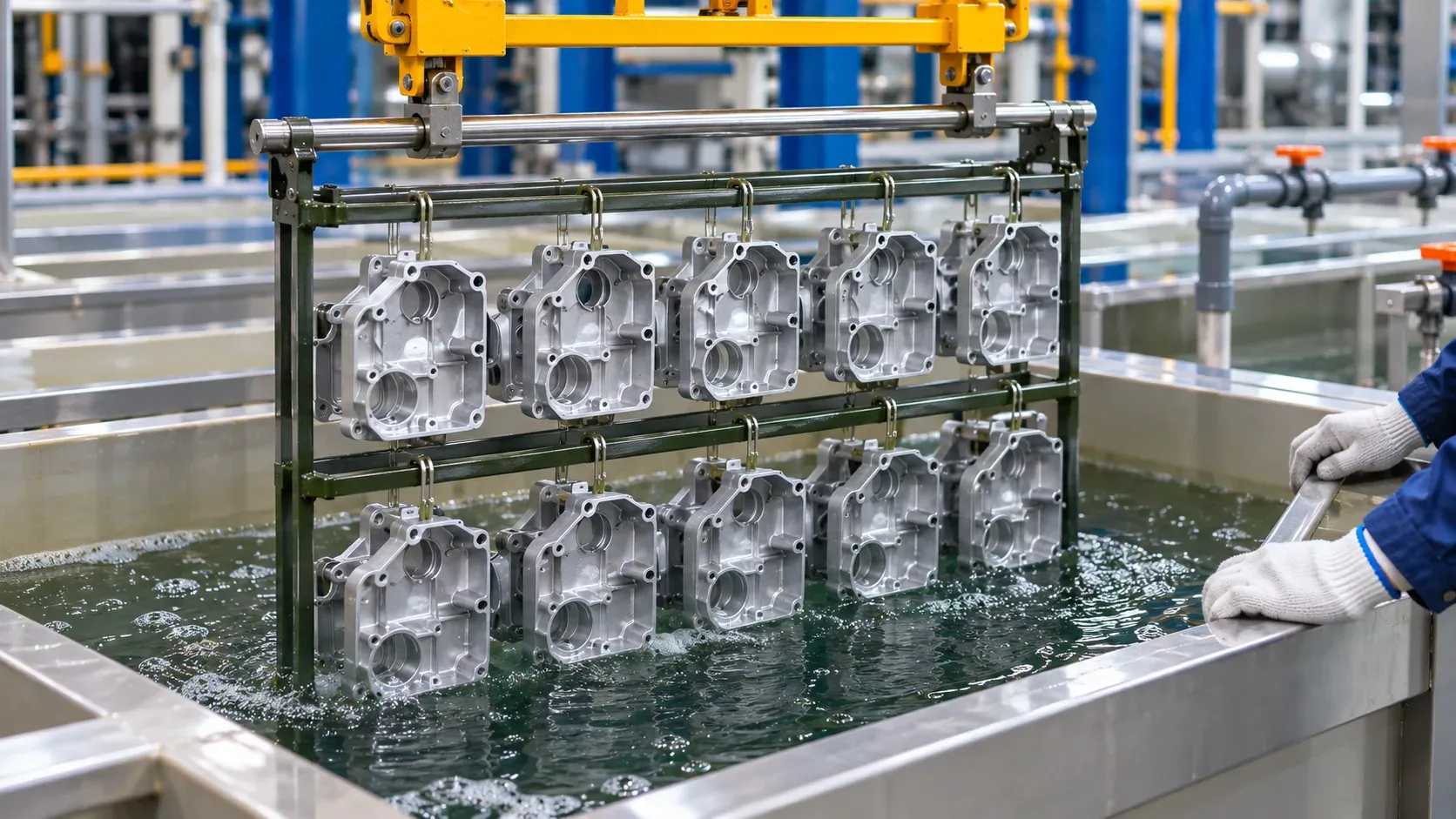
Magnesium is the lightest structural metal and its use in automotive, aerospace and consumer electronics is growing — but it is also the most difficult common substrate to electroplate. Magnesium reacts with almost every plating chemistry, its natural oxide layer reforms instantly, and galvanic corrosion at the coating boundary destroys unprotected parts. This guide covers the pre-treatment sequence, the plating options and the equipment scope for magnesium substrates.
Technical planning document — confirm chemistry parameters with your chemistry supplier, as magnesium pre-treatment is chemistry-specific.
Why magnesium is difficult
Magnesium has the most negative electrochemical potential of any structural metal. In any aqueous solution, it corrodes rapidly — producing hydrogen gas, dissolving the substrate and preventing adhesion. The natural magnesium oxide layer reforms within seconds of surface preparation. Every plating chemistry that works on steel or aluminum must be modified or replaced for magnesium.
Challenge | Why it happens | Consequence if ignored |
|---|---|---|
Instant oxide reformation | Mg oxidises within seconds of surface preparation | No adhesion — coating deposits on oxide, not metal |
Acid attack | Mg dissolves rapidly in all acids | Substrate loss, hydrogen gas generation, surface pitting |
Galvanic corrosion | Mg is anodic to every common coating metal | Pinholes and corrosion at pores in the coating after service |
Hydrogen embrittlement | Mg dissolution generates hydrogen on the part surface | Blisters and adhesion failure during plating |
The pre-treatment sequence for magnesium
Step | Chemistry | Function |
|---|---|---|
1 · Alkaline cleaning | Mild alkaline cleaner, 60–80°C | Removes oil and gross soil |
2 · Pickling | Chromic acid or proprietary magnesium pickle | Removes oxide and old coating — very short immersion (seconds) |
3 · Activation | Hydrofluoric acid or ammonium bifluoride | Conditions the surface for zinc or zincate treatment |
4 · Zincate (double) | Zinc immersion deposit | Deposits a thin zinc layer that acts as the plating base — done twice for uniformity |
5 · Copper strike | Cyanide copper or electroless nickel | First electrodeposited layer over the zinc — isolates magnesium from subsequent acids |
6 · Conventional plating | Nickel, chrome, etc. | Standard plating on top of the copper strike |
The double zincate step is critical: the first zincate layer is non-uniform, so it is partially dissolved in acid and re-zincated for better coverage. Skipping the double zincate is the most common cause of adhesion failure on magnesium.
The equipment scope
- All tanks in PP or lined steel. Magnesium chemistry includes hydrofluoric acid — tank material compatibility is critical.
- Ventilation for HF chemistry. Hydrofluoric acid fumes require dedicated extraction in compatible material.
- Short-timing hoist system. Magnesium pickling and activation are measured in seconds, not minutes — a programmable hoist prevents over-exposure.
- Rinse stages between every step. Carry-over between magnesium chemistry steps causes contamination and quality failures.
- Waste treatment for fluoride. Fluoride-containing rinse water requires calcium-based precipitation before discharge.
Key takeaways
- Magnesium corrodes in every plating chemistry — the zincate process isolates it from the electrolyte.
- Double zincate is the critical pre-treatment step that prevents adhesion failure.
- Copper strike over the zincate isolates magnesium from subsequent acid plating solutions.
- Hydrofluoric acid activation requires dedicated tank material and ventilation.
- Fluoride waste treatment is part of the effluent scope.
Your next five steps
- Confirm the magnesium alloy — AZ91D, AM60 and other alloys have different pickling responses.
- Obtain the magnesium-specific pre-treatment chemistry from a specialist supplier.
- Design the tank sequence for the full pre-treatment chain with short-timing capability.
- Specify PP tanks and HF-compatible extraction and ventilation.
- Plan the fluoride-containing waste treatment in the effluent scope.
FAQ
Can we skip the double zincate step?
It depends on the alloy and the coating requirement. For thin coatings on uniform AZ91D castings, a single zincate may work. For maximum adhesion, for wrought alloys or for safety-critical parts, double zincate is the specification.
Is hydrofluoric acid safe to use?
HF is one of the most hazardous industrial chemicals — it penetrates skin and attacks bone. Full PPE, calcium gluconate gel on site, dedicated ventilation and strict handling protocols are mandatory.
Can we use electroless nickel on magnesium?
Yes — ENP on magnesium after zincate and a copper strike is a common route. Direct ENP on magnesium without zincate is possible with special chemistries but adhesion is less reliable.
Image note: AI-generated editorial photography illustrates equipment or workpiece contexts; it is not an ES-PRO installation, customer reference or evidence of coating performance.


