A Hull cell test deposits a coating across a range of current densities under controlled conditions. It helps compare bath response and investigate defects alongside analysis and production records. One panel does not separate every chemistry, preparation or equipment cause.
In this guide
What can a Hull cell panel show about a plating bath?
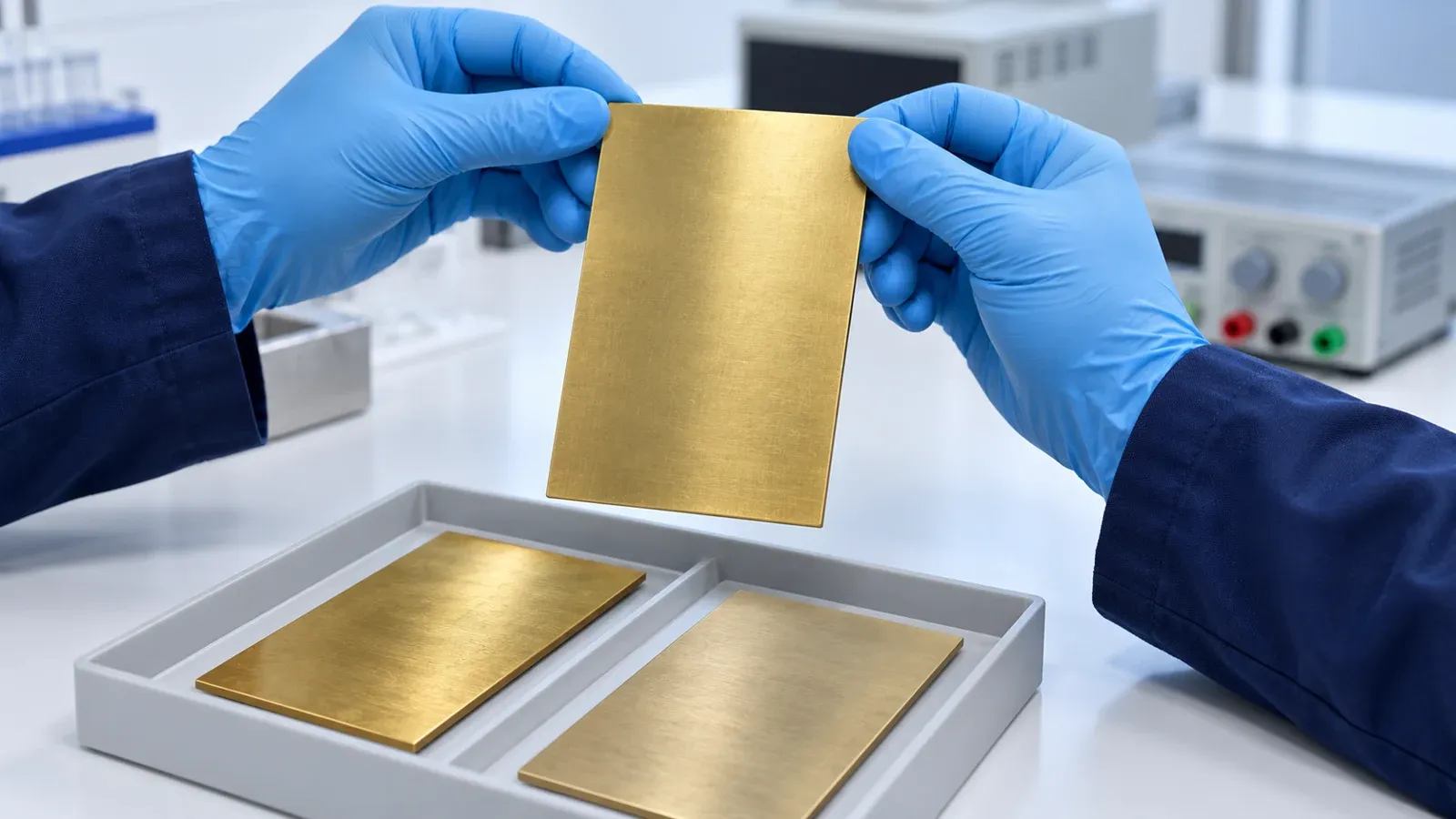
An angled test cathode creates a current-density range along a panel. Appearance can reveal changes that an average bath measurement misses. The useful range depends on the cell, total current and procedure; it does not automatically represent the entire production window.
Compare a suspect sample with a suitable known-good reference under the same procedure. Record the changed zones and events before the defect. This provides a question for further testing, rather than a final root-cause verdict.
Which conditions should a Hull cell test record?
Use the bath system's approved procedure. Record sample identity and age, cell type, panel preparation, anode, current, time, temperature, agitation and sample treatment. Control relevant conditions; the laboratory cell need not physically duplicate the tank.
The official IPC-TM-650 2.3.21, Revision A (August 1997), sections 3.1–3.3, links representative sampling and chemical analysis to the relevant production conditions. It is an advisory method, not a universal operating recipe. Record how temperature and agitation correspond to production; follow the approved bath-specific procedure where the methods differ.
Keep reference panels and photographs with test records so a sampling or procedure change can be distinguished from a bath change. Label the panel's high- and low-current ends, total test current and orientation; use the scale appropriate to the actual cell and current. IPC section 5.3 describes this correlation. An unlabeled photograph cannot establish a current-density interval.
Example: compare one controlled sample treatment
Split a representative sample using the process owner's approved test plan. Retain one untreated baseline and change only the selected variable in the comparison aliquot. Keep cell, panel preparation, temperature, current, duration and agitation controlled. Log the treatment, panel IDs and changed zones, then compare with analysis and the production defect. This is an investigation design, not an additive-dosing instruction; a better panel does not authorize an automatic full-tank addition.
How should a Hull cell panel be assessed?
Use the chemical system's reading guide and reference. These observations are investigation prompts, not exclusive diagnoses:
| Observation | Possible questions | Further evidence |
|---|---|---|
| Defect near the higher-current region | Did chemistry, temperature or test current change? | Analysis, procedure check and comparison panel |
| Haze or poor levelling | Are additives, contamination or preparation involved? | Controlled sample treatment and analysis |
| Thin or skipped low-current appearance | Has low-current response or panel activation changed? | Prepared reference and appropriate measurement |
| Whole-panel change | Was the sample or laboratory procedure different? | Sample history and controlled repeat comparison |
Relate the zone to the test procedure before comparing production. Retain unsuccessful comparisons as well as improvements to avoid hiding competing explanations.
What a Hull cell result cannot diagnose by itself
A visual Hull cell result does not replace production thickness, adhesion, corrosion or other acceptance tests. Additional panel measurements can be made when the approved procedure calls for them, but laboratory panels are not automatically representative production evidence.
A satisfactory panel does not rule out preparation, contamination or chemistry differences at production parts. Investigate loading, contacts, electrical output, solution movement and temperature alongside production analysis; record which explanations remain open.
How can Hull cell findings inform plating equipment assessment?
Convert a demonstrated gap into a measurable equipment question:
- Distribution: compare defect maps, loading, contacts and measured output before proposing anode or conductor changes.
- Stability: identify the parameter production cannot hold, its approved range and measurement location before specifying controls.
- Solution services: use evidence to define filtration, movement or thermal duty instead of asking for "more agitation" without a requirement.
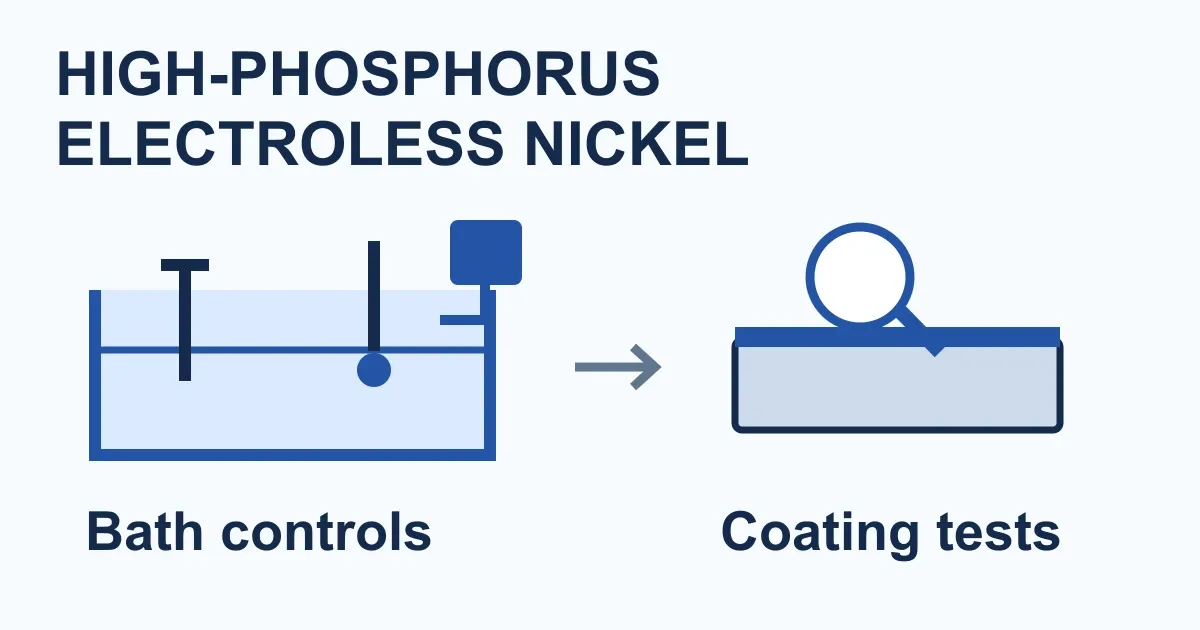
The process walkthrough places bath control in production. The thickness testing guide explains a separate verification task. Keep observations, production measurements and the proposed change traceable to one investigation.
Where this does not fit
- A universal bath procedure: use conditions approved for the actual chemistry.
- A stand-alone root-cause verdict: include analysis, preparation and production evidence.
- Uncontrolled comparisons: sample ageing, treatment and test conditions can change results.
- Automatic production acceptance: a panel serves only the role permitted by the specification.
Questions You May Have:
Can one panel represent every bath we run?
No. Each bath family has its own cell procedure, anode and panel materials, and reading guide. Treat the Hull cell as a procedure per process, recorded in the process owner's control plan.
How often should we run it?
That is a process-control decision, typically tied to bath maintenance events, new make-ups and problem investigations rather than a fixed calendar. The valuable habit is running it before changing equipment, so the change is justified by evidence.
Our panel looks perfect but parts fail. What next?
Check whether the sample and test represent the failure. Compare preparation, loading, contacts, output, movement and temperature alongside analysis. A good panel alone does not eliminate chemistry-related causes.
Who should read the panel?
The bath specialist and production or equipment owner should review it together. Record observations, competing explanations and the next controlled check before authorizing a change.
Official references
- IPC-TM-650 2.3.21 Revision A — Plating Quality Hull Cell Method — official advisory method covering sample/conditions, panel evaluation and controlled comparisons; August 1997. Check applicability and the current process-owner procedure before use.
Get Proposal and Demo
Introduce your investigation with company, name, email and project country. Technical fields are optional. Share the defect description, bath history and any Hull cell results when available, and ask which equipment assessment the evidence justifies.
Photographs and records can follow by sales email, or chat on WhatsApp. Our line setup checklist helps connect a diagnosis to the wider factory project when a change is justified.