
Plating Process
Closed Loop Water Plating ZLD
Closed-loop water systems in electroplating are no longer a niche concept — discharge permit tightening, water cost increases and customer sustainability requirements are pushing buyers to consider ze
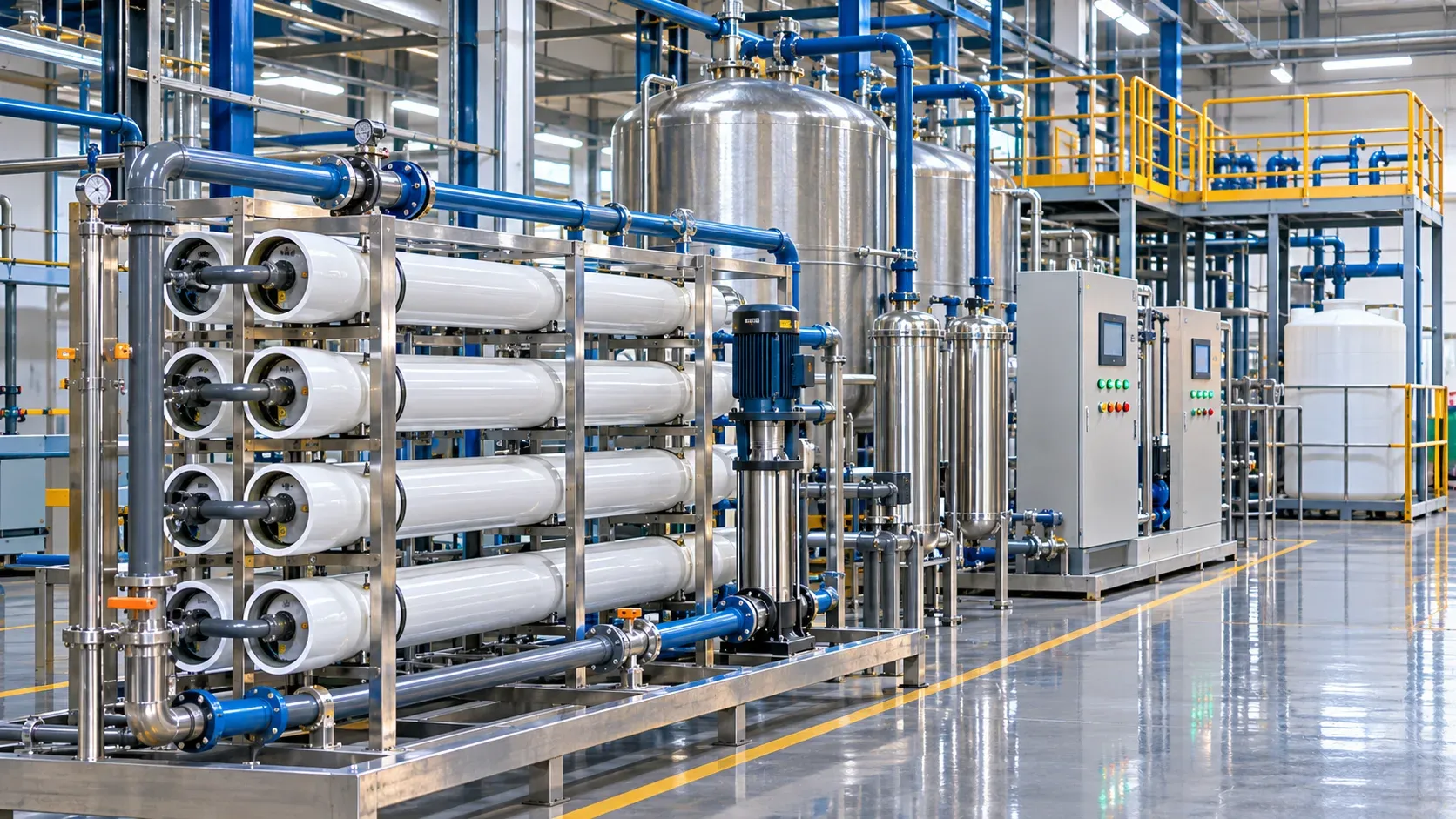
Closed-loop water systems in electroplating are no longer a niche concept — discharge permit tightening, water cost increases and customer sustainability requirements are pushing buyers to consider zero liquid discharge (ZLD) or near-closed-loop configurations. This guide covers what a closed-loop system actually looks like, what equipment it adds, and where the economics work.
Technical planning document — confirm water quality requirements with your chemistry supplier.
What closed-loop means in plating
A closed-loop plating line recirculates its rinse water instead of discharging it. The rinse water picks up dissolved metals and chemistry salts from the parts; it must be treated to remove these contaminants before it can be reused as rinse water. The goal is to reduce or eliminate wastewater discharge while also reducing fresh water consumption.
Three levels of closure exist:
Level | Description | Water saving | Equipment added |
|---|---|---|---|
Partial recirculation | Final rinse recirculated through ion exchange; first rinses still discharged | 30–50% | Ion exchange columns on the final rinse loop |
Near-closed-loop | Counterflow rinse water treated through ion exchange and recycled; only regeneration waste discharged | 70–90% | Ion exchange + activated carbon + filtration on the rinse loop |
Zero liquid discharge (ZLD) | All water recirculated; only concentrated waste evaporated or solidified | 95–100% | Ion exchange + reverse osmosis + evaporator/crystalliser |
The equipment that makes it work
The treatment technology chain for a closed-loop rinse system follows the contaminant load:
Technology | Removes | Position in the loop |
|---|---|---|
Filtration (sand, cartridge) | Suspended solids, particulates | First stage — protects downstream equipment |
Activated carbon | Organics, surfactants, decomposition products | Second stage — protects ion exchange resin |
Ion exchange (cation + anion) | Dissolved metals (Cu, Ni, Zn, Cr), salts | Third stage — the primary polishing technology |
Reverse osmosis | Dissolved salts at higher concentration | Fourth stage or instead of IX for high-salt loads |
Electrodeionisation (EDI) | Trace ions for ultrapure final rinse | Final polishing for DI-quality water |
Evaporator / crystalliser | Concentrated waste — produces solid salt and distillate | End of the ZLD loop — handles IX/RO regeneration waste |
The ion exchange resin is the workhorse: cation resin removes metals (Cu²⁺, Ni²⁺, Zn²⁺), anion resin removes acids and salts. When the resin is exhausted, it is regenerated with acid and caustic — and the regeneration waste contains the concentrated metals that must be treated or disposed of.
The economics: when closed-loop works
Closed-loop systems are capital-intensive. The economics depend on three factors:
- Water cost. High water tariffs, discharge fees or water scarcity make recirculation more attractive.
- Discharge permit difficulty. If the discharge permit is hard to obtain or renew, closing the loop removes the problem.
- Production volume. Higher rinse-water throughput amortises the capital cost faster.
For most plating shops, near-closed-loop (partial recirculation with ion exchange) is the sweet spot: 70–90% water saving without the evaporator cost of full ZLD. Full ZLD is justified where discharge permits are unavailable, water cost is very high, or customer sustainability requirements demand it.
Key takeaways
- Closed-loop rinse systems reduce discharge and water consumption simultaneously — two permits become one operation.
- Three levels exist: partial recirculation, near-closed-loop and full ZLD — each adds equipment and cost.
- Ion exchange is the core technology; RO and evaporators are added for higher closure levels.
- Resin regeneration produces concentrated waste that must be treated or disposed of.
- Counterflow rinsing and conductivity control reduce the load on the treatment loop.
Your next five steps
- Measure your current rinse water consumption and discharge volume.
- Confirm which closure level matches your permit situation and water cost.
- Design the treatment technology chain for your contaminant load.
- Specify conductivity-controlled rinsing to reduce the load on the treatment loop.
- Plan the resin regeneration waste treatment or disposal route.
FAQ
Can closed-loop water be used for all rinse stages?
Treated recirculated water can serve final and intermediate rinses. The first rinse after the plating tank should still use fresh water to avoid contaminating the loop with the highest metal concentration.
How often does ion exchange resin need regeneration?
It depends on the metal load in the rinse water — higher production means faster resin exhaustion. Monitor the outlet conductivity to trigger regeneration.
Is ZLD realistic for a small plating shop?
Full ZLD with evaporators is a large-investment technology. For small shops, near-closed-loop with ion exchange and contracted regeneration waste disposal is more practical.
Image note: AI-generated editorial photography illustrates equipment or workpiece contexts; it is not an ES-PRO installation, customer reference or evidence of coating performance.


